
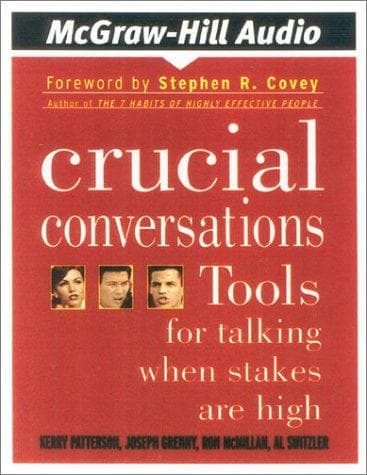
Crucial Conversations
Kerry Patterson, Joseph Grenny
Like Goleman, it treats emotional self-control and reading others as learnable skills, applied to high-stakes conversations at work and home, with practical techniques rather than theory alone.
Reader-supported: when you buy through links on our site, we may earn an affiliate commission. Learn more
12 books to read next
If you loved Emotional Intelligence by Daniel Goleman
Emotional Intelligence is a popular psychology book about how self-awareness, self-control, empathy and social skill can matter as much as IQ in work and relationships. Readers typically value its research-backed but accessible tone, its clear examples from everyday life, and its practical argument that emotional skills can be learned. It moves briskly through ideas rather than dwelling on technical detail, making it approachable for general readers.
Kerry Patterson, Joseph Grenny
Like Goleman, it treats emotional self-control and reading others as learnable skills, applied to high-stakes conversations at work and home, with practical techniques rather than theory alone.
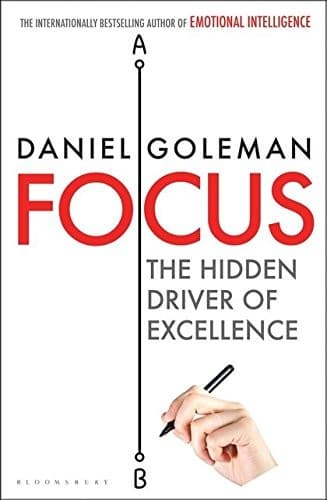
Daniel Goleman
Goleman's follow-up turns to attention as the foundation of emotional and social skill, extending the themes of self-awareness that readers of Emotional Intelligence valued.
Susan Cain
It explores how temperament shapes social life and self-understanding, pairing research with real stories so readers can see their own emotional patterns in a new light.
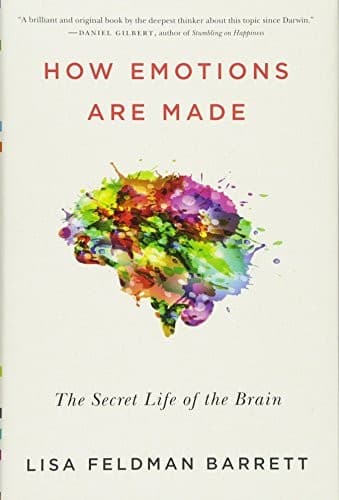
Lisa Feldman Barrett
It challenges common assumptions about emotion with neuroscience, offering a deeper look at the mechanics behind the feelings Goleman describes so readers can think about them differently.
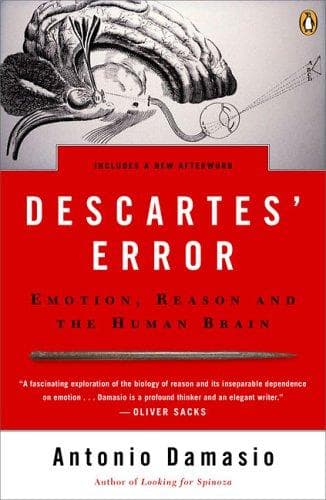
Antonio Damasio
Damasio shows through patient case studies that emotion is essential to good decisions, a central idea for anyone who found Goleman's argument that feelings guide thinking persuasive.
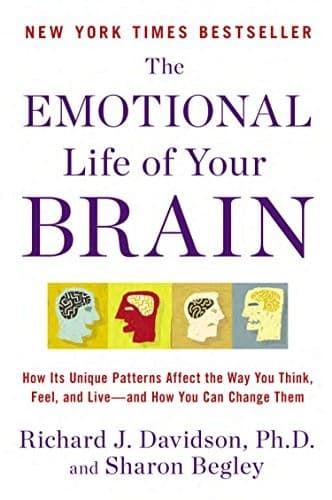
Richard J. Davidson
Written by a leading neuroscientist, it explains how emotional styles are shaped and can be trained, expanding on the idea that emotional skills can be developed over a lifetime.
James Clear
Like Goleman's emphasis on practice, it offers a clear system for building small, repeatable behaviours, useful for readers who want to turn emotional awareness into daily routine.
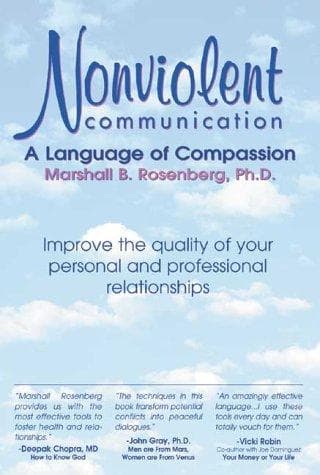
Marshall B. Rosenberg, Deepak Chopra
It gives a concrete method for expressing feelings and needs without blame, a hands-on companion for readers who want to apply empathy and self-control in conversation.
Carol S. Dweck
Dweck explores how beliefs about ability shape response to setbacks, connecting to Goleman's view that self-management and resilience can be cultivated.
Daniel Kahneman
Kahneman explains how intuitive and deliberate thinking interact, a rigorous next step for readers curious about the mental forces Goleman links to emotional judgement.
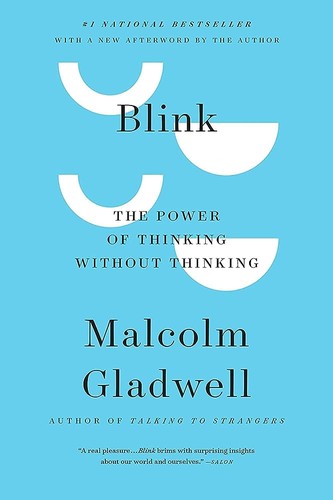
Malcolm Gladwell
Gladwell examines snap judgements and the hidden knowledge behind quick reactions, a readable match for readers fascinated by how emotion and intuition shape decisions.
Bessel A. Van der Kolk
It examines how emotions and trauma live in the body, offering a deeper, clinically grounded look at emotional regulation for readers who want to go beyond Goleman's overview.
We earn a commission if you buy through these links. Learn more