
We earn a commission if you buy through these links. Learn more
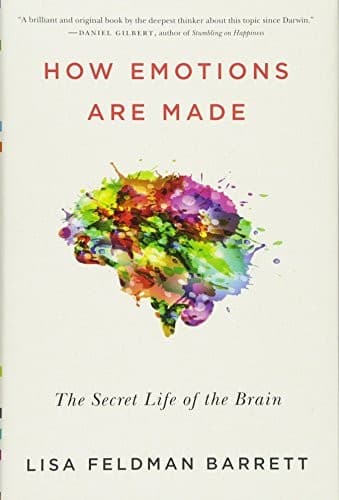
How Emotions Are Made: The Secret Life of the Brain
Barrett's case that emotions are predictions your brain constructs, not universal reactions it triggers, is a fresh, evidence-based reframing worth your time.
What It's About
How Emotions Are Made is Lisa Feldman Barrett's argument that the emotions we feel are not hardwired responses that switch on when something happens to us. Instead, she argues, the brain constructs them, using past experience, concepts we have learned, and signals from inside the body to predict what is happening and what to do next. The book is built on a challenge to the older view that anger, fear, and sadness each have a dedicated brain circuit and a matching facial expression.
Barrett writes as a scientist explaining a research program, not as a self-help author. She walks through experiments and the history of the debate, takes the opposing side seriously, and is candid about where evidence is strong and where it is still open. The prose is clear for a general reader, though the argument returns to the same core idea from several angles, which can feel repetitive.
The experience is less like a guide to managing feelings and more like having a long-held assumption dismantled. Many readers finish with a changed view of why emotions feel so real and so automatic, and with a few practical ideas about naming feelings more precisely. Expect to slow down for the neuroscience, and don't expect a step-by-step plan.
Read this if you…
- want a science-based explanation of why emotions feel so automatic and real
- are curious how the brain turns body signals into the feelings you actually experience
- are interested in naming your feelings more precisely and understanding where they come from
Skip it if you…
- want a quick, practical toolkit for managing anger, anxiety, or stress
- prefer a light read without dense neuroscience or long discussions of research methods
Key Ideas
- 1
Emotions as the brain's predictions
Barrett proposes that the brain is constantly guessing what is about to happen and what the body will need. An emotion is the brain's best prediction, built from past experience, about what a given bodily state means in the current situation. Feelings arrive as if they were direct readings of the world, but much of the work happens before you are aware of it.
- 2
Concepts shape what we feel
Your emotional experience depends on the emotion concepts you have learned, such as what counts as anger or contentment in your culture and language. Barrett argues that these learned categories help the brain organize body signals into specific feelings. This is why emotion categories differ across people and societies, and why the same physical arousal can be felt as excitement or dread.
- 3
Body signals and the body budget
The book gives real weight to interoception, the brain's sense of the body's internal state, including heart rate, hormones, and energy levels. Barrett describes the brain as managing a body budget, and emotions as part of how it spends or saves resources. This reframes feelings as tied to physical regulation rather than sealed inside the mind.
- 4
Why the classic view is contested
Barrett directly challenges the widely taught idea that basic emotions have fixed brain signatures and universal facial expressions. She reviews the evidence on both sides and argues that the data fit a constructed account better. Readers get a clear picture of a live scientific disagreement, not just a settled verdict.
- 5
Emotional granularity and everyday life
Near the end, Barrett explores the idea that people who distinguish finer emotional categories often handle stress and conflict more effectively. She suggests that building a richer emotional vocabulary can change how experiences are constructed. These implications are sketched rather than fully developed, so they work best as a starting point for your own reflection.
Limitations
Critics, including some emotion researchers, argue that Barrett understates the evidence for universal facial expressions and for emotion-specific patterns in the brain, so the debate is far from settled. The book is also more interested in theory than in application, and its practical advice on emotional granularity is brief. Some neuroscience described has been refined in the years since publication, so check newer reviews for current findings.
Questions Readers Ask
- Is How Emotions Are Made still relevant?
- Yes. The book is an accessible account of the theory of constructed emotion, which remains an active and contested position in affective science. Its research examples date from the 2010s, so readers wanting the latest studies should pair it with recent review articles. The core argument about prediction and learned concepts is still widely discussed.
- How does it compare to Paul Ekman's work on emotion?
- Ekman's research on six basic emotions and universal facial expressions is the classic view Barrett most directly challenges. Barrett reads much of the same evidence differently. If you already know Ekman, this book gives you the strongest alternative case. For a balanced picture, read both and weigh the evidence yourself.
- Published
- 2017
- ISBN
- 9780544133310
- Difficulty
- intermediate
- Category
- Psychology
Book details and cover from Google Books.
Ready to read How Emotions Are Made: The Secret Life of the Brain?
Get your copy on Amazon, or listen to it on Audible. We earn a commission if you buy through these links.