
The Power of Habit
Charles Duhigg
Duhigg's cue-routine-reward habit loop is the foundation Atomic Habits builds on. If you liked Clear's research-backed stories, this offers a narrative-driven look at habits in individuals, companies and societies.
Reader-supported: when you buy through links on our site, we may earn an affiliate commission. Learn more
We earn a commission if you buy through these links. Learn more
Find Similar Booksby James Clear
A clear, highly practical playbook for building good habits and dropping bad ones by changing your systems and surroundings instead of relying on willpower.
Atomic Habits argues that lasting change comes less from big goals and bursts of motivation than from small behaviors repeated until they become automatic. James Clear treats habits as the compound interest of personal growth: tiny improvements look insignificant day to day but add up over months and years. His central tool is a four-part framework built on the cue-craving-response-reward loop. Each stage becomes a lever you can pull to make a good habit easier to start, or to make a bad one harder to continue.
The book is written for action. Short chapters each introduce one idea, illustrate it with a story from sports, business, medicine or history, and end with a summary you can apply straight away. Clear draws on behavioral psychology and neuroscience, but lightly. He prefers memorable rules of thumb to detailed research discussion, so the prose is brisk and plain and you rarely need to reread a passage.
Reading it feels like getting a well-organized toolkit rather than a deep theory of human behavior. Many readers finish it in a few sittings and come away with specific changes to try: rearranging a room, tying a new habit to an existing routine, or shrinking a daunting task until it is easy to begin. Its biggest strength is that it turns familiar advice into a system you can actually use.
Clear asks readers to stop judging progress by immediate results. A slight daily improvement, or a slight daily slip, barely registers in the short term but snowballs over a long horizon. Because results lag behind effort, people often quit just before their habits start paying off. Understanding this delay helps you stay patient during what he calls the plateau, when the work seems to produce nothing visible yet.
Winners and losers often share the same goals, Clear notes, so goals alone can't explain success. What differs is the process each person follows every day. He suggests you focus on designing routines and environments that produce progress automatically, rather than fixating on outcomes. A goal points you in a direction. A system is what actually moves you, and it keeps working after a single target has been reached.
The most durable habits come from shifting how you see yourself. Instead of aiming to run a marathon, you aim to become a runner, and each small action becomes a vote for that identity. This reframing makes habits self-reinforcing, because you act in line with who you believe you are. It also explains why outcome-focused efforts often collapse once motivation fades.
Clear's framework says good habits should be obvious, attractive, easy and satisfying. To break a bad habit, you invert each law: make it invisible, unattractive, difficult and unsatisfying. Most of the book unpacks practical tactics under these four headings. They include habit stacking, temptation bundling, reducing friction, the two-minute rule for starting small, and habit tracking to make progress feel rewarding.
Rather than counting on self-control, Clear recommends shaping your surroundings so the right choice is the default. You can put cues for good habits in plain sight, hide triggers for bad ones, and add or remove small steps of effort. People with apparently strong discipline, he argues, often just structure their lives to avoid temptation, which is a more reliable strategy than resisting it moment by moment.
Much of the framework repackages earlier work, especially Charles Duhigg's habit loop and BJ Fogg's emphasis on tiny behaviors, so well-read fans of the genre may find little that is new. The research is simplified and leans on success anecdotes that can feel tidy or cherry-picked. The book mostly treats habits as an individual design problem. It says little about poverty, time scarcity, mental health or other circumstances that limit how much someone can reshape their environment. Some readers also find the later chapters repetitive once the four laws are established.
Reviews from readers on YouTube. Their opinions are their own.
Book details and cover from Google Books.
Ready to read Atomic Habits?
Get your copy on Amazon, or listen to it on Audible. We earn a commission if you buy through these links.
Charles Duhigg
Duhigg's cue-routine-reward habit loop is the foundation Atomic Habits builds on. If you liked Clear's research-backed stories, this offers a narrative-driven look at habits in individuals, companies and societies.
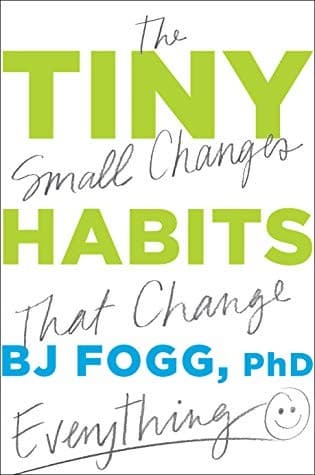
B. J. Fogg
Fogg's lab work at Stanford shaped much of modern habit thinking. Like Clear, he argues for starting absurdly small and anchoring new behaviours to existing routines, with step-by-step recipes to try.
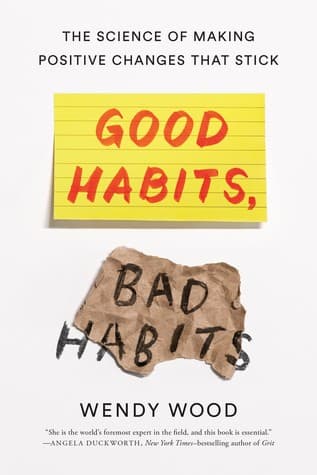
Wendy Wood
A psychologist's deep dive into why willpower fails and context wins. Readers who loved Clear's chapters on environment design will find the research behind those ideas explained in fuller detail.
Darren Hardy
Hardy's central idea, that small daily choices accumulate into dramatic outcomes, echoes Clear's one-percent-better philosophy. It's short, motivating and full of simple tracking exercises.