
Black Holes and Time Warps
Kip S Thorne
Thorne, a leading relativity physicist, explains black holes with the same wonder Susskind brings. It covers the stars, the spacetime distortions and the paradoxes that make the Hawking debate so striking.
Reader-supported: when you buy through links on our site, we may earn an affiliate commission. Learn more
12 books to read next
If you loved The Black Hole War by Leonard Susskind
Readers who love The Black Hole War usually enjoy its mix of hard physics and personal drama. Susskind explains Hawking's paradox about what happens to information that falls into a black hole, and he keeps the stakes clear: a rivalry, a bet, and a idea that the universe may be a hologram. The tone is lively and conversational, the pace brisk, and the science is presented without shying away from the difficult parts. These picks share that blend of big questions, clear explanation, and a sense of the people behind the discoveries.
Kip S Thorne
Thorne, a leading relativity physicist, explains black holes with the same wonder Susskind brings. It covers the stars, the spacetime distortions and the paradoxes that make the Hawking debate so striking.
Stephen Hawking
This is the book by the physicist whose black hole claims started the war. Reading it gives you Hawking's own voice on radiation, singularities and the nature of time, the ideas Susskind pushed back against.
Brian Greene
Greene explains string theory, the framework behind Susskind's holographic ideas. Readers who enjoyed the mind-bending side of The Black Hole War will find the same excitement about hidden dimensions and the structure of reality.
Sean Carroll
Carroll takes on quantum mechanics and the many-worlds picture with clear reasoning. Like Susskind, he asks what the equations really say about reality, and he treats that question seriously without jargon.
Carlo Rovelli
Rovelli's short, poetic chapters cover relativity, quantum theory and black holes in a few pages each. Readers who want Susskind's big picture in a compact, lyrical form will find it a good companion.
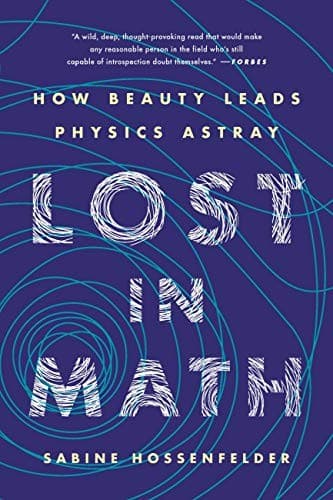
Sabine Hossenfelder
Hossenfelder questions whether beauty and elegance still guide theoretical physics. Readers who enjoyed Susskind's fierce, opinionated style will appreciate her sharp critique of where the field has gone.
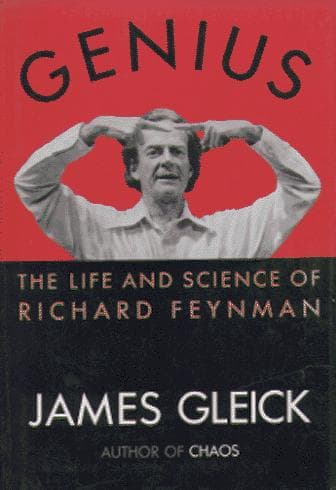
James Gleick
Gleick's biography of Richard Feynman captures the restless, competitive character of mid-century physics. It suits readers who enjoyed the human rivalries and personalities at the heart of The Black Hole War.
Richard P. Feynman
Feynman's collected stories are playful and irreverent, and they show how a physicist thinks. Readers who liked Susskind's lively, personal tone will enjoy the same energy and curiosity.
Richard Rhodes
Rhodes tells the history of nuclear physics as a human drama of rival teams and high stakes. It gives the same sense of how scientific ideas are fought over, on a larger historical canvas.
Bill Bryson
Bryson makes science warm, funny and accessible, covering the universe, atoms and the scientists behind them. Readers who want to explore physics without heavy equations will find a welcoming guide.
Carl Sagan
Sagan's classic gives a sweeping tour of the universe and its history, with the same sense of awe Susskind brings to black holes. It is a good next step for readers who want the big picture.
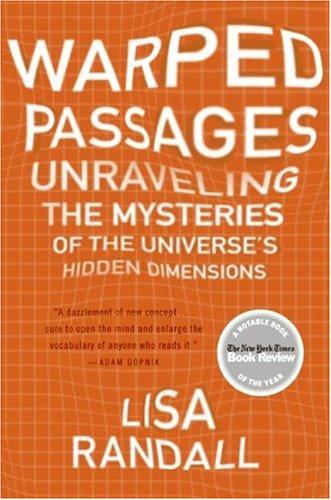
Lisa Randall
Randall, a particle physicist, explains extra dimensions and the geometry of the universe with clarity. Readers fascinated by the hologram idea and hidden dimensions will find a related, accessible story.
We earn a commission if you buy through these links. Learn more