
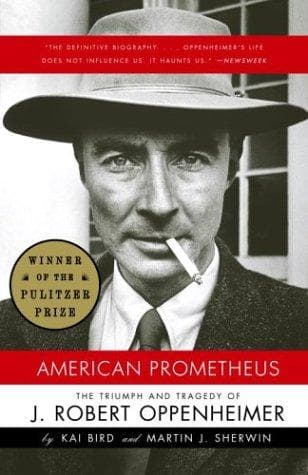
American Prometheus
Kai Bird, Martin J. Sherwin
A biography of J. Robert Oppenheimer that covers the Manhattan Project in depth. It matches the source book's blend of physics, politics and personal drama, and it draws on extensive archival research.
Reader-supported: when you buy through links on our site, we may earn an affiliate commission. Learn more
We earn a commission if you buy through these links. Learn more
Find Similar BooksGuide by the Books of the Day editors · Updated · How we write our guides
The definitive account of how fission, wartime rivalry and the Manhattan Project produced the bomb, told through the scientists who built it.
1 creator reviewed The Making of the Atomic Bomb on YouTube in 2022, with 935 views between them. Their opinions are their own; we picked these reviews, we didn't write them.
Richard Rhodes's book is a long, narrative history of how the atomic bomb came to exist, starting with early discoveries in radioactivity around the turn of the century and ending with the bombings of Hiroshima and Nagasaki in 1945. It moves between laboratories in Europe, Britain, and the United States, and it keeps returning to the people doing the work: their rivalries, their doubts, their political entanglements, and their often painful moral reckonings.
The approach is chronological and character-led. Rhodes gives the physics enough room that a determined general reader can follow the logic of fission and chain reactions, but he always anchors the explanations in who discovered what, under what pressures, and with what consequences. The prose has the pace of a thriller, though the account rests on heavy research, including interviews and archival sources.
Reading it is an immersive, sometimes slow experience. It is long, and the wartime sections involve dense technical and administrative detail. What you get in return is a sense of how improbable and rushed the path to the bomb was, and how much of it depended on individual choices rather than inevitability.
The book shows how the splitting of uranium emerged from experiments that were not designed to find it. Chemists were puzzled by their results, and physicists in exile had to work out what had happened. Rhodes makes clear how much of the breakthrough depended on collaboration, timing and a few people willing to trust unexpected data.
Once the possibility of a chain reaction was understood, scientists worried that Nazi Germany might build such a weapon first. Rhodes traces how that fear led émigré physicists to lobby governments, including the letter to Roosevelt and the British memorandum that pushed the program forward. The book treats these moments as political acts with uncertain outcomes.
Rhodes shows the bomb as the product of a vast engineering effort spread across sites like Oak Ridge, Hanford and Los Alamos. He explains the scale of the enterprise, the tension between theoretical physicists and industrial managers, and how quickly a small research question turned into a national undertaking.
Many of the scientists involved debated whether and how the weapon should be used, and some argued against using it on cities. Rhodes gives these arguments real weight rather than treating them as footnotes, which makes the final decisions feel contested and human rather than inevitable.
Rather than writing about physics in the abstract, Rhodes builds the story around figures such as Szilard, Bohr, Fermi, Teller and Oppenheimer. Their personalities, rivalries and blind spots shape how the research unfolds, and the portraits are the main way the book makes complex ideas memorable.
The book is long, and its wartime sections can feel heavy with administrative detail. Published in 1986, it predates the release of many documents and later scholarship on Soviet espionage and the Japanese side of the war, so some specifics have since been revised. Critics also note that its focus on scientists can underplay the labor behind the project, the experiences of people in Japan, and the wider moral debate about the bombings. The account is generally well sourced, but readers should keep these gaps in mind.
Book details and cover from Google Books.
Ready to read The Making of the Atomic Bomb?
Get your copy on Amazon, or listen to it on Audible. We earn a commission if you buy through these links.
Kai Bird, Martin J. Sherwin
A biography of J. Robert Oppenheimer that covers the Manhattan Project in depth. It matches the source book's blend of physics, politics and personal drama, and it draws on extensive archival research.
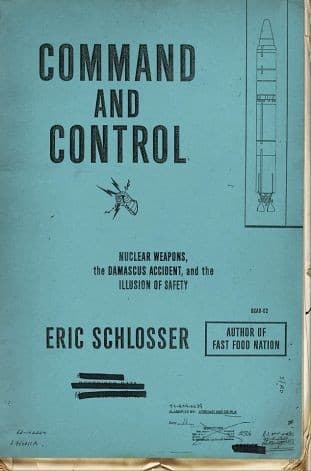
Eric Schlosser
Investigates the decades of nuclear weapons handling that followed the bomb, with careful reporting on the close calls. Readers who valued the source book's attention to the Cold War aftermath will find it a sobering companion.
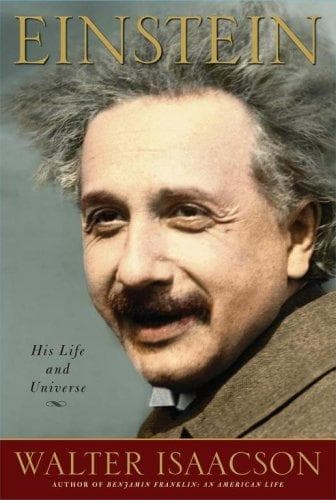
Walter Isaacson
A full biography of the physicist whose ideas and letters helped set the atomic story in motion. It gives the scientific background and the human character that the source book brings to its own cast.
Richard P. Feynman
The memoir of a physicist who worked at Los Alamos, told in lively anecdotes. It gives an informal, personal view of the wartime scientists that complements the source book's portraits.