Reader-supported: when you buy through links on our site, we may earn an affiliate commission. Learn more

Cover of "Surely You're Joking, Mr. Feynman!"
Buy on AmazonBuy on Bookshop.orgListen on Audible

We earn a commission if you buy through these links. Learn more

Find Similar Books

"Surely You're Joking, Mr. Feynman!"

by Richard P. Feynman

Biographies
★★★★★5.0 (1)

Guide by the Books of the Day editors · Updated · How we write our guides

A Nobel physicist's funny, loose collection of stories about a restless life, from Los Alamos safecracking to teaching in Brazil, all showing curiosity in action.

What Creators Say About "Surely You're Joking, Mr. Feynman!"

2 creators reviewed "Surely You're Joking, Mr. Feynman!" on YouTube between 2017 and 2021, with 48.7K views between them. Their opinions are their own; we picked these reviews, we didn't write them.

Surely You're Joking, Mr. Feynman! (Book Summary & Review)robertus on YouTube31.5K views · 2021
"Surely You're Joking, Mr. Feynman!" Book ReviewBulldog Mindset on YouTube17.2K views · 2017

What It's About

Surely You're Joking, Mr. Feynman! is a collection of short, mostly self-contained stories from the life of Richard Feynman, the physicist who shared the 1965 Nobel Prize for his work on quantum electrodynamics. The episodes were gathered and shaped into chapters by Ralph Leighton, a friend who recorded Feynman talking about his past. It is not a biography in the usual sense. It skips the orderly progression of childhood, career milestones and personal reflection in favor of whatever episode made a good tale.

The stories range widely. Some concern his student days and early academic life, some his wartime years at Los Alamos, where he became known for opening locked cabinets and safes, and some his later travels and teaching. Along the way he wanders into art, lockpicking and a steady impatience with pompous authority. The voice is conversational, sometimes boastful, and often self-deprecating. Physics appears less as a set of formulas than as a way of looking at ordinary things.

Reading it feels like sitting across from a fast-talking dinner guest who has done far too many things. It is quick, light and frequently funny, and each chapter can be read on its own. The tone is much brighter than most scientists' memoirs, though the book is less reflective than readers hoping for insight into his inner life may want.

Read this if you…

  • want a lighter, funnier way into how a working physicist thinks
  • enjoy short stories you can dip into and finish in any order
  • are curious about the people and atmosphere of wartime Los Alamos

Skip it if you…

  • want a structured biography with dates, family background and career detail
  • need rigorous technical physics, since the book deliberately avoids equations

Key Ideas

  1. 1

    Curiosity as a way of living

    The book's central engine is a restless habit of asking why things behave as they do. Feynman follows questions from the everyday, such as why a spinning plate wobbles, into physics and back again. The stories suggest that curiosity was not a professional duty but his default way of paying attention to the world.

  2. 2

    Distrust of pomp and borrowed authority

    Again and again Feynman bristles at titles, jargon and people who claim expertise without showing their working. He prefers to test an idea himself and to say plainly when he does not understand something. This irreverence is the source of much of the humor, and it is also a quiet argument about how serious thinking should be done.

  3. 3

    Physical intuition in everyday life

    Rather than presenting physics as formulas to memorize, the book shows a way of reasoning about how things work. Feynman describes thinking through problems in concrete terms, picturing mechanisms and checking whether results make sense. Readers without a technical background can still pick up a feel for that approach.

  4. 4

    Wartime Los Alamos and its characters

    The Manhattan Project chapters offer a vivid picture of a gifted, unusual group of people working under pressure and secrecy. The safecracking stories show how Feynman treated security problems as puzzles, which says something about both him and the institution. These pages are among the most memorable in the book.

  5. 5

    Anecdotes as performance, not transcript

    These are recollections shaped for telling, so they are polished for effect and sometimes exaggerated for comic timing. Reading them as lively, partly embellished stories, rather than as a precise historical record, is the right way to take them. The craft of the telling is part of what makes the book work.

Limitations

Because the stories are oral recollections edited into chapters, some details may be shaped by memory and by the demands of a good anecdote, and the book does not check them against records. Feynman presents himself charmingly but often flatteringly, and the emotional and personal side of his life gets little space. Some of his remarks about women and about other people read poorly today, and some of the attitudes on display feel dated.

Questions Readers Ask

Do I need a physics background to enjoy this book?
No. The book has almost no equations and explains what it needs in plain language. Its appeal is in the characters, the humor and the way Feynman talks about curiosity. Some stories touch on physics, but you can follow them without any prior knowledge.
How does it compare with James Gleick's Genius?
Gleick's Genius is a full biography that places Feynman within the history of physics and gives a broader account of his career and personal life. Surely You're Joking is shorter, looser and more entertaining, built from individual anecdotes. Read Gleick for context and this book for voice and personality.
Published
2018
ISBN
9780393355680
Difficulty
beginner
Category
Biographies

Book details and cover from Google Books.

Ready to read "Surely You're Joking, Mr. Feynman!"?

Get your copy on Amazon, or listen to it on Audible. We earn a commission if you buy through these links.

Books Like "Surely You're Joking, Mr. Feynman!"

View all →
Cover of The double helix

The double helix

James D. Watson, Grover Gardner narrator

Like Feynman's stories, this is a first-person account of scientific discovery with plenty of personality, rivalry, and frank opinions. Watson's candid, sometimes provocative tone will feel familiar to readers who enjoyed Feynman's irreverence.

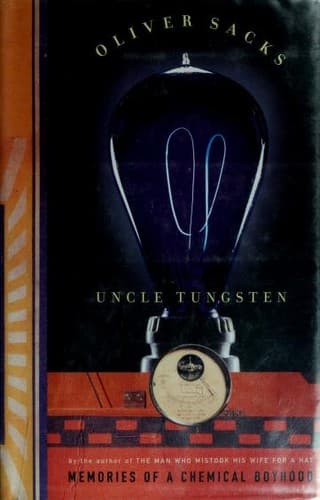
Cover of Uncle Tungsten

Uncle Tungsten

Oliver Sacks

Sacks recalls a childhood steeped in chemistry and an eccentric family of scientists, with the same delight in hands-on experiments and wonder at the physical world that runs through Feynman's book. It is warm, vivid, and full of curious detail.

Cover of Born a Crime

Born a Crime

Trevor Noah

Noah's memoir shares Feynman's gift for turning a life of unusual circumstances into sharp, funny storytelling. Readers who enjoyed Feynman's mischievous, anecdote-driven voice will appreciate its humour and candour.

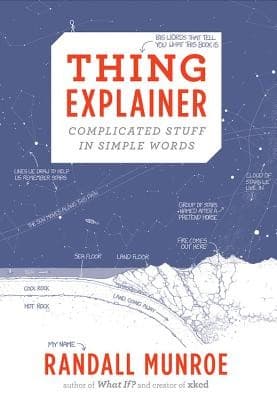
Cover of Thing Explainer

Thing Explainer

Randall Munroe

Munroe explains complicated machines and ideas using only the thousand most common words, with witty drawings. It captures Feynman's gift for making hard science feel delightful and accessible to any curious reader.

Explore More