
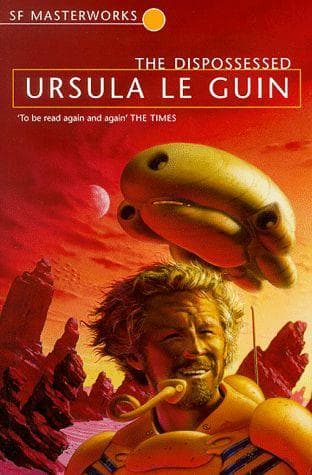
The Dispossessed
Ursula K. Le Guin
Another Le Guin novel exploring a society built on different values, comparing an anarchist moon with a capitalist planet through a physicist's eyes. It shares the same careful anthropology and political curiosity.
Reader-supported: when you buy through links on our site, we may earn an affiliate commission. Learn more
10 books to read next
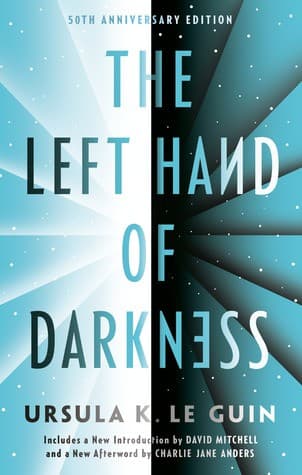
If you loved The Left Hand of Darkness by Ursula K. Le Guin
Readers who love The Left Hand of Darkness usually come for its patient, thoughtful worldbuilding: an envoy travelling across an icy planet whose people have no fixed gender. The book moves slowly and asks big questions about culture, politics, trust and what it means to be human, all grounded in a close, personal friendship. It is anthropological science fiction, more interested in ideas and empathy than in spectacle.
Ursula K. Le Guin
Another Le Guin novel exploring a society built on different values, comparing an anarchist moon with a capitalist planet through a physicist's eyes. It shares the same careful anthropology and political curiosity.
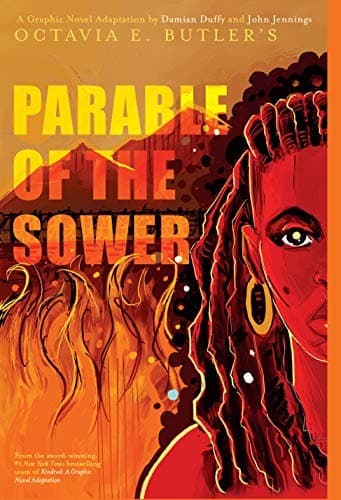
Octavia E. Butler
A near-future society under strain, told with the same clear-eyed attention to how communities form, survive and change. Like Le Guin, Butler asks what a people could become under very different conditions.

Samuel R. Delany
A linguist-led story where language reshapes how people think and act, echoing the Gethenian thought experiment at the heart of Le Guin's novel. It rewards close reading and philosophical curiosity.
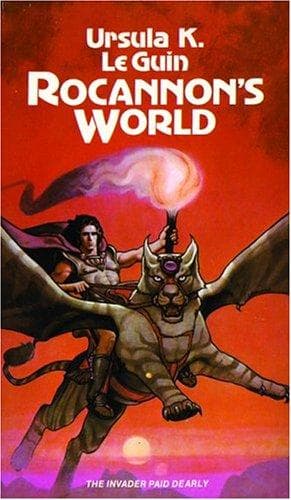
Ursula K. Le Guin
An early Hainish novel with a lone envoy crossing unfamiliar lands and cultures, sharing the measured pace and sense of discovery found in The Left Hand of Darkness. It is a gentler introduction to the same universe.
N. K. Jemisin
Its slow, layered narration and attention to a harsh, unfamiliar world's social structures will appeal to readers drawn to Le Guin's careful worldbuilding. The politics are personal and the storytelling is deliberate.
Kazuo Ishiguro
A quiet, melancholy narrative that reveals its unusual world gradually, with a focus on memory and human dignity. Readers who valued the reflective tone of Le Guin's book often find it deeply moving.
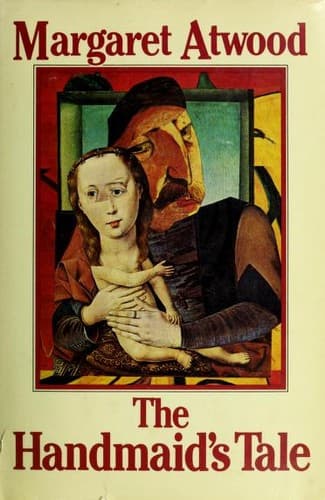
Margaret Atwood
A speculative novel about how a society reshapes gender roles and power, written with the same seriousness about politics and personal voice. It suits readers who want to see gender used as a lens on society.

Virginia Woolf
A playful, classic novel that treats gender as fluid across centuries, with wit and literary daring. It offers a different but thoughtful take on the questions Le Guin raises.

Stanisław Lem
A philosophical science fiction novel about the limits of human understanding when faced with something truly alien. It matches Le Guin's interest in the gap between cultures and the difficulty of really knowing another mind.
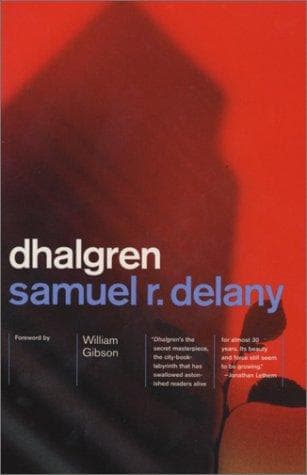
Samuel R. Delany
A dense, challenging novel in a strange city where meaning is unstable and identity shifts. It suits readers who enjoyed the intellectual demands and open-ended ideas of Le Guin's book.
We earn a commission if you buy through these links. Learn more