

The Dispossessed
Ursula K. Le Guin
Another Le Guin novel exploring a society built on different values, comparing an anarchist moon with a capitalist planet through a physicist's eyes. It shares the same careful anthropology and political curiosity.
Reader-supported: when you buy through links on our site, we may earn an affiliate commission. Learn more
We earn a commission if you buy through these links. Learn more
Find Similar BooksGuide by the Books of the Day editors · Updated · How we write our guides
Le Guin's classic science fiction novel uses an alien world without fixed gender to test how well one outsider can really understand another people.
2 creators reviewed The Left Hand of Darkness on YouTube between 2020 and 2024, with 211.1K views between them. Their opinions are their own; we picked these reviews, we didn't write them.
The Left Hand of Darkness is a 1969 science fiction novel that remains Le Guin's best-known work outside genre circles. Genly Ai, an envoy from a loose interstellar association called the Ekumen, arrives on the frozen planet Gethen hoping to persuade its nations to join. Gethenians are unlike any human society he has known. They have no fixed sex, and for a few days each month they enter a phase in which they take on male or female characteristics.
The book is assembled from several kinds of material: Genly's official reports, a long section told from the viewpoint of Estraven, a Karhidish statesman whose fortunes have collapsed, Gethenian legends, and a scholarly-style account of the planet's history. Le Guin shifts between these voices so that you piece together the politics and customs the way Genly does, slowly and with mistakes. The middle of the novel is a punishing journey across a glacier, where the two men's partnership is tested by cold, hunger, and mutual suspicion.
Reading it feels like being a patient guest. The pace is deliberate, the dialogue is sometimes formal, and the emotional payoff depends on attention to small gestures and the gradual building of trust. It is less a space adventure than a study of how strangers misread one another and how hard it is to see a society clearly from inside your own assumptions. Many readers find the early chapters slow, but those who push through tend to find the ending moving without being neat.
Gethenians have no fixed sex. For a few days each month they enter kemmer and take on male or female characteristics, and the outcome is unpredictable. Le Guin uses this to test which parts of behavior we assume are gendered at all. Genly, raised with clear categories, keeps reaching for pronouns and expectations that do not fit, and watching him struggle is part of the point.
Shifgrethor is the Gethenian sense of prestige, the unspoken rules of face, pride, and obligation that govern nearly every conversation. Genly misreads it repeatedly, sometimes insulting the people he means to flatter. The book takes these failures seriously, showing how a confident reading of another culture can do real damage even when the intentions are good.
The long walk across the Gobrin Ice is where the novel's emotional argument plays out. Two men who distrust each other must depend on each other to survive the cold. Le Guin makes trust feel physical and costly, built through small acts rather than declarations. The journey strips away court manners and forces both characters to reconsider what they assumed about each other and about themselves.
Karhide's court is a world of rivalry, exile, and careful alliances, and Estraven's position within it shapes much of the book. Le Guin asks what loyalty means when a government's interests and a person's conscience pull apart. The Ekumen's offer of union is also questioned, since joining a larger community may simply trade one set of pressures for another.
The novel mixes Genly's reports, Estraven's own account, Gethenian legends, and a scholarly record of the planet. No single voice is fully reliable, so the reader must weigh evidence and notice what each narrator hides. This makes the book feel more like a field investigation than a conventional adventure, and it rewards slow, attentive reading.
Some readers find the opening chapters slow, since Genly's reports and lengthy explanations of Gethenian politics arrive before the emotional stakes take hold. Genly often uses male pronouns for Gethenians in early passages, a choice that reflects 1969 assumptions. Le Guin later discussed this herself, and it can jar. The gender concept is more a thought experiment than a fully lived culture, and critics note that the planet is still seen through a largely human, outsider lens. The Ekumen's idealized vision of interstellar union receives less scrutiny than the rest of the book.
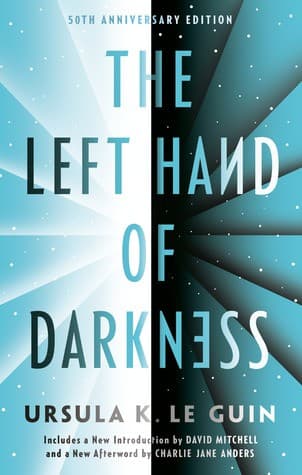
Book details and cover from Google Books.
Ready to read The Left Hand of Darkness?
Get your copy on Amazon, or listen to it on Audible. We earn a commission if you buy through these links.
Ursula K. Le Guin
Another Le Guin novel exploring a society built on different values, comparing an anarchist moon with a capitalist planet through a physicist's eyes. It shares the same careful anthropology and political curiosity.

Octavia E. Butler
A near-future society under strain, told with the same clear-eyed attention to how communities form, survive and change. Like Le Guin, Butler asks what a people could become under very different conditions.

Samuel R. Delany
A linguist-led story where language reshapes how people think and act, echoing the Gethenian thought experiment at the heart of Le Guin's novel. It rewards close reading and philosophical curiosity.
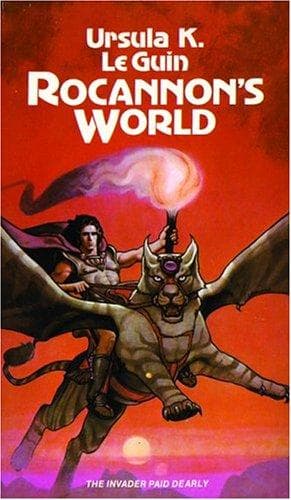
Ursula K. Le Guin
An early Hainish novel with a lone envoy crossing unfamiliar lands and cultures, sharing the measured pace and sense of discovery found in The Left Hand of Darkness. It is a gentler introduction to the same universe.