
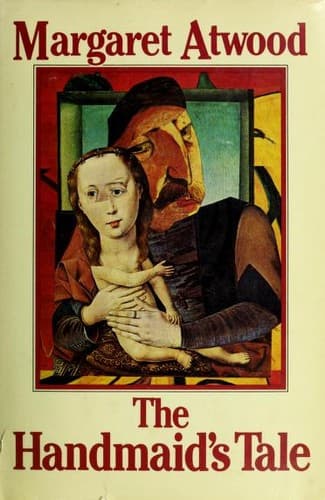
The Handmaid's Tale
Margaret Atwood
Like Kathy, Offred narrates an oppressive system through fragmented memory and small domestic details, letting the horror emerge slowly rather than through spectacle.
Reader-supported: when you buy through links on our site, we may earn an affiliate commission. Learn more
We earn a commission if you buy through these links. Learn more
Find Similar BooksGuide by the Books of the Day editors · Updated · How we write our guides
Ishiguro's quietly devastating novel turns a boarding-school memory into slow-building dread, rewarding readers who value restraint, memory, and emotional precision over plot.
2 creators reviewed Never Let Me Go on YouTube between 2012 and 2018, with 262K views between them. Their opinions are their own; we picked these reviews, we didn't write them.
Never Let Me Go is narrated by Kathy H., who in her early thirties works as a carer, and it moves back and forth between her present work and her memories of childhood at Hailsham. Ishiguro builds the book around an unhurried, memory-driven voice. Kathy is precise about small things: which corridor someone walked down, what a friend said about a cassette, who was left out of a game. The larger picture arrives in fragments, so much of the reading is spent piecing together what kind of place Hailsham was and what its students are being prepared for.
The experience is closer to listening to someone who has decided not to make a fuss than to reading a conventional thriller. Kathy rarely tells you how to feel, and she often stops short of saying the thing that matters most. That restraint is the book's main engine. The gaps between what she says and what she clearly knows create a steady, low-level unease, and the tension lies less in what happens next than in how the characters respond to what they have been told about their lives.
The sentences are plain on the surface and heavy underneath. Reading it is slow and often melancholy, and it rewards attention to repetition and small detail. It will not give you a plot to race through. It asks you to sit with memory, friendship, and the ways people make peace with limits they did not choose.
Kathy's refusal to spell things out is the book's central technique. What she leaves unsaid carries much of the emotional weight, and the reader is asked to notice the distance between her calm tone and what the situation obviously means. Much of the pleasure comes from reading between those lines and realizing how much she has long known without naming it.
Kathy's recollections are shaped by affection, regret, and the need to make sense of the past. She remembers certain friendships and moments with great clarity while skating over others, so the childhood she describes is partly a construction. The book invites readers to wonder what gets preserved, what gets reshaped, and why people return so often to particular scenes.
A central question is how people respond when their future has been decided for them by others. The characters range from quiet acceptance to hopeful bargaining, and Ishiguro treats both with sympathy rather than judgment. The book is less interested in rebellion than in dignity: how ordinary people make meaning inside constraints they cannot escape.
The bond among Kathy, Ruth, and Tommy is tangled with jealousy, loyalty, and misunderstanding. Their relationships shift as they grow, and the emotional history between them colors every later encounter. The friendships feel real and flawed, which is why their collisions hurt so much.
Hailsham's rituals, collections, and creative pursuits matter because they offer the students something of their own. Ishiguro uses these small objects and activities to show how people try to find beauty and value in a life that feels provisional. The attention to ordinary objects gives the book much of its quiet atmosphere.
Some readers find the pace too slow and the emotional restraint frustrating, especially if they expect a conventional mystery or a sharp reveal. The book also gives little explanation of the wider society and science behind its premise, which science fiction readers may see as a deliberate gap and others as a missed opportunity. Because Kathy looks back so wistfully, some passages of nostalgia can feel repetitive. The melancholy tone is consistent, which suits the story but may feel monotonous to readers who prefer more varied emotional registers.
Book details and cover from Google Books.
Ready to read Never Let Me Go?
Get your copy on Amazon, or listen to it on Audible. We earn a commission if you buy through these links.
Margaret Atwood
Like Kathy, Offred narrates an oppressive system through fragmented memory and small domestic details, letting the horror emerge slowly rather than through spectacle.
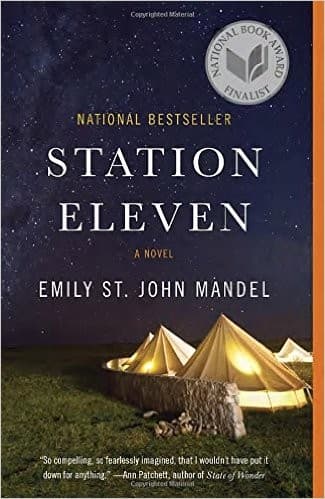
Emily St. John Mandel
A gentle, elegiac novel about memory, art and human connection after collapse, with the same tender attention to what makes ordinary lives precious.
Cormac McCarthy
Spare and devastating, it shares Never Let Me Go's focus on love and endurance under a fate the characters cannot escape.

Kazuo Ishiguro
An artificial friend narrates with innocent precision, raising questions about love, mortality and what it means to be human in Ishiguro's familiar hushed register.