Reader-supported: when you buy through links on our site, we may earn an affiliate commission. Learn more

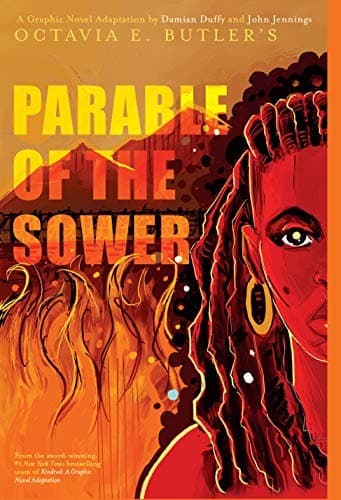
Cover of Parable of the Sower
Buy on AmazonBuy on Bookshop.orgListen on Audible

We earn a commission if you buy through these links. Learn more

Find Similar Books

Parable of the Sower

by Octavia E. Butler

Guide by the Books of the Day editors · Updated · How we write our guides

Octavia Butler's 1993 novel pairs a teenager's hard-won survival with a faith built on change, making climate and social collapse feel close and personal.

What Creators Say About Parable of the Sower

2 creators reviewed Parable of the Sower on YouTube in 2020, with 50K views between them. Their opinions are their own; we picked these reviews, we didn't write them.

Parable of the Sower - Scifi REVIEWDaniel Greene on YouTube36K views · 2020
PARABLE OF THE SOWER OCTAVIA BUTLER BOOK REVIEWLEFT ON READ on YouTube13.9K views · 2020

What It's About

Parable of the Sower, published in 1993, is the first novel in Octavia E. Butler's Earthseed series. It follows Lauren Olamina, a teenager growing up inside a walled neighborhood in a Southern California that has come apart. Water is scarce, steady work is rare, and fire, debt, and desperate strangers are part of ordinary life. Lauren is further set apart by hyperempathy, a condition that makes her feel other people's pain as if it were her own.

Butler tells the story through Lauren's private journal, and the entries carry a second layer: verses of Earthseed, a belief system Lauren begins to shape as she tries to make sense of a world that no longer runs on comfort. The journal form keeps the prose spare and immediate, while the verses give the book its distinctive rhythm, sometimes stern and sometimes quietly hopeful. Butler lets the reader watch an idea take form under pressure rather than handing over a finished philosophy.

Reading it feels less like chasing a plot than like traveling beside someone who observes carefully and decides what she believes. It is bleak in places, with violence and addiction depicted without softening, but it is also patient, practical about survival, and warm toward people who choose to look after one another. Expect to sit with discomfort more than to be thrilled by twists, and expect the story to leave you thinking about how ordinary communities hold together.

Read this if you…

  • want a near-future novel that treats climate and economic collapse as everyday lived reality rather than distant spectacle
  • are drawn to speculative fiction built around character and moral questions more than action set pieces
  • want to see why Butler's work is so often cited as a foundation for Afrofuturism and climate fiction

Skip it if you…

  • need a fast, plot-driven thriller, since the book moves slowly and its journal structure can feel episodic
  • find graphic violence or depictions of addiction too hard to read without some relief

Key Ideas

  1. 1

    Change as the central idea

    Earthseed's core notion is that change is the only constant and that people can learn to shape change instead of only suffering it. Lauren treats adaptation as both a faith and a practical discipline. Butler makes this philosophy feel earned rather than preachy, because each new hardship tests whether the idea actually holds.

  2. 2

    Hyperempathy as a burden and a bond

    Lauren's condition makes other people's pain physically contagious, which turns ordinary cruelty into something she cannot ignore. The trait isolates her from a world that rewards hardness, yet it also pushes her toward empathy as a moral and social project. The novel treats feeling as both a vulnerability and a source of strength.

  3. 3

    Community as the answer to collapse

    Lauren's idea of survival is not lone-wolf self-reliance. It depends on building groups with shared rules, skills, and trust. The book is interested in how small communities form, who gets left out, and what allows cooperation to hold up under strain.

  4. 4

    Economic and social breakdown rendered plainly

    The novel depicts a society where debt, corporate power, and class divisions push people into precarity, and where race and poverty shape who is safe. Butler's extrapolation feels uncomfortably close to present-day anxieties, and much of the book's force comes from that closeness.

Limitations

Some readers find the episodic travel structure uneven, and the Earthseed verses can read as didactic, with a religious framing that stays somewhat thin compared to the novel's social detail. The world is closely tied to American anxieties of the early 1990s, so some specifics feel dated even though its concerns have aged well. The book also leaves many questions open, so readers wanting a tidy resolution may feel unsatisfied.

Questions Readers Ask

Do I need to read the sequel?
Not strictly. This novel has its own complete arc and can be read alone. Parable of the Talents, published in 1998, continues Lauren's story and develops the Earthseed material further. Readers who finish this one often want to continue, and the sequel is generally considered darker in tone.
Is Parable of the Sower still relevant?
Yes. Its concerns with water scarcity, debt, housing insecurity, and political polarization make it feel current, which is a big reason readers come to it now. Butler's writing about climate and inequality explains why it is still widely taught and discussed.
Published
1993
ISBN
9780704344211
Difficulty
beginner
Category
Fiction

Book details and cover from Google Books.

Ready to read Parable of the Sower?

Get your copy on Amazon, or listen to it on Audible. We earn a commission if you buy through these links.

Books Like Parable of the Sower

View all →
Cover of The Ministry for the Future

The Ministry for the Future

Kim Stanley Robinson

Like Butler's novel, it confronts climate catastrophe head-on and asks how ordinary institutions might respond. Its sweeping, realistic account of collapse and recovery will appeal to readers drawn to Lauren's grounded view of a damaged world.

Cover of The Water Knife

The Water Knife

Paolo Bacigalupi

Set in a drought-stricken American Southwest where water is power, it shares Parable of the Sower's vision of scarcity driving violence and displacement. Its gritty, morally complicated characters echo Lauren's struggle to survive with her principles intact.

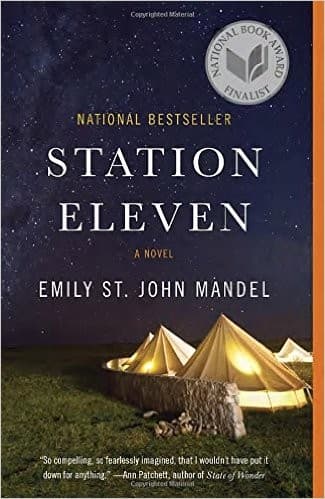
Cover of Station Eleven

Station Eleven

Emily St. John Mandel

It imagines life after a societal collapse with a humane, observant eye, focusing on what communities choose to preserve. Readers who valued Lauren's belief in building something lasting from ruin will find the same hopeful undercurrent.

Cover of The Road

The Road

Cormac McCarthy

A spare, bleak journey through a ruined landscape, driven by a father's moral commitment to his child. Its stark prose and focus on goodness amid collapse suit readers who admired Lauren's steadfast inner code.

Explore More