
Thinking, Fast and Slow
Daniel Kahneman
Written by one half of the partnership at the heart of The Undoing Project, it explains the heuristics and biases the two men uncovered, with the same clarity and curiosity about how intuition goes wrong.
Reader-supported: when you buy through links on our site, we may earn an affiliate commission. Learn more
We earn a commission if you buy through these links. Learn more
Find Similar BooksGuide by the Books of the Day editors · Updated · How we write our guides
A gripping account of the Israeli psychologists whose research on flawed judgment reshaped economics, medicine, and policy, and of the friendship behind it.
2 creators reviewed The Undoing Project on YouTube between 2016 and 2021, with 46.6K views between them. Their opinions are their own; we picked these reviews, we didn't write them.
The Undoing Project is Michael Lewis's account of Daniel Kahneman and Amos Tversky, two Israeli psychologists who, starting in the late 1960s, set out to show that people judge uncertain situations in systematic ways that depart from what statistics and rational choice would predict. Lewis tells their story as a biography of a friendship and a working partnership, covering their early lives, the habit of arguing until one of them gave way, and the slow acceptance of their ideas by economists.
Lewis's method is narrative. He moves between the men's personalities and the experiments that made them known, following how their questions about judgment took shape and how the results were received. The prose is brisk and scene-driven, closer to a novel about two temperaments than a textbook. Lewis is especially interested in how different the two were: Tversky quick and dazzling, Kahneman more cautious and methodical, and how that difference powered their work.
Reading it feels like watching a famous intellectual partnership rise, flourish, and fracture, then get reassembled in memory. Readers who know Thinking, Fast and Slow will recognize many ideas but gain the human setting behind them. The science is explained without requiring statistical training, though the book rewards close attention.
Kahneman and Tversky argued that people estimate probabilities by relying on rules of thumb, such as judging how typical something seems or how easily examples come to mind. These shortcuts are often useful but produce predictable, systematic errors that even trained experts make. Lewis shows how the pair built experiments to expose these patterns one by one.
Their prospect theory held that people evaluate outcomes relative to a reference point and feel losses more sharply than equivalent gains. This challenged the standard economic picture of a perfectly rational decision-maker. The book explains why this idea was so disruptive to a discipline built on rational models.
A central thread is how two very different minds worked together, testing each other's intuitions and arguing over examples until the ideas held up. Lewis presents their partnership as a model of how rigorous thinking can be sharpened through friction and mutual challenge. It is as much about process as about conclusions.
The book traces how their findings influenced fields far from the lab, including medicine, sports analytics, and government policy. Lewis suggests that once people understood how judgment goes wrong, they began designing systems to correct for it. This is where the story connects to the broader modern interest in data and decision-making.
Lewis leans heavily on personal drama, and some readers find the portrait of the two men more novelistic than scholarly. Because Tversky died in 1996, much of his side of the story comes through recollection and secondhand accounts rather than his own words. The book also gives limited space to later debates about how robust some heuristics findings are, including criticism from researchers who argue that people reason better than these experiments suggest. Readers wanting that wider scientific context should look elsewhere.
Book details and cover from Google Books.
Ready to read The Undoing Project?
Get your copy on Amazon, or listen to it on Audible. We earn a commission if you buy through these links.
Daniel Kahneman
Written by one half of the partnership at the heart of The Undoing Project, it explains the heuristics and biases the two men uncovered, with the same clarity and curiosity about how intuition goes wrong.
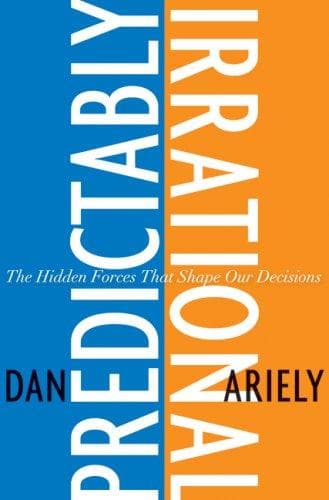
Dan Ariely
It takes the Kahneman and Tversky tradition of behavioural economics and applies it to everyday choices, showing how predictable errors shape prices, promises and purchases in ways readers will recognise.
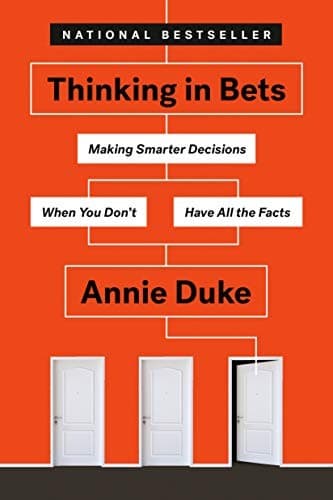
Annie Duke
Duke, a former professional poker player, examines how people judge decisions under uncertainty, echoing the book's central idea that good reasoning must account for what we cannot know.
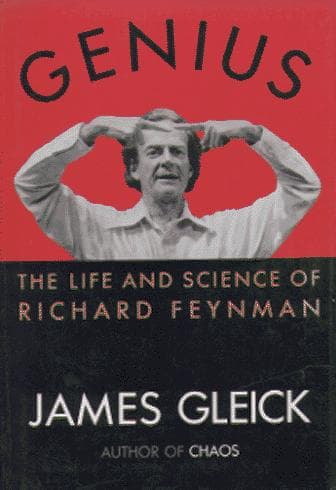
James Gleick
A lively biography of the physicist Richard Feynman that, like The Undoing Project, shows how a single extraordinary mind works and how science is shaped by its personalities and rivalries.