
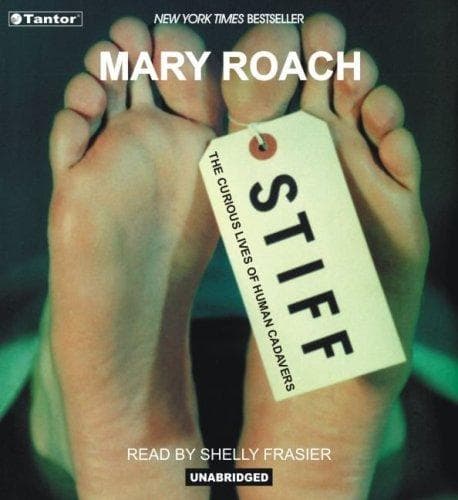
Stiff
Mary Roach, M Roach
Like Blum, Roach takes a grisly subject and explains the science behind it with humour and curiosity, showing how the human body is studied after death, much as Norris and Gettler did in their laboratory.
Reader-supported: when you buy through links on our site, we may earn an affiliate commission. Learn more
We earn a commission if you buy through these links. Learn more
Find Similar Booksby Deborah Blum
Guide by the Books of the Day editors · Updated · How we write our guides
A well-paced account of how New York's 1920s medical examiner's office, with chemist Alexander Gettler, turned poison detection into real forensic science, and why that history still matters.
2 creators reviewed The Poisoner's Handbook on YouTube between 2010 and 2021, with 2.8K views between them. Their opinions are their own; we picked these reviews, we didn't write them.
The Poisoner's Handbook (2010) tells how New York City's medical examiner's office changed after 1918, when Charles Norris became chief medical examiner and brought in Alexander Gettler, a toxicologist who made chemical testing a dependable part of death investigations. Before that, deaths that looked like poisoning were often never examined closely. The office was entangled with Tammany Hall politics, and arsenic or other poisons could pass as natural causes.
Blum builds the book around cases and the chemistry that solved them. You get the reasoning behind detection methods, why some poisons were nearly impossible to prove, and how the lab's findings had to survive public scrutiny and courtroom challenges. The prose is brisk and narrative, closer to a crime story than a textbook, and the science is explained at a level a general reader can follow.
The experience is less a tidy thriller than a portrait of an institution slowly becoming honest. Readers hoping for a full biography of either man, or a technical manual of toxicology, will find less than they expect. As an account of how forensic science became a public good in the Jazz Age, it is vivid, well paced, and easy to finish in a few sittings.
The book shows how investigations once relied on appearance, rumor, and quick certificates. Norris and Gettler pushed for systematic testing of bodies and evidence, so that a death's cause rested on measurable results rather than assumptions about who had motive.
Gettler's refined methods for finding arsenic and other substances in tissue are the book's core technical thread. Blum explains why a reliable test mattered as much as a clever idea, since a result had to hold up under cross-examination and public doubt.
Tammany Hall patronage shaped who got jobs and who was believed in the coroner's world. The book is a useful case study in how institutions resist expertise, and how a few determined people can change practice through persistence and visible results.
Radium, carbon monoxide, and bootleg alcohol brought hazards that ordinary people met at work and at home. Blum connects these cases to the broader question of who is protected when industry and public health collide.
Rather than lecturing, the book uses scenes, personalities, and stakes to carry the science. The effect is that technical points land as plot turns, which makes the chemistry feel more like detection than instruction.
The book centers on New York City and a fairly small group of people, so it says less about forensic practice elsewhere in the country or the world. Its narrative style compresses timelines and leans on dramatic scene-setting, which can make some stories feel more streamlined than the historical record. The chemistry is simplified for general readers, so specialists may want more precise methods. Some readers also find the later chapters less focused than the opening, and the personal lives of Norris and Gettler receive less attention than their professional work.
Book details and cover from Google Books.
Ready to read The Poisoner's Handbook?
Get your copy on Amazon, or listen to it on Audible. We earn a commission if you buy through these links.
Mary Roach, M Roach
Like Blum, Roach takes a grisly subject and explains the science behind it with humour and curiosity, showing how the human body is studied after death, much as Norris and Gettler did in their laboratory.
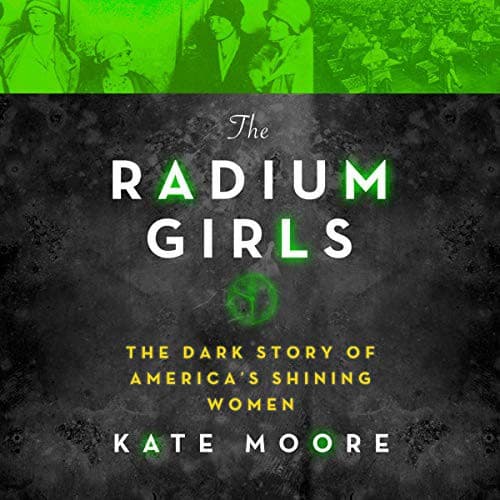
Kate Moore
This account of factory workers poisoned by radium paint in the 1920s shares The Poisoner's Handbook's focus on industrial poisons, the fight for scientific truth, and the institutions that resisted it.
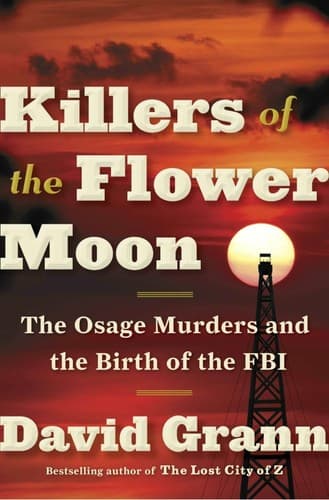
David Grann, Luis Murillo Fort
Grann reconstructs a 1920s murder investigation in Oklahoma with the same archival precision and page-turning pace, showing how early forensic work and institutional corruption shaped justice.
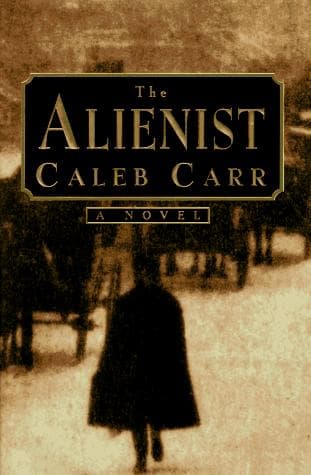
Caleb Carr
Set in 1890s New York, this thriller follows investigators using early forensic methods against a killer, offering the same gritty city atmosphere and scientific-minded detection that Blum captures.