
We earn a commission if you buy through these links. Learn more
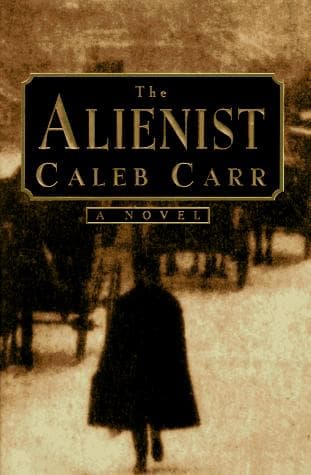
The Alienist
by Caleb Carr
A historical thriller that treats a 1896 New York murder case as a study of the criminal mind, with period detail that makes the city itself a character.
What It's About
The Alienist is a 1994 historical thriller set in New York City in 1896, when the city was growing fast and its police force was being reformed under a young commissioner named Theodore Roosevelt. When a series of murders claims boys drawn from the city's street life, a psychologist of the era, Dr. Laszlo Kreizler, is brought in to think about the killer's mind. He recruits a newspaper illustrator, John Moore, who narrates, and a young woman working in the police department, Sara Howard, to help build the case.
Carr tells the story in Moore's first-person voice, looking back on those months with a reporter's eye for detail. Much of the book's texture comes from its setting: tenements and station houses, the politics of a city remaking its institutions, and the crude forensics and vocabulary of the day. The pace is deliberate. Long stretches go to interviews, observation, and the slow assembling of evidence, which suits readers who enjoy process as much as revelation.
The experience is closer to a dense historical novel with a murder mystery at its center than to a fast puzzle. Carr does not shy away from violence, and the investigation keeps returning to the abuse of children, which makes it an unsettling read at times. What lingers is less the whodunit than the argument between older moral explanations of evil and the emerging idea that a mind can be studied and understood.
Read this if you…
- you enjoy historical fiction where the period is as important as the plot
- you are curious about how early psychology and crime detection first met
- you can tolerate dark material and a slow, layered build
Skip it if you…
- you want a fast, lean thriller with short chapters and quick reveals
- you find graphic accounts of violence against children hard to read
Key Ideas
- 1
Crime as a problem of the mind
Kreizler approaches murder as something to be understood through psychology rather than judged only as wickedness. The novel dramatizes the early friction between this new discipline and a police culture that trusted fists, rumor, and instinct. Readers see how hard it was to argue that a killer's behavior had causes that could be traced.
- 2
Childhood and the making of violence
A running concern is how neglect and cruelty in early life can shape adult violence. The book treats the victims as children first, which gives the investigation its moral weight. It also asks whether understanding how a person became dangerous changes what society owes to the vulnerable.
- 3
Gilded Age New York in full texture
Carr builds a city of immigrant neighborhoods, political machines, wealth on one side and poverty on the other. Corruption and class shape who gets listened to and who gets ignored. The setting is researched in detail and feels lived in rather than decorative.
- 4
Reform, politics, and the new police
The investigation runs against a backdrop of a police department trying to professionalize under pressure from reformers and newspapers. Characters must weigh institutional loyalty against doing the right thing. The politics are real, though they sometimes serve the plot more than they explore the issues.
- 5
An unlikely team of outsiders
The core group is built from people who do not fit neatly into their professions: a doctor with unorthodox methods, a reporter, and a woman in a role that others resist. Their friction and partnership drive much of the book's emotional engagement and give it a distinctive voice.
Limitations
Critics often point to length and pacing: the historical detail is thorough, and some readers find the middle sections slow. The violence is graphic and the abuse themes are heavy, which is a deliberate choice but not one everyone will want. The psychology is of its era and reflects ideas that have since been revised or discarded, so it reads more as a period perspective than as settled science. Some characters are drawn broadly, and the real historical figures appear in ways that serve the story more than a biography would.
Questions Readers Ask
- Is The Alienist too dark to enjoy?
- It is dark. The murders are violent, and the investigation repeatedly confronts the abuse of vulnerable children. Many readers find the tension and atmosphere rewarding, but it is not a light read. If you are sensitive to graphic content, consider whether you are ready for it before starting.
- How does it compare to The Devil in the White City?
- Erik Larson's book is nonfiction about the 1893 Chicago fair and a notorious killer, while The Alienist is a novel set in 1896 New York. Both share a rich period setting and a serious interest in how cities and crime intersect. Carr's book leans more toward a crime story with a fictional team at its center.
- Published
- 1994
- ISBN
- 9780751593570
- Difficulty
- intermediate
- Category
- Fiction
Book details and cover from Google Books.
Ready to read The Alienist?
Get your copy on Amazon, or listen to it on Audible. We earn a commission if you buy through these links.