
We earn a commission if you buy through these links. Learn more
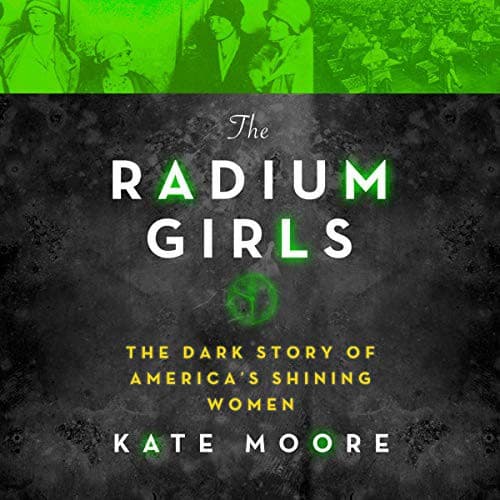
The radium girls
by Kate Moore
Guide by the Books of the Day editors · Updated · How we write our guides
A gripping, carefully researched account of the young women who painted glowing watch dials, were poisoned by radium, and forced an industry to answer for it.
What Creators Say About The radium girls
2 creators reviewed The radium girls on YouTube between 2018 and 2019, with 2.6K views between them. Their opinions are their own; we picked these reviews, we didn't write them.
What It's About
The Radium Girls follows the young women hired in the 1910s and 1920s to paint luminous numbers on watch and clock dials at factories in New Jersey and Illinois. Taught to shape their brush tips with their lips, they swallowed radium daily, believing it was harmless, and many developed severe illnesses. Moore builds the account around several of these workers and the lawyers, doctors, and reporters who eventually took up their cases.
The approach is narrative history. Moore draws on archival records, court papers, and family accounts to reconstruct scenes, and she gives the women distinct personalities so that the company's responses and the medical disputes feel personal rather than abstract. Expect a page-turner with real emotional weight, not a dense technical treatise on radioactivity.
Reading it is an experience of rising anger and grief, shaped by the gap between what the companies knew and what they admitted. The book also tracks how a handful of cases pushed the country toward workplace protections, so it reads as both a tragedy and a story about how change actually happens. Some passages are hard to read, especially the descriptions of physical decline.
Read this if you…
- want a gripping, well-sourced history that reads like a thriller
- are interested in workplace safety, corporate accountability, or early medical history
- want to understand how ordinary workers fought powerful employers a century ago
Skip it if you…
- want a scientific explanation of how radioactivity works
- prefer dry, analytical history without personal stories or narrative scenes
Key Ideas
- 1
Knowledge kept behind closed doors
The book's central argument is that the companies behind radium dials understood the danger well before they told their workers anything. Moore traces how internal medical advice, correspondence, and public denials were managed to protect profits. Her point is less about one villain than about a system in which the people with the most information had the most reason to stay quiet.
- 2
Radium as a symbol of progress
Radium was sold in the early twentieth century as a glowing, almost magical substance, and dial work was treated as skilled, clean, even glamorous employment. The book shows how that image kept workers reassured long after symptoms appeared. It is a useful reminder that branding can be as powerful as chemistry in deciding who gets hurt.
- 3
Women whose bodies became evidence
Many of the women were young, some barely out of their teens, and their bodies became the evidence in arguments about radiation. Moore gives weight to their own letters, accounts, and decisions to sue, which were often dismissed at the time. The result is a portrait of people who had to fight to be believed about injuries that doctors and employers were slow to name.
- 4
Safety rules won through suffering
The lawsuits and public attention around these cases helped push occupational safety thinking and new limits on radiation exposure forward. Moore is careful to show that change was slow and uneven, and that many victims received little in return. The book asks readers to see regulation as something won through specific, painful cases rather than handed down from above.
Limitations
Some critics note that the narrative leans on dramatic framing and emotionally vivid reconstruction, so it reads more like advocacy than neutral analysis. The focus is mainly on the American plants and legal fights, with less coverage of the wider international radium industry. The medical and physics explanations are simplified for a general audience, and readers wanting the full clinical detail or the defense's side in depth may need to look elsewhere.
Questions Readers Ask
- Is The Radium Girls too grim to read?
- It is emotionally heavy, and the descriptions of illness and suffering are detailed. Moore does not dwell on gore for its own sake, though, and the legal struggle gives the story momentum. Most readers find it difficult in places but hard to put down.
- Do I need background knowledge of radiation to understand it?
- No. Moore explains what radium was, why it glowed, and what it did to the body in plain language. You will follow the story without any prior science training.
- Is the book still relevant today?
- Yes. Its themes of corporate disclosure, workplace health, and the cost of trusting a product's marketing remain current. It also serves as a clear case study for anyone interested in how occupational safety rules came about.
- Published
- 2016
- ISBN
- 9781471153877
- Difficulty
- beginner
- Category
- History
Book details and cover from Google Books.
Ready to read The radium girls?
Get your copy on Amazon, or listen to it on Audible. We earn a commission if you buy through these links.