
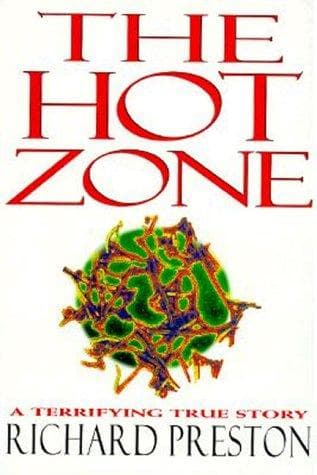
The Hot Zone
Richard Preston, Richard Preston
Like The Ghost Map, it turns a disease outbreak into a tense, step-by-step investigation, following scientists who race to trace the source of a deadly virus before it spreads.
Reader-supported: when you buy through links on our site, we may earn an affiliate commission. Learn more
We earn a commission if you buy through these links. Learn more
Find Similar BooksGuide by the Books of the Day editors · Updated · How we write our guides
A gripping popular history of how a skeptical doctor and a hand-drawn street map challenged Victorian ideas about disease, showing how cities, data, and sanitation shaped modern public health.
2 creators reviewed The Ghost Map on YouTube between 2007 and 2023, with 146.8K views between them. Their opinions are their own; we picked these reviews, we didn't write them.
The Ghost Map is a narrative history centred on the cholera outbreak that struck the Broad Street area of Soho in late summer 1854. Steven Johnson follows the epidemic street by street and death by death, and at the centre of it is John Snow, a physician who doubted the prevailing belief that disease spread through foul air. Snow's attempt to find the source of the outbreak becomes the book's engine, and the story keeps the reader turning pages because the investigation is genuinely uncertain until nearly the end.
Johnson's method is to move between scales. One chapter might dwell on the microscopic biology of the bacterium, the next on the layout of a Victorian neighbourhood, and the next on the politics of water companies and sanitary reform. This shifting zoom gives the book its character: it reads partly as detective work, partly as urban history, and partly as an essay on how systems and networks behave. The prose is brisk and visual, and the book's map-based argument makes it feel like watching a case being built.
The experience is less like reading a dense academic study and more like being walked through an argument by an enthusiastic guide who wants you to see what he sees. Expect vivid scenes, plenty of context, and a steady pace. Readers who want a rigorous, source-by-source scholarly account may find the storytelling more smooth than they would like, but as an introduction to how modern epidemiology was born, the book does its job well.
Snow plotted the location of each death on a street map and saw that the victims clustered around a single public water pump rather than spreading through the area by bad air. The book shows how spatial evidence can overturn an authority's theory when the data is gathered carefully and displayed clearly. Johnson presents this as a model of reasoning that goes beyond medicine and still applies to any field that depends on evidence about populations.
The dominant explanation of the time blamed miasma, or noxious air from decay. Snow argued that the disease was transmitted by contaminated water, and the book walks through how he tested that idea, including the comparisons he drew between households that drew from different sources. Johnson keeps the science accessible while making clear how hard it was to persuade people who already had a settled explanation.
Johnson uses the outbreak to argue that a city is a system of interlocking flows, including water, waste, people, and information. Problems in one part of the network can spread through pipes, streets, and daily habits in ways that are invisible from ground level. This idea gives the book a wider reach, linking nineteenth-century sanitation to later thinking about infrastructure and the modern city.
The book shows that defeating cholera depended not only on one insight but on public works, including sewer building and water supply reform, and on officials willing to act on imperfect knowledge. Johnson highlights how private interests, civic institutions, and local people all shaped the outcome. The result is a picture of public health as a collective achievement, built slowly and sometimes against resistance.
Some critics argue that Johnson leans toward a heroic version of Snow and gives less weight to the wider community of sanitarians, engineers, and local officials who also contributed. The book's broader claims about cities as networks and its analogies to modern technology can feel more sweeping than the evidence strictly supports. Because it is a popular history, it simplifies some scientific and political detail and does not engage deeply with historians' debates. Readers wanting full scholarly nuance will need to look elsewhere for it.
Book details and cover from Google Books.
Ready to read The Ghost Map?
Get your copy on Amazon, or listen to it on Audible. We earn a commission if you buy through these links.
Richard Preston, Richard Preston
Like The Ghost Map, it turns a disease outbreak into a tense, step-by-step investigation, following scientists who race to trace the source of a deadly virus before it spreads.
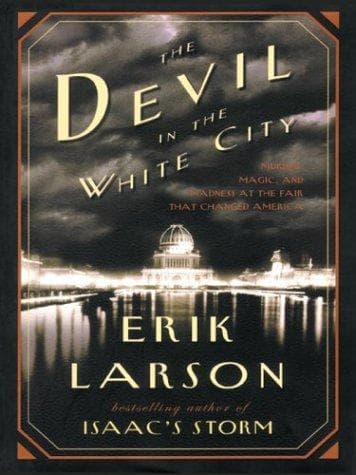
Erik Larson
Larson, like Johnson, braids a historical city with a dark, real-life mystery, weaving together urban ambition and human danger in late nineteenth-century America.
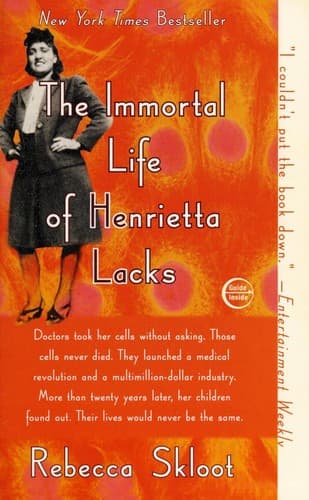
Rebecca Skloot
It pairs a scientific breakthrough with the personal stories of ordinary people, the same human-scale focus that makes Johnson's account of the Broad Street outbreak so compelling.
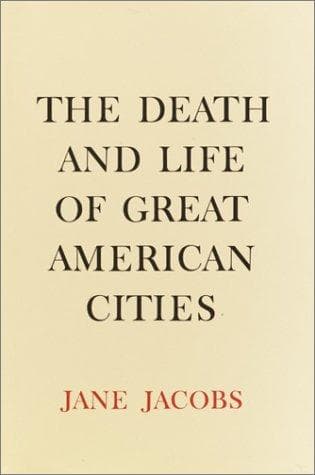
Jane Jacobs
Jacobs argues that neighbourhoods, streets and everyday contact make cities healthy, an idea that echoes Johnson's view that urban design and public health are deeply connected.