
We earn a commission if you buy through these links. Learn more
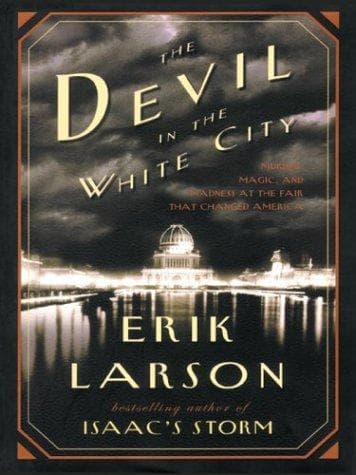
The Devil in the White City
by Erik Larson
Guide by the Books of the Day editors · Updated · How we write our guides
Erik Larson turns Chicago's 1893 World's Fair and a hidden serial killer into a gripping, carefully researched history that reads like a thriller.
What Creators Say About The Devil in the White City
2 creators reviewed The Devil in the White City on YouTube between 2022 and 2025, with 14.8K views between them. Their opinions are their own; we picked these reviews, we didn't write them.
What It's About
Despite the fiction label in your listing, The Devil in the White City is narrative nonfiction. Erik Larson tells the true story of Chicago's 1893 World's Fair, the Columbian Exposition, which had to be built almost from scratch in a few years to show America's ambition to the world. The book follows two men who shaped the city in very different ways: Daniel Burnham, the architect who drove the project to completion, and H. H. Holmes, a charming con man who used the fair's crowds to lure victims to a hotel he built nearby.
Larson alternates chapters between the two, so the construction saga and the slow-building dread of the murders run side by side. The effect is closer to a thriller than a textbook. He spends real time on the logistics of the fair, from funding fights and rivalry with other cities to engineering and the scramble for commissions, and he uses the everyday texture of 1890s Chicago, like rail schedules and gaslight, to build a strong sense of place.
Reading it feels like being pulled forward by a story that knows where it is going. The tension comes from pacing and the choice of detail rather than invention. Larson leans on period records and newspapers, and he reconstructs some scenes from them, so treat small moments as informed interpretation. Expect a popular history voice rather than an academic one.
Read this if you…
- enjoy narrative history that reads like a novel
- want a vivid picture of Gilded Age Chicago and how big projects got built
- are curious about how a predator could hide in a crowded, growing city
Skip it if you…
- want a dense academic account of the fair's economics, politics, or architecture
- find true crime uncomfortable or prefer a book with no graphic violence
Key Ideas
- 1
Ambition built against a deadline
The fair was a race against time, money, and skepticism. Larson shows how Chicago wanted to prove itself after the 1871 fire and how Burnham's White City became a statement of civic ambition, with all the compromises that came with building something so large so quickly.
- 2
Two men shaped by the same moment
Burnham and Holmes are mirrored figures. Both were opportunists who understood how a booming, spectacle-hungry city could be used. One builds for public admiration, the other for private gain, and the contrast gives the book its central tension.
- 3
A city that did not look too closely
Chicago's huge, transient population made disappearances easy to overlook. The book examines how weak record-keeping and indifference allowed a predator to operate in plain sight, which makes the crimes feel uncomfortably plausible.
- 4
Suspense created through structure and selection
Larson's alternating chapters and careful choice of detail make history read like a novel. He withholds and reveals information with control, so the reader feels the pull of the story without the book inventing its drama.
- 5
Progress and the divides it hid
The fair celebrated industry and progress while its planners kept the city's poverty, racism, and class lines largely out of view. The book's celebratory surface sits on top of those tensions, which gives its historical picture more depth.
Limitations
Some critics find the Holmes thread sensational, and the murder scenes can feel like they are pulled forward for effect. The Burnham chapters sometimes slow down under the weight of construction detail. The book also gives the fair's wider social story, including who was excluded and who was left out of the city's prosperity, less space than some readers would like. Later historians have questioned certain details about Holmes, so it is worth treating the book as a strong popular account rather than the final word.
Questions Readers Ask
- Is The Devil in the White City a novel?
- No. It is nonfiction, a narrative history of the 1893 Chicago World's Fair and the murders committed by H. H. Holmes during that period. Larson builds the story from historical records, and it reads with the momentum of a thriller, which is why it is often mistaken for fiction.
- Is the book still worth reading today?
- Yes, especially if you are interested in urban history, large public projects, or how cities handle rapid growth. The fair's themes of ambition, spectacle, and the costs hidden behind progress still feel current, and the book works well even if you already know the basic outline of the Holmes case.
- Published
- 2003
- ISBN
- 9780609608449
- Difficulty
- beginner
- Category
- Fiction
Book details and cover from Google Books.
Ready to read The Devil in the White City?
Get your copy on Amazon, or listen to it on Audible. We earn a commission if you buy through these links.