
We earn a commission if you buy through these links. Learn more
The Hot Zone
by Richard Preston, Richard Preston
On screen: Outbreak (film, 1995)
Guide by the Books of the Day editors · Updated · How we write our guides
A gripping, reportorial look at Ebola and other hemorrhagic viruses, built like a thriller, that shows how close ordinary people came to disaster.
What Creators Say About The Hot Zone
2 creators reviewed The Hot Zone on YouTube between 2020 and 2025, with 3.9K views between them. Their opinions are their own; we picked these reviews, we didn't write them.
What It's About
The Hot Zone is narrative nonfiction about filoviruses, chiefly Ebola, and the people who track them. Preston moves between the 1976 outbreak in what was then Zaire, a Marburg case in Kenya, and a 1989 scare at a primate facility in Reston, Virginia, where the virus turned up in monkeys brought in from abroad. The threads connect into one story about how a little-known pathogen surfaces and how institutions respond.
The approach is closer to a techno-thriller than a textbook. Preston builds scenes around field doctors, pathologists, and biosafety officers, and he writes in short, vivid passages that put the reader inside rooms, jungles, and laboratories. The biology is explained as it arrives, so you learn how the virus attacks the body without needing a background in virology. The pace is fast and the tone often ominous, with frequent foreshadowing.
Reading it is an unsettling experience, the kind that makes you notice hospitals and airports for a while afterward. It works best as a first encounter with the subject. It is a portrait of a frightening virus and of the people trying to contain it, rather than a systematic account of the science, policy, or global health politics around it.
Read this if you…
- want a gripping introduction to Ebola and related viruses without a science background
- enjoy narrative nonfiction that reads like a disaster or medical thriller
- are curious how field teams and biosafety labs handle dangerous pathogens
Skip it if you…
- want a rigorous, up-to-date account of Ebola after the 2014 West African epidemic
- prefer measured prose and want every dramatic claim carefully sourced
Key Ideas
- 1
Emergence from unknown natural reservoirs
A central interest is how a virus that rarely appears can erupt into human populations, and how little researchers knew about where it lived between outbreaks. The book keeps returning to that uncertainty, which is a large part of its sense of dread and of why the subject still feels open.
- 2
Containment depends on people and procedure
The book is as much about the human side of biosafety as about the virus. Preston pays close attention to protective gear, containment levels, and the decisions made under pressure, showing how a single lapse or a tired worker can become the difference between a contained scare and a crisis.
- 3
Fear as the book's organizing force
Preston frames the virus as a dread object and uses suspense to carry the reader forward. This rhetorical choice drives the book's appeal, and it is also the source of much of the criticism it has received about proportion and tone.
- 4
Risk made personal through individual scientists
Rather than explaining epidemiology in the abstract, the narrative follows specific researchers and clinicians through their work. That makes distant events feel immediate, though it also means the story is shaped by which people the author chose to foreground.
Limitations
The book predates the large West African epidemic of 2014 to 2016 and later outbreaks, so its picture of treatment, vaccines, and the virus's reach is dated. Its dramatic style has drawn criticism: some scientists and reviewers have argued that it overstates the threat to the general public, and certain episodes have been disputed on detail. Its focus on a few characters also gives less space to the many African clinicians, researchers, and local communities who did much of the work. Treat it as a gripping starting point rather than the final word.
Questions Readers Ask
- Is The Hot Zone still worth reading?
- Yes, for the basics of how filoviruses behave and for the history of outbreak containment. It predates the 2014 to 2016 West African epidemic and later advances in vaccines and treatment, so pair it with newer reporting if you want the current picture.
- How does it compare to Laurie Garrett's The Coming Plague?
- Garrett covers many emerging diseases and the politics of global health in depth, while Preston narrows to a few filoviruses and tells them as scenes. Choose Garrett for the big picture and Preston for a faster, character-led story about a single frightening virus.
- Published
- 1994
- ISBN
- 9781446436929
- Difficulty
- beginner
- Category
- Ebola virus disease
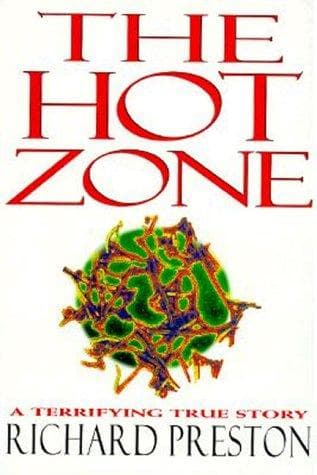
Book details and cover from Google Books.
Ready to read The Hot Zone?
Get your copy on Amazon, or listen to it on Audible. We earn a commission if you buy through these links.