Reader-supported: when you buy through links on our site, we may earn an affiliate commission. Learn more

Cover of The Gene
Buy on AmazonBuy on Bookshop.orgListen on Audible

We earn a commission if you buy through these links. Learn more

Find Similar Books

The Gene

by Siddhartha Mukherjee

Medical
★★★★★4.5 (7)

Guide by the Books of the Day editors · Updated · How we write our guides

A clear, humane history of how humans came to understand heredity, told through science, eugenics, and Mukherjee's own family story of mental illness.

What Creators Say About The Gene

2 creators reviewed The Gene on YouTube between 2023 and 2024, with 1.7K views between them. Their opinions are their own; we picked these reviews, we didn't write them.

The Gene by Siddhartha Mukherjee: 10 Minute SummarySnapTale Audiobook Summaries on YouTube1.2K views · 2023
Summary of The Gene: An Intimate History, by Siddhartha MukherjeeStrategic Summaries on YouTube500 views · 2024

What It's About

The Gene traces how people moved from guessing that traits pass from parents to children to a molecular account of what genes are and how they work. Mukherjee moves roughly chronologically, from ancient theories and early breeding practice through Mendel's pea experiments, the chromosome work of the early 1900s, the double helix, and the sequencing of the human genome. The science is explained patiently, with analogies that let a non-specialist follow the logic.

What sets the book apart is its braid of personal material. Mukherjee's family history of severe mental illness runs alongside the scientific narrative and turns abstract questions into personal ones: how much of a person is written in DNA, and what can be known or predicted about a life. These memoir passages are not decoration. They keep returning to the gap between what a laboratory can show and what a family actually lives with.

The experience is that of reading a long, carefully paced narrative nonfiction book with a strong authorial voice. The prose is lyrical in places and sometimes ornate, and the length rewards patience. It is less a manual than an extended essay on what heredity means, and it leaves you with more questions about genetic medicine and selection than with settled answers.


Read this if you…

  • want a deep, patient history of how the idea of the gene came to be
  • are curious about the ethics of genetic testing and selection
  • like nonfiction that mixes scientific explanation with personal memoir

Skip it if you…

  • want a concise, practical guide to current genetic testing or DNA services
  • find long historical narratives with extensive scientific detail tiring

Key Ideas

  1. 1

    Heredity was debated long before genes had names

    Long before anyone knew what a gene was, thinkers argued about whether traits blended between parents or came in discrete packets. Mendel's careful counting in pea plants offered a answer that was ignored for decades until it was rediscovered around 1900. The book treats this slow, often accidental progress as the real story, showing how ideas gained meaning only once the right instruments and questions appeared.

  2. 2

    Genes became real through chromosomes, then molecules

    The concept of a gene moved from an abstract unit of inheritance to a physical thing sitting on chromosomes, and then to a molecule with a structure that could be read. Experiments on fruit flies, along with the work that revealed the double helix, show how a theory became testable. Mukherjee emphasizes that the discovery was collaborative, uneven, and sometimes contested.

  3. 3

    The eugenics past still shapes genetic choices

    The same scientific tools that explained heredity were used to justify forced sterilization and discriminatory policy. Mukherjee presents this history as a warning rather than a footnote. He asks what it means to make decisions about which traits to select or prevent, and who gets to make them, when today's technologies are far more precise than those of the early twentieth century.

  4. 4

    Sequencing a genome is not the same as predicting a life

    Mapping the human genome revealed the scale of what we still don't understand. Most traits and diseases depend on many genes interacting with each other and with environment, which makes individual forecasts unreliable. The book argues that the distance between laboratory knowledge and real-world meaning is where much of the public debate about genetics goes wrong.

Limitations

Some readers find the book's length and sweep uneven, with historical sections that spend many pages on figures and rivalries before reaching the science that matters most to them. The memoir passages are powerful but can feel like they tug the narrative away from its main argument. Published in 2016, the book predates many advances in gene editing and large-scale genomic research, so its discussion of the frontier is dated and should be supplemented with newer sources.

Questions Readers Ask

Is The Gene still relevant if the science has moved on?
Yes, mostly for its history and its ethical framing. The book is less useful for the latest techniques, since gene editing and genomic research have advanced considerably since publication. Its value lies in showing how the central concepts developed and why earlier generations misjudged them, which helps readers evaluate current claims more critically.
How does it compare with Mukherjee's The Emperor of All Maladies?
Both are long, literary histories built around a single scientific concept and a strong narrative voice. The Emperor of All Maladies follows cancer as a disease and a treatment problem, while The Gene is more abstract, focused on the idea of heredity and its social consequences. Readers who enjoyed the first will find the same storytelling style here, with more personal material.
Published
2016
ISBN
9781476733531
Difficulty
intermediate
Category
Medical

Book details and cover from Google Books.

Ready to read The Gene?

Get your copy on Amazon, or listen to it on Audible. We earn a commission if you buy through these links.

Books Like The Gene

View all →
Cover of The Immortal Life of Henrietta Lacks

The Immortal Life of Henrietta Lacks

Rebecca Skloot

Like The Gene, it pairs medical history with a deeply personal family story, tracing how one woman's cells transformed biology and raising the same hard questions about consent, ethics and who science serves.

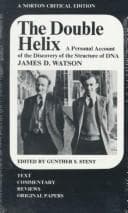
Cover of The double helix

The double helix

James D. Watson, Grover Gardner narrator

A candid first-hand account of the race to find DNA's structure, a key episode in The Gene, showing the rivalries and personalities Mukherjee sketches, told by one of the participants.

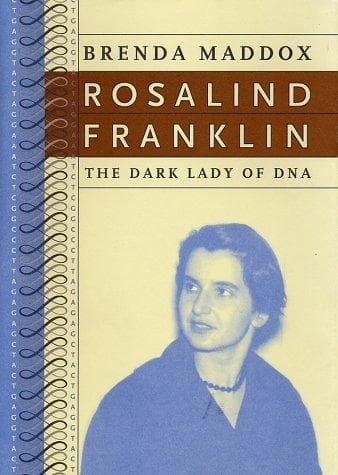
Cover of Rosalind Franklin

Rosalind Franklin

Brenda Maddox

A full biography of the scientist whose X-ray work was central to the double helix, filling in the human story behind a chapter readers of The Gene will remember.

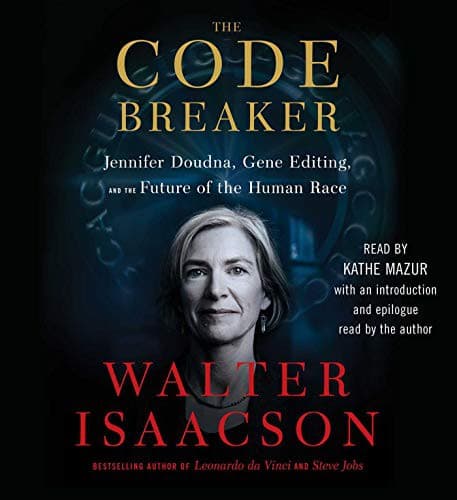
Cover of The Code Breaker

The Code Breaker

Walter Isaacson, Kathe Mazur

Picks up where The Gene's final sections leave off, following Jennifer Doudna and the discovery of CRISPR, with the same mix of lab drama, personalities and ethical stakes.

Explore More