
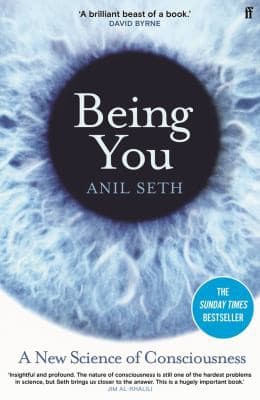
Being You
Anil Seth
Like Metzinger, Seth argues that perception and selfhood are controlled hallucinations built by the brain. He covers the same neuroscience of body ownership and predictive processing, in clear, current prose.
Reader-supported: when you buy through links on our site, we may earn an affiliate commission. Learn more
We earn a commission if you buy through these links. Learn more
Find Similar BooksA philosopher argues the self is a model the brain builds and never recognizes as a model, then asks whether some mental states are better than others.
The Ego Tunnel is Thomas Metzinger's shorter, more popular route into the self-model theory he developed at length in his earlier, much denser work Being No One. The core claim is that the self you experience is not a thing you find inside your head but a representation the brain constructs, and that it feels real precisely because the construction is hidden. Metzinger calls this transparency: we look through the model rather than at it.
Much of the book is spent on evidence from neuroscience, clinical cases, out-of-body experiences, body-ownership illusions, and virtual reality, all used to show how easily the sense of being someone can be bent, split, or switched off. The writing is clear and unhurried, with the author regularly stopping to test a concept against an example. Readers coming from pop science will find it demanding in places, but it rewards patience with a sharp sense of how strange ordinary experience looks once the usual assumptions fall away.
The final portion turns from theory to ethics. If the self is a tunnel that lets in little and leaves out much, Metzinger asks whether some conscious states are better than others, and whether we have obligations when we design or manipulate minds, including artificial ones. These passages are speculative and less developed than the scientific sections, and they are where the book's argument is most open to dispute.
Metzinger argues that the brain generates a self-model representing the organism as a whole, as the owner of experiences and the agent of actions. Because the brain does not label this as a construction, it feels like direct acquaintance with a subject. The book builds this claim from neuroscience rather than simply asserting it, which makes the argument more demanding but also more convincing.
The contents of the self-model appear as reality or as ourselves, not as representations, so we cannot see the construction from the inside. This explains why introspection seems to reveal a solid, unified self. The ego tunnel metaphor captures the idea of a narrow, self-generated passage through which we perceive the world.
Metzinger draws on experiments and reported cases in which people feel they occupy another body or sit outside their own, to show that the sense of self can be altered. These examples are the most vivid part of the book. They serve his larger point that the self we take for granted is more flexible than it appears.
If experience is shaped by a model, then the quality of experience can vary, and suffering and well-being become things we can assess and perhaps improve. Metzinger asks whether such distinctions can be made without an absolute standard, and what it would mean to pursue better states of mind deliberately.
As neurotechnology and artificial systems advance, Metzinger argues that creating or manipulating subjective experience carries serious moral risks. He calls for precaution, including a temporary halt on work that might produce artificial subjective experience. This is the book's most distinctive and most debated contribution.
Metzinger's self-model theory is contested, and many philosophers and neuroscientists reject his strong claim that no self exists in any robust sense. The book leans on a rich but partly anecdotal set of experiments and thought experiments, and some readers will feel the leap from 'the self is a model' to specific ethical conclusions is under-argued. The ethics section is brief relative to its ambition. Since the book appeared in 2009, the fast-moving fields of neurotechnology and AI have overtaken some of its examples, so its practical recommendations are best read as a starting point.
Reviews from readers on YouTube. Their opinions are their own.
Book details and cover from Google Books.
Ready to read The Ego Tunnel?
Get your copy on Amazon, or listen to it on Audible. We earn a commission if you buy through these links.
Anil Seth
Like Metzinger, Seth argues that perception and selfhood are controlled hallucinations built by the brain. He covers the same neuroscience of body ownership and predictive processing, in clear, current prose.

Donald Hoffman
Hoffman pushes the idea that what we experience is a useful interface rather than a true picture of the world. That challenge to naive realism will appeal to readers drawn to the tunnel-vision metaphor in The Ego Tunnel.
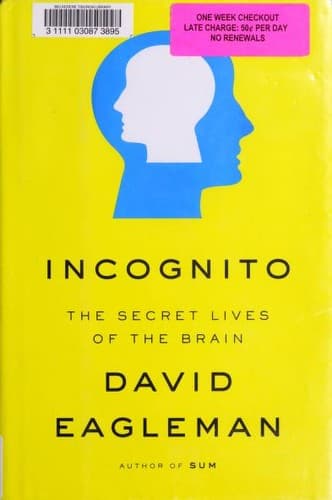
David Eagleman
Eagleman shows how much of mental life runs below awareness and how the conscious self is the last to know. Readers interested in the self as a late-arriving narrator of brain processes will find his examples vivid and accessible.
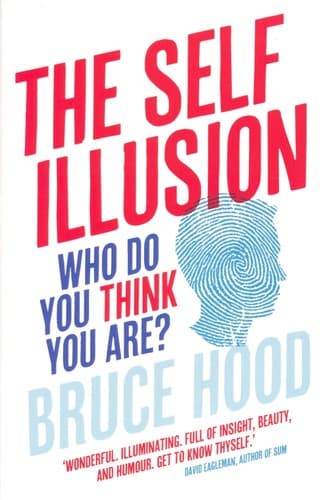
Bruce M. Hood
Hood makes the case that the sense of a stable, inner self is constructed by the brain from social and biological parts. It takes the same skeptical stance toward selfhood that defines The Ego Tunnel, with a more personal tone.