Reader-supported: when you buy through links on our site, we may earn an affiliate commission. Learn more

Cover of The Disappearing Spoon
Buy on AmazonBuy on Bookshop.orgListen on Audible

We earn a commission if you buy through these links. Learn more

Find Similar Books

The Disappearing Spoon

by Sam Kean

Science
★★★★☆4.0 (12)

Guide by the Books of the Day editors · Updated · How we write our guides

Sam Kean turns the periodic table into a guide to strange, human stories about poisons, medicine, rivalry, and the atomic age, making chemistry feel like gossip worth hearing.

What Creators Say About The Disappearing Spoon

2 creators reviewed The Disappearing Spoon on YouTube between 2012 and 2014, with 42.2K views between them. Their opinions are their own; we picked these reviews, we didn't write them.

The Disappearing Spoon: True Tales of Madness, Love, and World History from the Periodic TableNational Institute of Standards and Technology on YouTube38.5K views · 2012
Book Review: The Disappearing Spoonbtwnbookcovers on YouTube3.7K views · 2014

What It's About

The Disappearing Spoon is a popular science book from 2010 in which Sam Kean uses the periodic table as a loose map for storytelling. Rather than marching through the elements in order, he moves across the table, pausing on substances that touched history through medicine, industry, warfare, and money. Many of the people he profiles are colorful, and their rivalries, mistakes, and obsessions are as much the point as the chemistry.

The style is anecdotal and conversational, with digressions and asides that keep the pace brisk. Kean is good at finding the human drama behind a discovery, whether that is a lab accident, a dubious health fad, or a scientist's lifelong fixation. The science is explained for curious nonscientists, so you learn why elements behave as they do without needing any math. Most sections stand fairly independently, so you can dip in and out.

Reading it feels like touring a museum of odd stories with a well-informed guide who keeps circling back to the table. Some passages lean more on entertainment than depth, and you will likely finish with a stack of new trivia rather than a rigorous grasp of chemistry. It is best approached as an enjoyable, well-stocked introduction to the stories behind the elements.

Read this if you…

  • enjoy science written as narrative and gossip-rich history
  • want an accessible way into chemistry without equations or lab training
  • like learning odd trivia that connects everyday objects to larger historical events

Skip it if you…

  • want a rigorous, textbook-level understanding of chemistry or the periodic table
  • prefer a tightly argued single thesis over a collection of loosely connected anecdotes

Key Ideas

  1. 1

    The periodic table as a storytelling map

    Kean uses the table less as a chart to memorize and more as an organizing device. Each element becomes an entry point into a different corner of human experience, so the book jumps from kitchens to battlefields to hospitals. The structure gives a loose sense of progression without forcing a rigid chronology, and it rewards readers who like following connections across unrelated subjects.

  2. 2

    Chemistry as a human, messy enterprise

    Many discoveries in the book came from rivalry, luck, stubbornness, and the occasional reckless experiment. Kean emphasizes that scientists are people with ambitions and blind spots, and that the path to knowledge often runs through error. This framing makes the history feel alive and shows how credit, competition, and personality shaped what was found and who got recognized for it.

  3. 3

    Elements shaping daily life and power

    The book argues that certain elements quietly influenced medicine, industry, politics, and war. Some became fashionable remedies, others were tied to economic or military interests, and a few carried hazards that were misunderstood for years. Seeing the table this way makes everyday objects and historical events look connected to specific atoms, which is the book's most persuasive move.

  4. 4

    The danger of believing unvetted science

    Several stories show how early enthusiasm for a new substance could outrun what was actually known. Kean highlights cases where promotion, profit, or simple ignorance led people to trust products that harmed them. These episodes are cautionary without being preachy, and they give the book a sharper edge than a simple celebration of discovery would have.

  5. 5

    Scientific understanding as an unfinished story

    Kean also shows that the periodic table itself was assembled piece by piece, with gaps, misplaced entries, and later corrections. The table looks settled now, but the book reminds readers that it took generations of argument and experiment to reach its current form. That sense of provisional knowledge makes the science feel more human and less like a finished set of facts.

Limitations

The book's anecdotal approach means some stories are repeated more often than they are rigorously checked, and some popular tales are told with more confidence than the evidence supports. Its tone can feel breezy, which some readers find charming and others find shallow. Because it appeared in 2010, it predates later discoveries and updates in the field, including the recent additions to the table. It is strongest on history and human interest and lighter on the underlying physics and chemistry.

Questions Readers Ask

Do I need a chemistry background to enjoy The Disappearing Spoon?
No. Kean explains the basic ideas in plain language and focuses on people and events rather than calculations. A general adult reader with some curiosity about science should follow everything comfortably. Readers with a chemistry background may find some explanations simplified, but the stories remain engaging for them too.
How does it compare to Primo Levi's The Periodic Table?
Levi's book is a literary memoir built around personal experiences connected to individual elements, with a reflective and often melancholy tone. Kean's book is more of a popular science narrative with a wider cast of characters and a faster, gossipy style. If you want introspection, Levi is the better choice; if you want historical anecdotes and scientific trivia, Kean fits better.
Published
2010
ISBN
9780316089081
Difficulty
beginner
Category
Science

Book details and cover from Google Books.

Ready to read The Disappearing Spoon?

Get your copy on Amazon, or listen to it on Audible. We earn a commission if you buy through these links.

Books Like The Disappearing Spoon

View all →
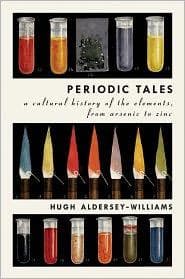
Cover of Periodic Tales

Periodic Tales

Hugh Aldersey-Williams

Like Kean, Aldersey-Williams roams through the elements via culture, art and history rather than equations, offering a similarly anecdotal, browsable tour of the periodic table with a British, essayistic flavour.

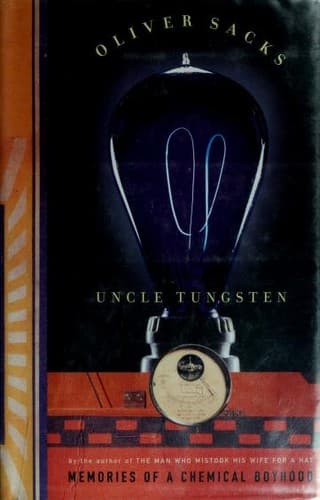
Cover of Uncle Tungsten

Uncle Tungsten

Oliver Sacks

Sacks's memoir of a boyhood obsessed with metals and chemistry captures the same wonder at elements that drives The Disappearing Spoon, blending personal story with the history of chemical discovery.

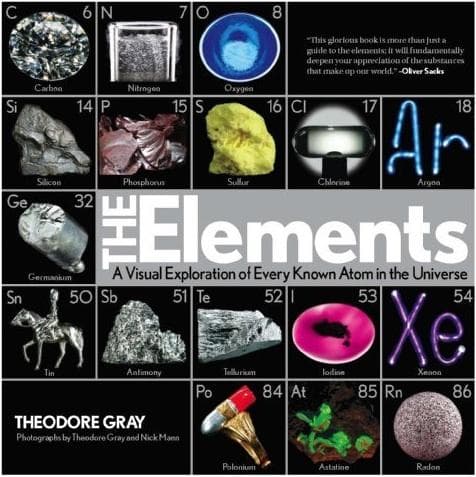
Cover of The Elements

The Elements

Theodore W. Gray

A lavishly photographed guide to every element, full of quirky facts and real-world samples. It's the visual companion to Kean's stories, perfect for readers who want to see what they read about.

Cover of The violinist's thumb

The violinist's thumb

Sam Kean

Kean applies the same storytelling approach to DNA and genetics, mixing odd historical episodes, flawed scientists and clear explanations exactly as he did with the periodic table.

Explore More