Reader-supported: when you buy through links on our site, we may earn an affiliate commission. Learn more

Cover of Predictably Irrational, Revised and Expanded Edition
Buy on AmazonListen on Audible

We earn a commission if you buy through these links. Learn more

Find Similar Books

Predictably Irrational, Revised and Expanded Edition

by Dan Ariely

Psychology
★★★★☆4.0 (15)

Ariely turns everyday mistakes about money, free stuff, and self-control into repeatable patterns, making this an accessible, eye-opening starting point for behavioral economics.

What It's About

Predictably Irrational is a tour through a series of small experiments, mostly run with students, volunteers, and everyday shoppers, that show how people misjudge value, make choices they later regret, and misread their own future behavior. Ariely's central claim is that our mistakes are not random noise. They follow patterns that repeat across different people and situations, which means they can be understood and, in some cases, anticipated.

The style is conversational and brisk. Chapters are short, the anecdotes are concrete, and each idea is introduced through a simple setup the reader can picture and, often, guess the result of before reading on. The experience is less like a manual of fixes and more like being gently caught out. You finish with a stronger suspicion of your own snap judgments, especially the ones that feel obviously sensible.

The revised and expanded edition adds material to the original text, but the core appeal is unchanged: it is a readable, lively introduction to how context, expectations, and emotion steer decisions. Anyone curious about why we act against our own stated preferences will find it engaging, even if they come to it without any background in economics or psychology.

Read this if you…

  • are curious about why people make predictable mistakes with money, time, and choices
  • want an accessible introduction to behavioral economics before tackling denser academic work
  • enjoy short, anecdote-driven chapters that encourage you to test your own assumptions

Skip it if you…

  • want rigorous, large-sample research with detailed statistical methods
  • are looking for a step-by-step system for changing habits or getting organized

Key Ideas

  1. 1

    First numbers quietly shape later judgments

    Ariely shows how an arbitrary starting figure can pull our sense of what something is worth, even when we know the number is irrelevant. The lesson is practical: the first price, offer, or estimate you encounter tends to set the frame for everything that follows, so it is worth noticing where a number came from before you accept it as a reference point.

  2. 2

    Free is more powerful than logic suggests

    A book on irrational behavior would be incomplete without the pull of the zero price. Ariely argues that getting something for nothing triggers a response out of proportion to the actual savings, which can lead us to choose a worse overall deal simply because one option carries no visible cost. The idea is useful for spotting promotions designed to exploit this reaction.

  3. 3

    Social relationships run on different rules than markets

    Ariely distinguishes between favors among friends, family, and colleagues and transactions with a price attached. He argues that introducing money into a relationship can change its meaning and sometimes backfire, because people reinterpret a generous act as a paid service. This is one of the book's more thoughtful sections for readers interested in workplaces and personal life.

  4. 4

    Expectations change what we actually experience

    The book explores how beliefs about a product, a treatment, or a price can alter the experience itself, including how something tastes or how much pain we feel. Ariely uses these findings to argue that the mind is not a neutral recorder of reality, which has implications for marketing, medicine, and our own self-assessments.

  5. 5

    We are poor judges of our future selves

    Procrastination, overspending, and abandoned diets are presented as predictable outcomes of short-term thinking. Ariely explores how people sometimes use commitments, deadlines, and self-imposed constraints to protect their long-term goals. The discussion is less about willpower in the abstract and more about the structures that help people follow through.

Limitations

Many of the experiments are small, often drawn from student samples, and some of the effects described have been difficult for other researchers to reproduce at the same strength. The book also presents its findings with a confident, sometimes breezy tone that can make tentative results sound more settled than they are. In 2021 Duke University found research misconduct in some of Ariely's other published work, which he disputed; readers may want to treat the specific numbers with caution and focus on the broader ideas, which are worth testing for yourself.

Questions Readers Ask

Is Predictably Irrational still worth reading?
Yes, as an accessible introduction to the ideas, though not as a source of precise figures. Some of the individual studies have weaker support than the book suggests, and Ariely's later research record has been questioned. The core concepts, such as anchoring and the appeal of free, remain useful frames for thinking about everyday decisions.
How does it compare to Thinking, Fast and Slow?
Kahneman's book is broader, deeper, and more systematic, and it is better if you want the theoretical foundations of judgment research. Ariely's book is lighter, more playful, and organized around everyday examples. Many readers start with Ariely and move to Kahneman, though reading them in the opposite order also works well.
Who is this book best suited for?
It suits general readers who want to understand why they and others make choices that do not match their goals. It is also a good gift for someone new to psychology or economics. Readers who want practical tools rather than ideas to reflect on may find it less satisfying.
Published
2010
ISBN
9780061353246
Difficulty
beginner
Category
Psychology

Book details and cover from Google Books.

Ready to read Predictably Irrational, Revised and Expanded Edition?

Get your copy on Amazon, or listen to it on Audible. We earn a commission if you buy through these links.

Books Like Predictably Irrational, Revised and Expanded Edition

View all →
Cover of Thinking, Fast and Slow

Thinking, Fast and Slow

Daniel Kahneman

The foundational work behind many ideas Ariely popularises. Kahneman explains the two systems driving our judgments, giving a deeper, more complete map of the biases Predictably Irrational illustrates with experiments.

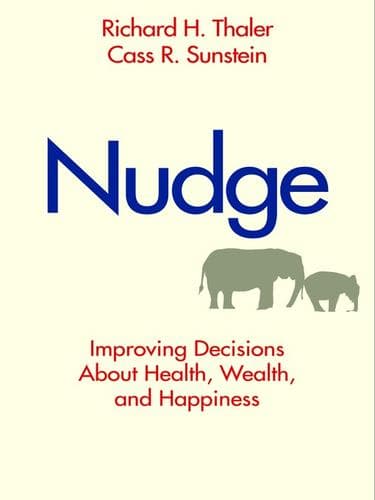
Cover of Nudge

Nudge

Richard H. Thaler, Cass R. Sunstein

Where Ariely shows how we go wrong, Thaler and Cass Sunstein show how choice design can steer us toward better decisions, applying the same insights to savings, health and public policy.

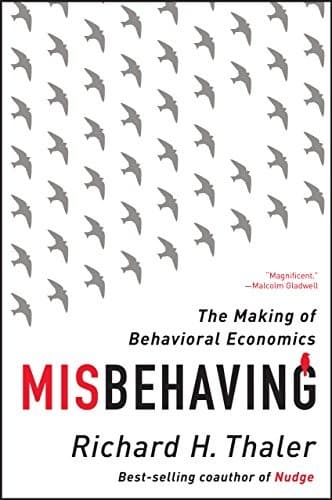
Cover of Misbehaving

Misbehaving

Richard H. Thaler

A witty, story-driven history of how behavioral economics fought its way into the mainstream, full of the same everyday anomalies about money and choice that make Ariely's book so entertaining.

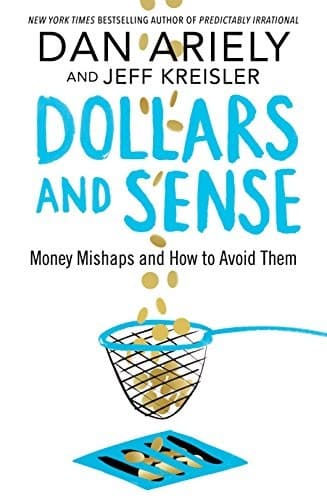
Cover of Dollars and Sense

Dollars and Sense

Dan Ariely, Jeff Kreisler

Ariely and Jeff Kreisler zoom in on spending, applying the mental accounting and pricing quirks from Predictably Irrational to everyday purchases, with practical tips for thinking about money more clearly.

Explore More