
Thinking, Fast and Slow
Daniel Kahneman
Kahneman's work underpins much of Nudge's thinking about automatic versus deliberate judgement. It explains the mental shortcuts that make default options and framing so powerful.
Reader-supported: when you buy through links on our site, we may earn an affiliate commission. Learn more
We earn a commission if you buy through these links. Learn more
Find Similar Booksby Richard H. Thaler, Cass R. Sunstein
Guide by the Books of the Day editors · Updated · How we write our guides
A short, readable tour of how the design of choices, especially default options, quietly steers everyday decisions, and a case for using that influence to help people.
2 creators reviewed Nudge on YouTube between 2016 and 2023, with 79.3K views between them. Their opinions are their own; we picked these reviews, we didn't write them.
Nudge, published in 2008 by economist Richard Thaler and legal scholar Cass Sunstein, argues that the way options are presented shapes what people pick. Default settings, the order of a menu, and the feedback people receive all push behavior in one direction or another, and since no presentation is truly neutral, the authors argue designers should use that influence deliberately. They call this approach libertarian paternalism: steer people toward choices they would likely endorse on reflection while keeping their freedom to choose otherwise.
The book is written for a general audience rather than for specialists. Its method is argument supported by a long run of concrete cases drawn from retirement savings, organ donation, cafeteria layouts, and public policy. Behavioral research appears in plain terms, and the authors openly state their own views on what governments and companies should do.
Reading it feels like being walked through a series of small design decisions in ordinary life and asked to notice them. The pace is brisk and the chapters build a single case rather than working as a how-to manual. Readers who want rigorous psychological detail or a systematic account of the research will find it light, but those who want to rethink how everyday choices get framed will find it engaging and quick to finish.
Every menu, form, or layout has to put some option first or make some option easier. The authors argue that because someone always designs the choice environment, the real question is whether that design is thoughtful and aimed at people's genuine interests, rather than pretending the default can be avoided.
Many people stick with whatever option is preselected, whether it is a savings rate, an organ donation status, or a subscription. The book uses this inertia to explain why changing a default can shift outcomes dramatically, and why opt-in and opt-out designs can produce very different results for the same population.
Libertarian paternalism is the book's central proposal. Officials and designers can influence choices for people's benefit while keeping every option available and easy to reject. The authors separate this from heavy mandates and bans, and they frame the distinction as the core of their argument.
Inattention, self-control problems, and reliance on rules of thumb mean people often fail to choose what they themselves would prefer. The book uses this gap between idealized and real behavior to justify better choice design, though it does not claim people are irrational in every situation.
Critics have argued that the line between nudging and manipulation is blurrier than the authors admit, and that whoever designs the default is still exercising power over others. Some of the policy examples have been debated since publication, and many of the behavioral findings have been revisited by later studies, with some effects proving smaller than first reported. The book also focuses mainly on individual choices and tends to say less about structural problems such as poverty or unequal access, which many readers will want to explore elsewhere.
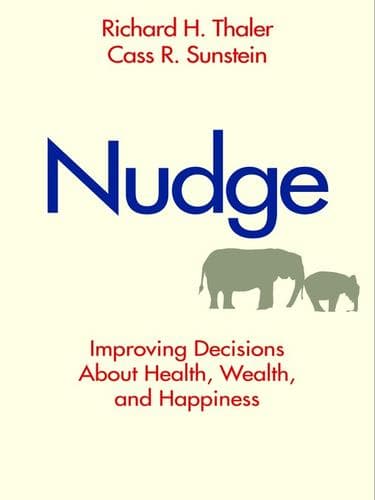
Book details and cover from Google Books.
Ready to read Nudge?
Get your copy on Amazon, or listen to it on Audible. We earn a commission if you buy through these links.
Daniel Kahneman
Kahneman's work underpins much of Nudge's thinking about automatic versus deliberate judgement. It explains the mental shortcuts that make default options and framing so powerful.
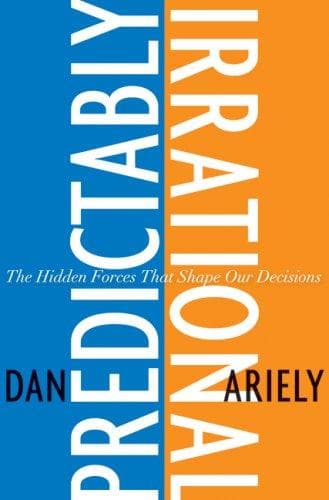
Dan Ariely
Ariely runs experiment after experiment showing how people deviate from rational choice. Readers who enjoyed Nudge's real-world examples will find the same playful, surprising tone.
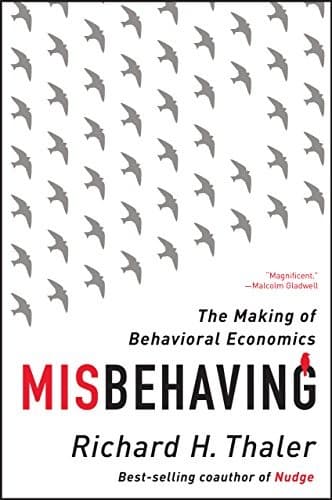
Richard H. Thaler
Written by Nudge's co-author, it tells the story of how behavioural economics developed. It gives the background to the ideas Nudge later applied to policy.
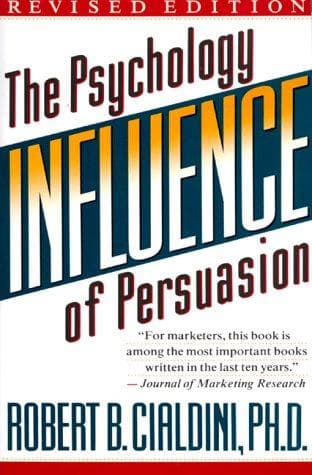
Robert B. Cialdini
Cialdini describes the psychological levers that shape everyday decisions, such as social proof and commitment. It complements Nudge's focus on how choices are framed.