
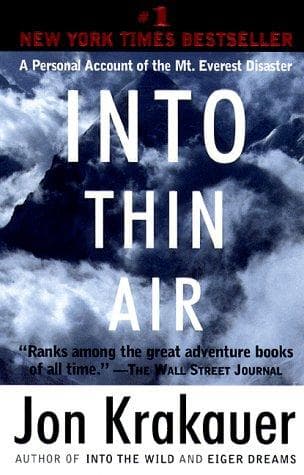
Into Thin Air
Jon Krakauer
Like Maclean, Krakauer reconstructs a deadly event from survivors' accounts and his own memory, asking how and why people died. Its honest, first-person grief echoes the way Young Men and Fire mourns its crew.
Reader-supported: when you buy through links on our site, we may earn an affiliate commission. Learn more
We earn a commission if you buy through these links. Learn more
Find Similar BooksGuide by the Books of the Day editors · Updated · How we write our guides
A grieving, lyrical reconstruction of Montana's 1949 Mann Gulch fire, where thirteen smokejumpers died, that turns hard fire science and reporting into a meditation on storytelling.
2 creators reviewed Young Men and Fire on YouTube between 2022 and 2025, with 1.2K views between them. Their opinions are their own; we picked these reviews, we didn't write them.
Young Men and Fire is Norman Maclean's attempt, over roughly four decades, to understand a single afternoon in August 1949. A crew of smokejumpers parachuted into a small blaze in a remote Montana canyon, the wind shifted, and most of them were overrun by the fire within minutes. Maclean, a longtime English professor, was drawn to the event for personal reasons and spent years gathering reports, interviews, and records to piece it together.
The book is not a straight narrative. Maclean moves between reconstructing the disaster minute by minute, explaining how fires behave and why the men were trapped, and stepping back to question what he can actually know and how a writer should handle the dead. The prose is plain in places and highly wrought in others, and the author's own voice is present throughout. Some readers find the digressions rewarding, while others find them slow.
Reading it feels less like absorbing facts than like following a careful, sometimes haunted mind working through evidence. The book is short, but it asks for patience and rewards attention. Expect a mix of suspense, technical education, and elegy, and expect it to stay with you longer than its page count suggests.
Maclean treats the Mann Gulch deaths as a puzzle built from official reports, survivor accounts, and terrain. He shows how little any single source can say and how much judgment goes into deciding what happened. The method is part detective work and part confession about the limits of記録 evidence.
A large part of the book explains fire physics in everyday language: how heat rises, how slopes accelerate flames, and why a dry grass fuel bed can turn lethal. This gives the reader a concrete sense of why experienced people were caught, rather than treating the tragedy as simple bad luck or simple blame.
The survival of a few men depended on an unusual decision made under extreme pressure. Maclean examines it closely, weighing how it was understood at the time against how it was judged later. The episode becomes a way into questions about training, obedience, and improvisation.
Maclean is openly preoccupied with whether a writer can honor the dead without inventing them. He keeps returning to his own method and motives. For many readers this self-scrutiny is the emotional center of the book, more than the fire itself.
The book's style is its main divisive feature. Maclean repeatedly circles back, stops to reflect, and sometimes repeats details, which some readers find meandering or self-indulgent. Its fire science is accessible but not exhaustive, and modern firefighting practice and safety rules have changed a great deal since 1949, so the book is a historical account rather than a current manual. Some readers also feel the author's personal grief sits uneasily beside the victims' stories, and the book does not offer a wider picture of Forest Service policy or the lives of the men beyond the crew.
Book details and cover from Google Books.
Ready to read Young Men and Fire?
Get your copy on Amazon, or listen to it on Audible. We earn a commission if you buy through these links.
Jon Krakauer
Like Maclean, Krakauer reconstructs a deadly event from survivors' accounts and his own memory, asking how and why people died. Its honest, first-person grief echoes the way Young Men and Fire mourns its crew.
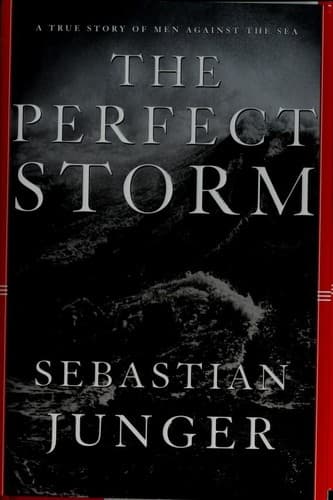
Sebastian Junger, Anne Collins
Junger gives a fatal weather event the same careful reconstruction Maclean brings to Mann Gulch, explaining the science clearly while staying with the men who were lost at sea.
Erik Larson, Richard M. Davidson
Larson combines hard scientific explanation with a human tragedy, much as Maclean pairs fire behaviour with the crew's story. Readers who valued the book's mix of expertise and elegy will find it satisfying.
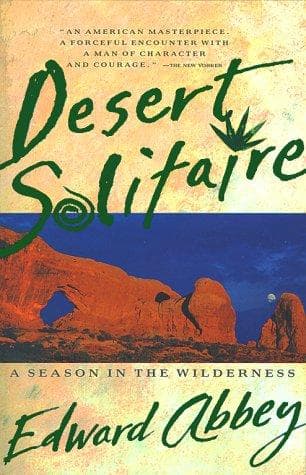
Edward Abbey
Abbey's meditative, sometimes angry prose about wild country shares Maclean's love of Western landscape and his fascination with its power. It suits readers drawn to the book's poetic, reflective voice.