
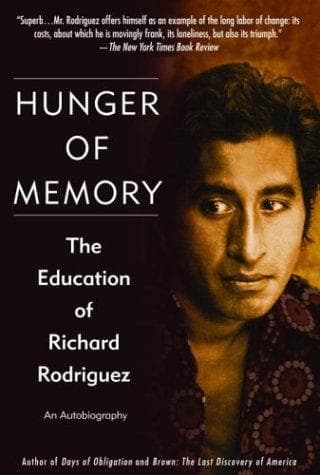
Hunger of memory
Richard Rodriguez
Like The Woman Warrior, it is a first-person memoir about growing up between a family's home language and English, and about what is lost and gained in that crossing.
Reader-supported: when you buy through links on our site, we may earn an affiliate commission. Learn more
We earn a commission if you buy through these links. Learn more
Find Similar BooksGuide by the Books of the Day editors · Updated · How we write our guides
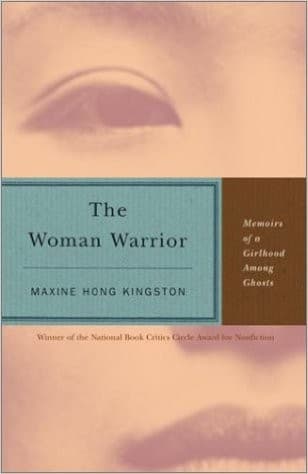
A memoir that reads like myth: Kingston weaves Chinese folk tales, her mother's talk-story, and her American childhood into a book about growing up between two worlds.
2 creators reviewed The Woman Warrior on YouTube between 2008 and 2019, with 75.4K views between them. Their opinions are their own; we picked these reviews, we didn't write them.
The Woman Warrior, published in 1976, carries the subtitle Memoirs of a Girlhood Among Ghosts. Kingston grew up in California as the American-born daughter of Chinese immigrants who ran a laundry. The book is usually shelved as memoir, but it is closer to a hybrid. It moves freely between family history, imagined scenes, and retold legends, so the line between what happened and what was told is deliberately blurred. The category label says biography, but this is not a conventional life story.
The structure is a set of linked pieces rather than a chronological narrative. Stories her mother told about women who defied their societies sit beside Kingston's own school-age confusions, her silences, and her sense that American and Chinese expectations pull in opposite directions. The prose is dense, lyrical, and often abrupt in its shifts between dream, rumor, and plain fact. Kingston also keeps returning to her own uncertainty about what is true, and that uncertainty becomes part of the subject.
Reading it feels less like being told a life than like watching someone work out how to tell one. Some passages are gripping; others loop back and ask for patience. You come away with a strong sense of a voice, and with the feeling that a family's story is always partly built from what it was told and what it chose not to say.
Kingston's mother passes down oral stories that are part guidance and part warning. They shape what the author believes a woman can be, and they arrive with contradictions she has to sort out herself. The book treats storytelling as a powerful and unreliable inheritance.
Certain relatives are never named, and certain events are never discussed directly. Kingston treats family silence as an active force rather than an absence, showing how shame and secrecy decide what a child is allowed to know and what she must invent.
Her American schooling and her Chinese home offer different models of obedience, speech, and success. Kingston does not present either side as simply right or wrong. Both supply strength and constraint, and she writes from inside that tension.
The title figure, a woman who fights, endures, and speaks, appears as an ideal the author admires and also reworks. Kingston uses legend to ask what courage means for a girl who has been told to stay quiet and small.
Some Chinese American writers and critics have objected to how Kingston draws on Chinese stories and reshapes them, and to the picture she gives of Chinese culture. That debate has continued since publication. The blend of memoir and invention also frustrates readers who want a clearly documented account. The book focuses on one family in one place and time and does not offer a broad survey of Chinese America. Some passages are overwrought, and a few readers will find the intensity wearing.
Book details and cover from Google Books.
Ready to read The Woman Warrior?
Get your copy on Amazon, or listen to it on Audible. We earn a commission if you buy through these links.
Richard Rodriguez
Like The Woman Warrior, it is a first-person memoir about growing up between a family's home language and English, and about what is lost and gained in that crossing.
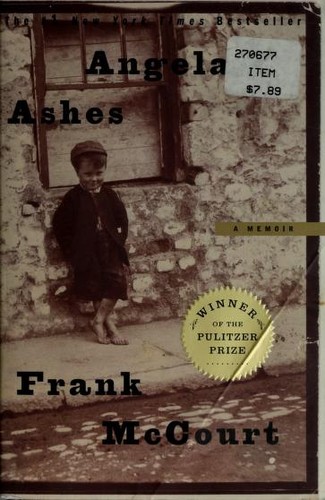
Frank McCourt
It shares The Woman Warrior's close focus on a childhood shaped by hardship and by parents whose stories shape the narrator, told with sharp humour and memory.
Amy Tan
Readers who loved the mother-daughter tension and inherited Chinese stories in The Woman Warrior will find the same themes explored through linked voices of Chinese American women.
Alice Walker
Its epistolary voice and its bold reimagining of a silenced woman's inner life echo The Woman Warrior's concern with speaking up against constraint.