
Born a Crime
Trevor Noah
Like McCourt, Noah turns a difficult childhood into funny, affectionate storytelling. His memoir of growing up in apartheid-era South Africa keeps the warmth and sharp observation that make Angela's Ashes so readable.
Reader-supported: when you buy through links on our site, we may earn an affiliate commission. Learn more
We earn a commission if you buy through these links. Learn more
Find Similar BooksGuide by the Books of the Day editors · Updated · How we write our guides
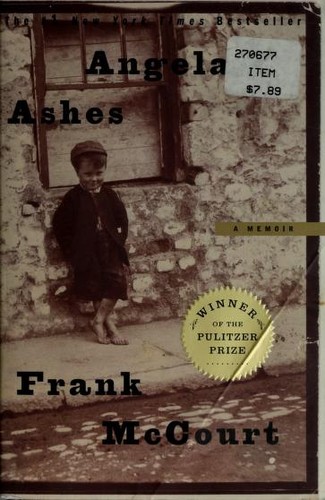
A grim, funny, unsentimental memoir of a poor Irish childhood in Limerick, told with a child's eye and a storyteller's ear. It is an adult book, not a children's book.
2 creators reviewed Angela's Ashes on YouTube between 2009 and 2016, with 216.2K views between them. Their opinions are their own; we picked these reviews, we didn't write them.
Angela's Ashes is Frank McCourt's account of growing up in Limerick, Ireland, in the 1930s and 1940s. He was born in Brooklyn to Irish parents, and the family moved back to Limerick when he was a small boy. The household was shaped by hunger, damp rooms, and a father whose drinking and unemployment kept them close to ruin. The book follows his childhood through the deaths of several younger siblings, the pull of the Catholic church, and the harsh discipline of school.
The approach is what makes it stand out. McCourt writes first in the voice of a child and later of a young man, so the prose stays close to what a boy would notice: smells, insults, bargains, and small victories. Misery is rendered with gallows humor and a rhythmic, repetitive style that can feel like listening to a gifted talker in a pub. The sentences are short and musical, and the mood swings quickly between laughter and grief.
Reading it is an emotionally heavy but absorbing experience. It is not a children's book, despite how it is sometimes shelved. It deals with death, alcoholism, and poverty without softening them, and it is hard to put down. Many readers finish it wanting to know what came next, and the two later volumes of the trilogy pick up that story.
The book treats hunger, cold, and illness not as background but as the texture of every day. The family's routines are organized around scarcity, and the reader feels how exhausting that is, hour by hour, rather than hearing about it as a general social problem.
McCourt's jokes and wry asides are not decoration. They are how a child copes with loss and humiliation. The reader sees the sadness underneath the wit, and the gap between the two is much of the book's emotional power.
Religion appears as both comfort and source of fear and guilt. The book examines how church authority shaped the expectations placed on children and parents alike, and how belief and humiliation could be hard to separate in that world.
The father is both lovable and destructive. The book refuses easy judgment and keeps the complexity of a man who clearly loved his family and repeatedly failed them. That ambivalence drives much of the narrative tension.
The narrator reconstructs events as an adult looking back, so the book is also about how memory shapes a story about one's own past. Readers get a child's immediacy filtered through a grown man's storytelling skill.
Family members and some residents of Limerick have disputed parts of McCourt's account, so it is best read as a personal memoir rather than a documented history. Because the book is told largely through a child's perspective, it offers little broader context about Irish politics, economics, or the church's wider role. The repetitive, rhythmic style can wear thin for some readers, and the relentless bleakness, sometimes softened by sentimental family portraits, is not for everyone.
Book details and cover from Google Books.
Ready to read Angela's Ashes?
Get your copy on Amazon, or listen to it on Audible. We earn a commission if you buy through these links.
Trevor Noah
Like McCourt, Noah turns a difficult childhood into funny, affectionate storytelling. His memoir of growing up in apartheid-era South Africa keeps the warmth and sharp observation that make Angela's Ashes so readable.
Jeannette Walls
Walls recounts a chaotic, impoverished childhood with a steady, unsentimental voice. Fans of McCourt's frank portrait of a difficult family will find the same mix of hardship and love.
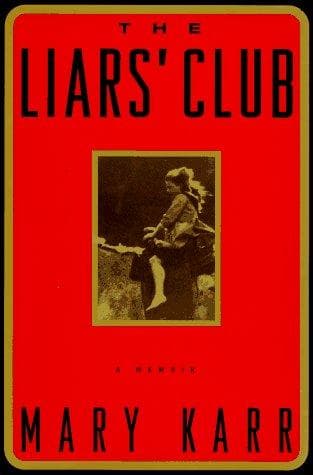
Mary Karr
Karr's memoir of a troubled Texas childhood is lyrical and funny in the same way McCourt's is. Its focus on family damage told from a child's sharp viewpoint echoes the emotional core of Angela's Ashes.
Colm Tóibín
Set around the Irish emigrant experience, this quiet novel shares Angela's Ashes' sense of Irish life and its hold on the people who leave it. Its careful, restrained prose suits readers who appreciated McCourt's sense of place.