
The Bonesetter's Daughter
Amy Tan
Tan returns to a San Francisco daughter uncovering her Chinese mother's hidden past through a manuscript, echoing the Joy Luck Club's layered timelines and the slow unspooling of maternal secrets.
Reader-supported: when you buy through links on our site, we may earn an affiliate commission. Learn more
We earn a commission if you buy through these links. Learn more
Find Similar Booksby Amy Tan
Sixteen linked stories follow four Chinese immigrant mothers and their American-born daughters, showing how love and unspoken history can wound and still hold a family together.
2 creators reviewed The Joy Luck Club on YouTube between 2019 and 2022, with 533.7K views between them. Their opinions are their own; we picked these reviews, we didn't write them.
The Joy Luck Club is a set of sixteen interlinked stories rather than a single plot. The frame is a group of women in San Francisco who gather to play mah jong, remember the past, and talk late into the night. Four mothers, each shaped by a life lived before coming to America, tell their own stories in their own voices. Their American-born daughters then take up the narrative, so the book moves between generations and between the past in China and the present in California.
Tan's style is conversational and direct, with plenty of dialogue and short, sharp scenes. Several narrators speak in English that carries the rhythms and idioms of their first language, and that shifting voice does much of the work of telling one perspective from another. The stories are often funny, sometimes sharp, and frequently painful. Gradually you piece together how an event in one story changes the meaning of another.
Reading it feels less like following a novel than like listening to several people confess, argue, and bargain across a table. You will get the most from it if you enjoy stitching the connections together yourself. The emotional payoff arrives slowly, and the book trusts you to sit with the discomfort between mothers and daughters before it offers any reconciliation.
Tan shows how hardships a mother survives get handed on as habits, warnings, and silences that daughters often misread. What reads as coldness or pressure is frequently a mother's attempt to protect a child from a world she once could not escape. The book asks what gets lost when painful history is never spoken aloud, and how much of a family's conflict is really about things nobody said.
The mothers boast about their daughters, despair over them, and measure them against dreams they carried across an ocean. Daughters experience these hopes as both a gift and a weight, and the book captures how both feelings can exist in the same moment. Tan treats ambition and expectation as love that has become tangled with fear.
The shifts between the mothers' English, with its inflections from Chinese, and the daughters' fluent American speech are not a gimmick. They carry identity, distance, and the gap between generations. Paying attention to who is speaking, and how, is essential to understanding what each character believes is at stake.
Tan's argument is that reconciliation does not depend on knowing everything about another person. Partial understanding, offered with love, can be enough to keep a relationship alive. The book is less interested in tidy resolutions than in the stubborn ties that persist after people have failed each other.
Critics have argued that some of the mothers' English, while intended to convey authenticity, leans on dialect in ways that can feel like caricature to some readers. Others find the stories uneven, with a few landing on sentimental notes that feel too neat. The book focuses almost entirely on mother-daughter relationships within a particular circle of Chinese immigrant women, so it offers only a partial picture of Chinese history and of Chinese American life more broadly. Readers looking for a wide social panorama may find it narrower than its reputation suggests.
Book details and cover from Google Books.
Ready to read The Joy Luck Club?
Get your copy on Amazon, or listen to it on Audible. We earn a commission if you buy through these links.
Amy Tan
Tan returns to a San Francisco daughter uncovering her Chinese mother's hidden past through a manuscript, echoing the Joy Luck Club's layered timelines and the slow unspooling of maternal secrets.
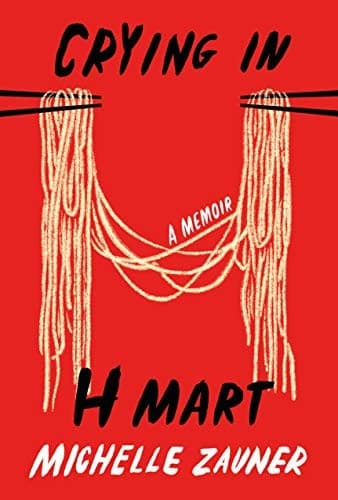
Michelle Zauner
A memoir of a Korean American daughter grieving her mother through food and memory; it shares the Joy Luck Club's mix of friction, love and cultural inheritance between generations.
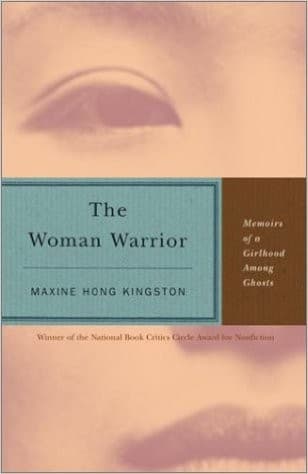
Maxine Hong Kingston
Kingston blends memoir and Chinese myth to explore a daughter shaped by her mother's stories, a classic companion to Tan's book on talk-story, silence and identity.

Jhumpa Lahiri
These quietly devastating stories of Indian immigrants and their children share the Joy Luck Club's attention to miscommunication within families and lives straddling two cultures.