
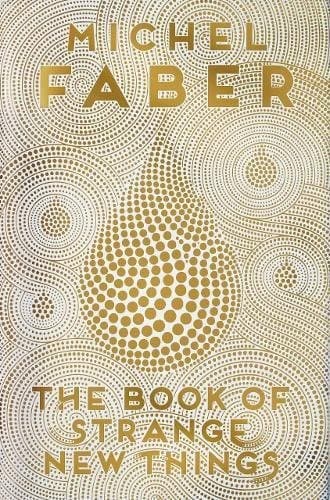
The book of strange new things
Michel Faber
A pastor travels to a distant planet to minister to its inhabitants. Like The Sparrow, it weighs belief, love and distance with quiet, aching seriousness.
Reader-supported: when you buy through links on our site, we may earn an affiliate commission. Learn more
We earn a commission if you buy through these links. Learn more
Find Similar BooksGuide by the Books of the Day editors · Updated · How we write our guides
Mary Doria Russell's The Sparrow uses a first-contact mission to ask hard questions about faith, language, and good intentions, with an emotional force few science fiction novels match.
2 creators reviewed The Sparrow on YouTube between 2015 and 2024, with 402.2K views between them. Their opinions are their own; we picked these reviews, we didn't write them.
The Sparrow is a science fiction novel about what happens when a mission built on goodwill meets a culture it cannot read. Emilio Sandoz, a Jesuit priest and gifted linguist, joins a small international crew sent to a planet orbiting another star after radio signals suggest a living civilization there. The team is chosen for talent and faith as much as technical skill, and the early chapters are full of wonder, friendship, and the thrill of a first real look at an alien world.
Russell does not tell the story in a straight line. The narrative moves between the mission and its aftermath, with fragments and reflections that keep the reader asking what went wrong and how much of it was anyone's fault. Much of the book's power comes from its patience: Russell spends time on language, daily routine, and the small decisions that accumulate. The prose is clear and often funny, which makes the darker material land harder.
Reading it is an emotionally demanding experience. It is a novel about faith, but it is not a sermon for or against belief. It treats religious conviction as something that shapes how people act under pressure, for good and ill. Expect a slow start, a heavy middle, and an ending that will likely stay with you. It suits readers who want big questions handled with care rather than spectacle.
Sandoz's belief is not decoration on the story but the lens through which he reads everything he sees. Russell asks whether faith can survive contact with evidence of cruelty, and whether a loving God is compatible with what humans do to one another. She refuses easy answers, letting characters of different convictions argue from real conviction rather than straw men.
The mission's central problem is communication. Sandoz's gift for languages makes him the crew's bridge, but translation is never neutral: every word choice carries assumptions about intent, status, and meaning. Russell shows how small misreadings, built on confident expectations, can grow into disaster. The theme applies well beyond space travel to any encounter between cultures.
The mission is staffed by people who mean well, and that is part of the tragedy. Russell examines how funding, politics, and the belief that a benevolent team is immune to harm shape decisions. The book is less interested in villains than in the gap between what people intend and what their choices do once they are far from home.
The alien world is vividly rendered but never the point. Russell gives the crew distinct personalities, histories, and friendships, so the science fiction works as a frame for character study. Readers who want hard technical detail may find the physics thin, but the group dynamics feel lived in and the relationships carry the weight.
Some readers find the structure frustrating, since key information arrives late and in pieces. The science is intentionally light, and critics have noted that the alien culture, though carefully imagined, can feel shaped by human assumptions. Its treatment of religion is sincere but written from inside a Catholic frame, which may feel limiting to some readers. Parts of the story are very dark, and the sequel, Children of God, continues the story in a more ambitious but less contained way.
Book details and cover from Google Books.
Ready to read The Sparrow?
Get your copy on Amazon, or listen to it on Audible. We earn a commission if you buy through these links.
Michel Faber
A pastor travels to a distant planet to minister to its inhabitants. Like The Sparrow, it weighs belief, love and distance with quiet, aching seriousness.

Walter M. Miller Jr., Волтер Майкл Міллер-молодший
Monks preserve knowledge across centuries after nuclear war. A classic that shares The Sparrow's interest in the Church, science and how faith survives catastrophe.
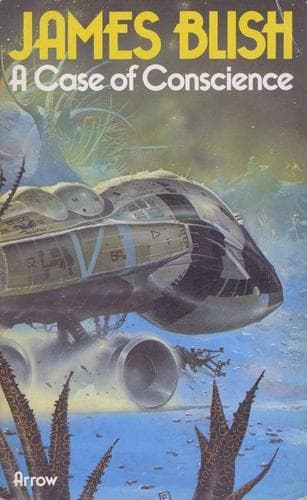
James Blish
A Jesuit biologist studies an alien species and faces a theological crisis. It is the clearest ancestor of the questions Emilio Sandoz wrestles with.
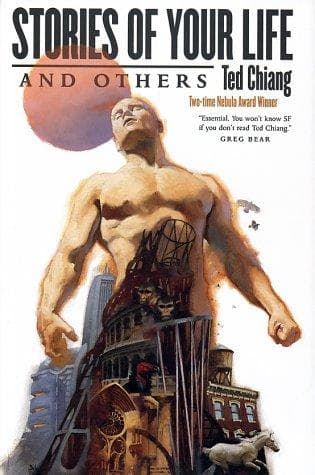
Ted Chiang
The title story follows a linguist decoding an alien language. Fans of Sandoz's gift for languages will love Chiang's precise, humane thought experiments.