
We earn a commission if you buy through these links. Learn more
A Case of Conscience
by James Blish
Guide by the Books of the Day editors · Updated · How we write our guides
James Blish's Hugo-winning novel sends a Jesuit biologist to an alien world whose intelligent natives seem to lack sin, turning a planetary survey into a hard test of faith.
What Creators Say About A Case of Conscience
2 creators reviewed A Case of Conscience on YouTube in 2023, with 2.4K views between them. Their opinions are their own; we picked these reviews, we didn't write them.
What It's About
A Case of Conscience (1958) is a science fiction novel about a scientific expedition to Lithia, a distant planet whose intelligent inhabitants appear to live without the moral failings that Christian theology calls sin. The team includes a Jesuit priest who is also a trained biologist, and the book follows his struggle to reconcile what he observes with what he believes. It is a short novel, built more like a debate than an adventure, with long conversations, careful argument, and scientific observation carrying most of the weight.
Blish writes in a spare, deliberate style with little interest in lush description. The planet is presented through its biology and its unusual social arrangements, and the drama comes from competing interpretations rather than action set pieces. Readers expecting space battles or romance will likely find it slow. Those who enjoy watching a mind test a belief against evidence will find it absorbing, and the pages feel dense with ideas.
The experience is intellectually sharp and sometimes uncomfortable. Blish takes theology seriously, which was uncommon in genre fiction of the period, and he does not make the believers simply foolish or the skeptics simply right. The result is a book that rewards slow reading and a second look.
Read this if you…
- want science fiction driven by ideas and argument more than action
- are curious how religious belief holds up against scientific observation
- enjoy slow, talky novels that reward rereading
Skip it if you…
- want fast pacing, spaceship action, or a clear heroic arc
- find dated 1950s prose and attitudes hard to get past
Key Ideas
- 1
Sin as a question, not a given
The novel asks what sin actually means if a rational, peaceful species seems to have no fall and no need for redemption. Blish presses on the gap between a moral vocabulary built around one human history and the situation of a people who never shared it. The question is less whether the Lithians are good and more whether goodness can be measured against a standard they never accepted.
- 2
Faith tested against observable evidence
The priest is a scientist as well as a believer, so his observations carry real weight for him. The book shows how a religious thinker might try to fit new facts into an existing framework, and how far that effort can stretch before it breaks. Readers interested in how people hold belief and evidence together will find the central conflict compelling.
- 3
Whether an alien mind can be judged
Blish explores what obligations humans have toward a species that does not share their categories of right and wrong. The expedition's wider aims and the ethics of contact sit in the background and raise questions that feel as current as they did in the 1950s. The book treats judgment as a serious problem rather than a plot device.
- 4
Theology taken seriously in genre fiction
Much science fiction of the period treated religion as superstition to be outgrown. Blish instead writes with real knowledge of Catholic thought and gives its arguments room to breathe. That seriousness is what makes the book stand apart, even for readers who do not share its premises.
Limitations
The prose and social attitudes reflect the late 1950s, and some readers will find the characterization thin and the dialogue stilted. Much of the book is talk, which can feel static if you come for plot. The science is also dated, so the biology reads as a period piece rather than a current model. Its theology is written from a specific Catholic perspective, and readers outside that tradition may find some arguments less engaging than the author intended.
Questions Readers Ask
- Is A Case of Conscience still worth reading today?
- Yes, mostly for its ideas. The prose and some attitudes show their age, and the science is dated. But the central question of how belief responds to evidence, and what moral judgment means for a different kind of mind, remains live. Readers who value philosophical science fiction will likely find it rewarding even with those rough edges.
- How does it compare to Stanisław Lem's Solaris?
- Both are contemplative science fiction about an alien world that resists human understanding. Solaris is more atmospheric and ambiguous, while Blish is more openly argumentative and concerned with theology and ethics. If you liked Solaris for its meditation on the limits of knowledge, you may enjoy Blish's sharper focus on belief.
- Published
- 1958
- ISBN
- 9780099063704
- Difficulty
- intermediate
- Category
- Fiction
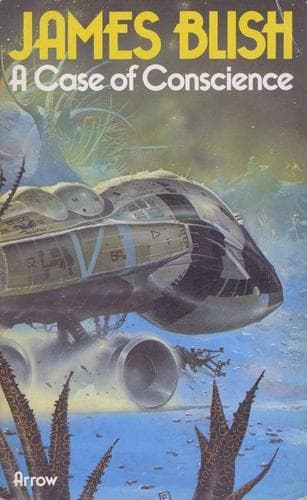
Book details and cover from Google Books.
Ready to read A Case of Conscience?
Get your copy on Amazon, or listen to it on Audible. We earn a commission if you buy through these links.