
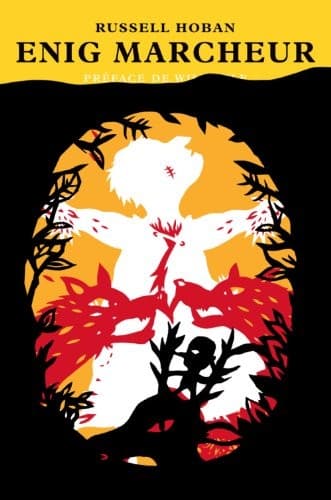
Riddley Walker
Russell Hoban
Like Canticle, it imagines a fractured future where knowledge has been reduced to fragments and rebuilt in strange new forms. Hoban's invented language carries the same sense of a world rediscovering lost meaning.
Reader-supported: when you buy through links on our site, we may earn an affiliate commission. Learn more
We earn a commission if you buy through these links. Learn more
Find Similar Booksby Walter M. Miller Jr., Волтер Майкл Міллер-молодший
Guide by the Books of the Day editors · Updated · How we write our guides
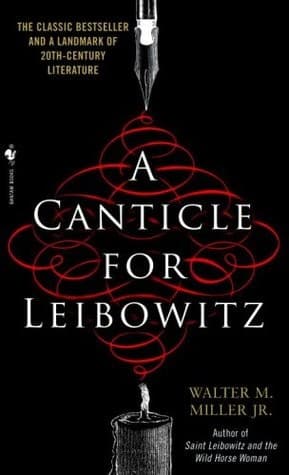
A Canticle for Leibowitz is a rare science fiction classic that treats civilization's rise and fall as a question of faith, memory, and whether knowledge can be trusted with people.
2 creators reviewed A Canticle for Leibowitz on YouTube between 2024 and 2025, with 31.9K views between them. Their opinions are their own; we picked these reviews, we didn't write them.
A Canticle for Leibowitz is a 1959 science fiction novel about a Catholic monastic order in the American Southwest, centuries after a nuclear war has stripped most of the world of its learning. The book is built in three long sections, each set many generations apart, showing a society slowly climbing back toward technology and then sliding toward catastrophe again. Much of the story follows monks who copy and guard scraps of pre-war writing they often cannot fully understand.
The tone is unusual for the genre. Miller writes with dry wit, ceremonial patience, and a steady interest in theology and history, so the plot moves slowly and the ideas carry most of the weight. Characters talk at length, and debates about faith, power, and whether recovered knowledge is safe to use take up as much room as action. Readers who want tight pacing may find parts of the book demanding, while readers drawn to philosophical fiction will find it rewarding.
Reading it feels like sitting with a long, melancholy chronicle that keeps asking the same question in new settings: what do people owe the past, and what will they do with it? It rewards rereading and rarely offers easy answers. Its best moments are quiet ones, where a small act of devotion reveals more about human nature than any battle could.
The monks copy documents they cannot fully read, treating fragments of technical writing almost as sacred relics. Miller asks whether keeping knowledge intact is the same as keeping it useful, and the answer shifts across the book's centuries and makes readers reconsider what libraries and traditions are actually for.
Each section shows humanity rebuilding toward a technological peak and then falling back toward ruin. The book treats history as a cycle of ambition and forgetting rather than a straight line of improvement, and the repetition is deliberate, pushing readers to notice patterns that feel uncomfortably familiar.
The monastic order is never portrayed as simply naive or simply wise. Its members wrestle with obedience, doubt, and the value of learning, and Miller gives skeptics and believers both real arguments, so the religious content reads as a serious intellectual conversation rather than a sermon.
Miller mixes sly comedy, sharp dialogue, and genuine sorrow. That balance keeps the book from becoming a lecture, even when its themes are heavy, and it gives the characters a human texture that makes their small victories and failures matter.
The pacing is slow, and the three sections are separated by large jumps in time, so readers must rebuild the setting and characters each time. Some critics find the characterization thin and note that women appear only rarely. The science and the book's view of technology reflect mid-century concerns, and some readers will find parts of its outlook dated. The third section is often considered the hardest to sustain.
Book details and cover from Google Books.
Ready to read A Canticle for Leibowitz?
Get your copy on Amazon, or listen to it on Audible. We earn a commission if you buy through these links.
Russell Hoban
Like Canticle, it imagines a fractured future where knowledge has been reduced to fragments and rebuilt in strange new forms. Hoban's invented language carries the same sense of a world rediscovering lost meaning.
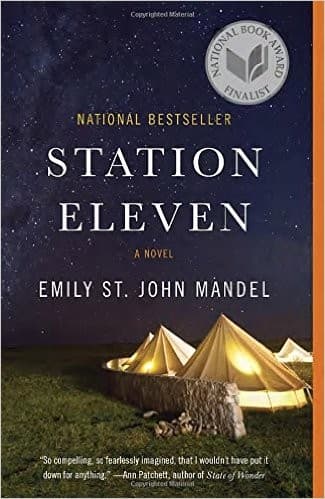
Emily St. John Mandel
It follows a travelling company of performers after a pandemic collapse, asking what culture is worth保存 when the old world is gone. Its quiet, humane look at survival echoes Miller's concern for memory.
Cormac McCarthy
A bleak, spare journey through a ruined landscape, driven by a father's devotion to carrying on what matters. Readers who valued Canticle's solemn tone and its focus on endurance will find the same weight here.
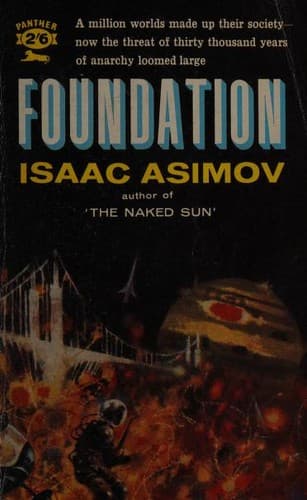
Isaac Asimov
Asimov's classic also spans centuries of decline and recovery, with a mathematician shaping how knowledge is kept alive. It shares Canticle's sense that civilisations rise and fall in patterns across long spans of time.