
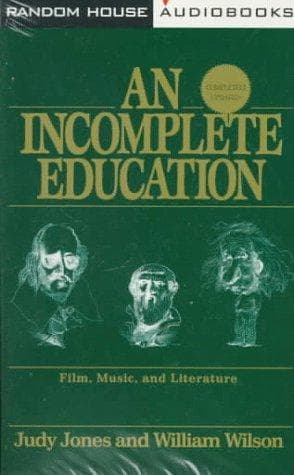
An Incomplete Education
Judy Jones
Like the Times guide, it surveys art, philosophy, science, economics and literature in a single volume, but with a breezier, wittier voice that makes filling cultural gaps genuinely fun.
Reader-supported: when you buy through links on our site, we may earn an affiliate commission. Learn more
We earn a commission if you buy through these links. Learn more
Find Similar BooksA broad, plain-language desk reference from the Times that answers everyday factual questions quickly, useful as a first stop when you want orientation on a subject you know little about.
The New York Times Guide to Essential Knowledge is a one-volume reference book published under the Times name, built to answer the kinds of questions that come up in conversation, at school, or while following the news. This second edition is a substantial revision, meant to bring its coverage up to date while keeping the format that made the first edition useful. Its material is organized by subject area, so you can dip in for a definition, a date, or a short explanation of how something works.
Reading it feels less like following an argument and more like browsing a well-stocked shelf. Most entries are brief and factual, written for someone without specialist training. The book does not build a case or trace a single thread from beginning to end, so you will rarely read it cover to cover. Its value lies in the pleasure of stumbling onto a topic you hadn't considered and wanting to know more.
The experience is that of a good desk reference: quick, orienting, and occasionally absorbing when a short entry sends you off to learn more. It works best as a first stop before deeper reading rather than as a final word on any subject.
The book aims to give a general reader working familiarity with many fields at once, from history and science to culture and current affairs. Instead of going deep on one area, it tries to cover enough ground that you can follow a conversation or a news story without feeling lost. Its breadth is the central promise, and it is the main reason to pick it up over a more specialized title.
Entries are written to be understood without a background in the subject. Technical terms are generally explained rather than assumed, which makes the book approachable for students and curious adults alike. The tone is clear and businesslike rather than chatty, so you get the information quickly without much padding around it.
The book presents information in a reference format rather than making a sustained case for any view. This means it is good for checking a date, a term, or a basic definition, but it will not teach you how experts argue about a question. Treat each entry as a foothold that points toward further reading.
Because the material is organized by subject and split into short pieces, the book suits brief sessions rather than continuous reading. You can open it while waiting for something, look up one thing, and close it again. This structure is what makes a reference book useful over years rather than a single read.
As a reference book, it cannot offer the depth, nuance, or sustained reasoning found in a good monograph, and it does not explain why experts disagree on many questions. Coverage is selective, so some topics you care about may be thin or missing. Factual content dates quickly, and a printed reference cannot keep pace with news or with the frequent updating of online sources. Check anything time-sensitive against a current source before relying on it.
Book details and cover from Google Books.
Ready to read The New York Times Guide to Essential Knowledge, Second Edition?
Get your copy on Amazon, or listen to it on Audible. We earn a commission if you buy through these links.
Judy Jones
Like the Times guide, it surveys art, philosophy, science, economics and literature in a single volume, but with a breezier, wittier voice that makes filling cultural gaps genuinely fun.
David S. Kidder, Noah D. Oppenheim
Breaks general knowledge into short daily readings across history, literature, science and more, ideal for readers who liked dipping into the Times guide a topic at a time.
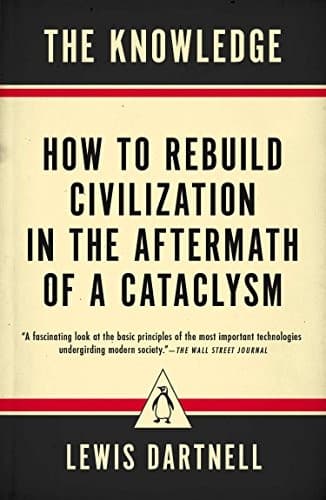
Lewis Dartnell
Explains how civilisation's essential know-how works, from agriculture to chemistry, offering the same practical, foundational understanding the Times guide gives across many fields.
Bill Bryson
Covers cosmology, geology, chemistry and biology in one engaging narrative, perfect if the Times guide's science chapters left you wanting the stories behind the facts.