
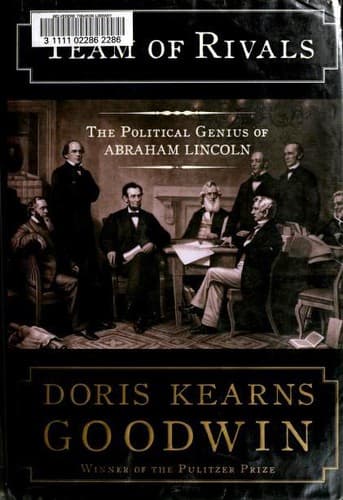
Team of Rivals
Doris Kearns Goodwin
Like the daily devotional's focus on pivotal moments, this book follows Lincoln and his rivals through the crisis of the Civil War, bringing a dense period to life through individual decisions and personalities.
Reader-supported: when you buy through links on our site, we may earn an affiliate commission. Learn more
We earn a commission if you buy through these links. Learn more
Find Similar Booksby David S. Kidder, Noah D. Oppenheim
Guide by the Books of the Day editors · Updated · How we write our guides
A year of bite-sized American history entries that work as a gentle daily habit, though each one stays shallow enough that it rewards browsing more than deep study.
2 creators reviewed The Intellectual Devotional: American History on YouTube between 2010 and 2012, with 7.7K views between them. Their opinions are their own; we picked these reviews, we didn't write them.
The book follows a daily-reading format: 365 short entries drawn from American history, each meant to be read in a few minutes. Entries mix turning-point events, brief profiles of public figures and everyday people, and quotations attributed to figures such as Jefferson, Franklin, and King. Each entry stands alone, so you can open to any page without needing the previous one.
The approach is survey-level. An entry gives you a snapshot of a moment or a person, names the key details, and moves on. It reads more like a calendar of prompts than a narrative, so the experience is light, episodic, and easy to pick up and put down. Connections across the year are mostly left for you to make.
Its strength is habit and breadth. If you want a daily nudge to think about the country's past, it does that job. If you want argument, sourcing, or a continuous story, you will need other books. Treat it as a starting point, and let a few entries send you toward longer reading on the people or episodes that catch your interest.
The core idea is that small, regular exposure to the past builds knowledge more reliably than occasional long reading sessions. Each entry is short enough to finish in a sitting, which makes the book an easy part of a morning routine. The payoff is cumulative: over a year you accumulate a loose but usable map of major events and figures.
Many entries anchor a historical moment in a specific person's choices, words, or circumstances rather than in abstract forces. This makes events easier to remember and gives a sense of how individuals responded to pressure. The trade-off is that broader social and economic causes often get less room than the personal angle.
Using words attributed to well-known figures is a deliberate way to make the past feel immediate. Quotes work as hooks that invite you to ask what the speaker meant and why it mattered at the time. Because such quotes circulate widely, it is worth checking a source before repeating one.
The book prioritizes covering a wide range of episodes over developing any one in detail. That makes it a good sampler and a poor substitute for a full history. Readers who finish a page wanting more are the book's intended audience, and the format rewards following up on whatever sparks curiosity.
The format is the main constraint. Entries are brief, so complex events and debates are compressed, and readers may come away with a simplified picture. The book dates from 2007 and does not reflect later scholarship or how historians have since reassessed some figures and episodes. Coverage reflects a popular, selective view of the past, and some readers may find the balance of topics uneven. Quotations and attributions should be verified before you cite them elsewhere.
Book details and cover from Google Books.
Ready to read The Intellectual Devotional: American History?
Get your copy on Amazon, or listen to it on Audible. We earn a commission if you buy through these links.
Doris Kearns Goodwin
Like the daily devotional's focus on pivotal moments, this book follows Lincoln and his rivals through the crisis of the Civil War, bringing a dense period to life through individual decisions and personalities.
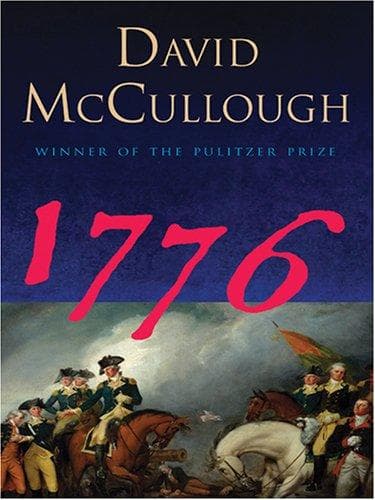
David McCullough
It covers a single pivotal year in the Revolution, drawing on letters and firsthand accounts in the vivid, accessible style that makes short historical readings feel immediate.

Howard Zinn, Kathy Emery
Zinn retells American history from the perspective of ordinary people and those left out of official accounts, offering the same wide-ranging scope and moral urgency the devotional brings to its readings.
Joseph J. Ellis
Ellis focuses on a handful of revealing episodes among the founders, giving the human, personal side of the nation's beginnings that readers of biographical profiles often enjoy.