
The Selfish Gene
Richard Dawkins
Dawkins supplies the gene-centred logic that Wright builds on. If The Moral Animal's idea that our behaviour reflects ancestral strategies appealed to you, this is the foundation it rests on.
Reader-supported: when you buy through links on our site, we may earn an affiliate commission. Learn more
We earn a commission if you buy through these links. Learn more
Find Similar BooksGuide by the Books of the Day editors · Updated · How we write our guides
A journalist's tour of evolutionary psychology that asks what natural selection means for jealousy, status, and our moral sense, and whether those roots should change how we judge ourselves.
2 creators reviewed The Moral Animal on YouTube between 2022 and 2023, with 6.5K views between them. Their opinions are their own; we picked these reviews, we didn't write them.
The Moral Animal, published in 1994, is Robert Wright's attempt to take evolutionary psychology out of specialist journals and show how it reshapes ordinary life. Wright is a journalist rather than a researcher, and he writes like one. He leans heavily on the scientists themselves and keeps a running argument about what their work implies, so the reader follows a line of reasoning rather than a textbook survey.
The core claim is that the human mind was shaped by natural selection to pursue survival and reproduction in ancestral environments, and that many of our feelings, including attraction, jealousy, resentment, guilt, and the urge to be fair, are the residue of that history. Wright moves through mating, parenting, friendship, and workplace rivalry, asking why these patterns look the way they do and where they pull against each other. The tone is curious and conversational, with frequent asides that keep the theory tied to everyday situations.
Reading it feels less like being lectured than like being walked through a set of arguments and invited to test them. Wright is willing to take positions, and he is also fairly open about how much remains speculative. The experience is closer to a long, well-argued magazine feature than a dense monograph, though the ideas are demanding enough to reward a slow read.
Wright treats our sense of right and wrong as something natural selection built, not as a product of pure reason. Indignation, guilt, and the feeling that something is unfair all have plausible adaptive roots. That raises a hard question: if our moral intuitions were shaped for social advantage, can they still be trusted as guides to what is actually good? The book takes this question seriously rather than dismissing it.
Helping unrelated people looks like it should not evolve, yet it does, under certain conditions. Wright explains how repeated interaction, reputation, and reciprocity can make cooperation pay, and why gratitude, friendship, and the tracking of who cheated whom become so important. This is the book's most accessible thread and a good way into the rest of its argument about social life.
Men and women face different reproductive stakes, and Wright argues that this difference shapes mate choice, jealousy, and infidelity in predictable ways. He presents these as tensions and strategies rather than fixed destinies, which matters for the book's central question about whether monogamy serves women's interests. Readers should expect the argument to be provocative and to invite pushback.
Wright draws on the idea that people often believe flattering stories about themselves because a convincing liar does better when he or she is not visibly lying. This helps explain status games and office politics, where people hide their motives even from themselves. The point links private psychology to public life and gives the book much of its bite when it turns to ordinary workplaces.
The book is from 1994, and many of its specific claims rest on research that has since been revised, extended, or disputed. Critics argue that evolutionary explanations of behavior can slide into just-so stories that are hard to falsify, and that the gender-related conclusions are more contested than the book's confident tone suggests. The policy discussion is thinner than the title's ambitions imply, and culture, learning, and individual variation get less attention than the evolutionary account does.
Book details and cover from Google Books.
Ready to read The Moral Animal?
Get your copy on Amazon, or listen to it on Audible. We earn a commission if you buy through these links.
Richard Dawkins
Dawkins supplies the gene-centred logic that Wright builds on. If The Moral Animal's idea that our behaviour reflects ancestral strategies appealed to you, this is the foundation it rests on.
Matt Ridley
Ridley explores sex, mating and evolutionary arms races with the same mix of accessible storytelling and rigorous science that makes The Moral Animal engaging for general readers.
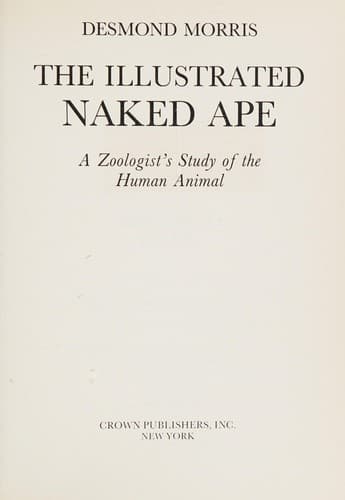
Desmond Morris
Morris treats humans as one more animal species, examining our behaviour through a biological lens. Readers who enjoyed Wright's frank, unsentimental view of human nature will find the same spirit here.
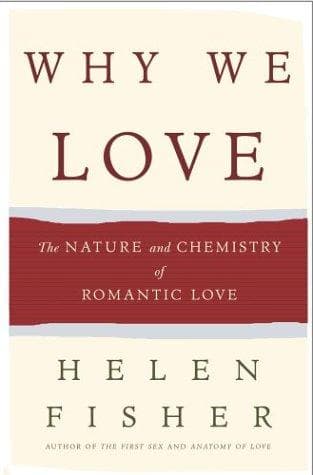
Helen Fisher, Helen E. Fisher
Fisher examines romantic love through brain chemistry and evolution, much as Wright explains attraction and mate choice through reproductive strategy. It suits readers drawn to his discussion of sexual preferences.