
The Selfish Gene
Richard Dawkins
Dawkins offers the gene-centred view of evolution that underlies much of The Red Queen's reasoning about why organisms must keep adapting just to stay in place. Expect a similarly sharp, argument-driven style.
Reader-supported: when you buy through links on our site, we may earn an affiliate commission. Learn more
We earn a commission if you buy through these links. Learn more
Find Similar Booksby Matt Ridley
Guide by the Books of the Day editors · Updated · How we write our guides
Ridley uses the idea that sex evolved to outrun parasites as a lens on mating, sexual selection and human behaviour, making a dense field of evolutionary biology readable for curious general readers.
2 creators reviewed The Red Queen on YouTube between 2021 and 2025, with 4K views between them. Their opinions are their own; we picked these reviews, we didn't write them.
The Red Queen is a popular science book about why sex exists and what the answers imply for human behaviour. Its organising idea comes from Lewis Carroll: the Red Queen has to keep running just to stay in place. Ridley applies that image to evolution, arguing that organisms, and especially their parasites, are locked in a constant arms race, and that sexual reproduction is one of the main ways populations keep shuffling their genes to stay ahead.
The book moves from that central puzzle into sexual selection: how animals choose mates, why some traits such as elaborate ornaments persist, and why males and females often have conflicting interests. Ridley draws on a wide range of studies from biology and genetics, and he is at his best when explaining the logic of competing theories and the experiments that tested them. He is also a lively writer who enjoys a vivid example and a sharp summary.
Reading it feels like being guided through a long argument by a confident, opinionated tour guide. The science is presented with energy, and the author is willing to take sides. That makes it engaging, but it also means you are reading one author's interpretation of a contested field, not a neutral survey.
The central argument is that reshuffling genes through sex may help populations stay ahead of fast-evolving parasites. Each generation's new gene combinations give some offspring a chance to resist whatever infections are circulating. The idea reframes sex from a puzzling cost into a survival strategy, and Ridley treats it as the thread that connects the rest of the book.
Ridley explains how mate choice can drive evolution as strongly as survival does. Traits that look wasteful or dangerous, such as elaborate displays, can persist because they signal quality or attract partners. The book shows how this logic can produce rapid change and how it differs from simple natural selection on survival.
Males and females share genes but not always goals. Differences in how much each sex invests in offspring, and in how many partners each can benefit from, create tension over mating and parenting. Ridley uses this framework to explain patterns of competition, deception and commitment across species, and then asks what it might mean for people.
The later chapters move from animals to humans and make claims about typical male and female preferences and behaviour. This is the most provocative part of the book. It asks readers to see human sexuality through the same evolutionary lens, but the strength of the link between the animal evidence and the human conclusions is a question the reader must weigh for themselves.
Parts of the book date from the early 1990s, and fields such as genetics and evolutionary psychology have moved on since then. Ridley's application of animal findings to human behaviour has been criticised as speculative and as relying on selective evidence, and some readers find his portrait of gender differences overly confident. The book also gives limited attention to cultural variation and to the social contexts that shape human mating. Treat its human conclusions as hypotheses to test rather than settled findings.
Book details and cover from Google Books.
Ready to read The Red Queen?
Get your copy on Amazon, or listen to it on Audible. We earn a commission if you buy through these links.
Richard Dawkins
Dawkins offers the gene-centred view of evolution that underlies much of The Red Queen's reasoning about why organisms must keep adapting just to stay in place. Expect a similarly sharp, argument-driven style.

Carl Zimmer
Zimmer explores the parasites that drive host evolution, the very pressure The Red Queen says made sex worthwhile. It is a vivid, well-reported companion for readers fascinated by the constant arms race between species.
Jonathan Weiner
Weiner follows Galápagos finches as their beaks change in real time, showing evolution as a live process. Readers who enjoyed Ridley's grounded, example-led approach will find the same appeal in its field-based storytelling.
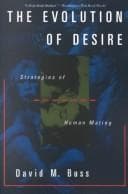
David M. Buss
Buss reports large studies of what men and women seek in partners, the mate preferences The Red Queen discusses in its account of blondes, status and youth. It is clear, data-driven and grounded in evolutionary psychology.