
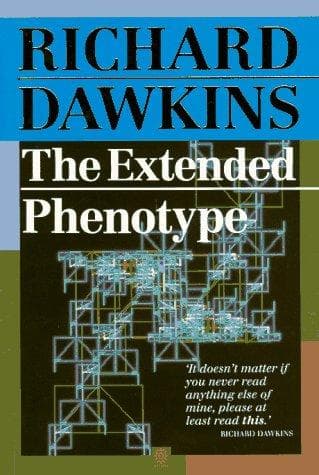
The Extended Phenotype
Richard Dawkins, Wolfgang Mayer
Dawkins's own sequel in spirit, pushing the selfish gene argument further to show genes reaching beyond bodies into nests, dams and even other organisms' behaviour.
Reader-supported: when you buy through links on our site, we may earn an affiliate commission. Learn more
We earn a commission if you buy through these links. Learn more
Find Similar BooksGuide by the Books of the Day editors · Updated · How we write our guides
A 1976 classic that reframes evolution around the gene rather than the individual, explaining cooperation, cheating, and self-sacrifice with clear logic and memorable metaphors.
2 creators reviewed The Selfish Gene on YouTube between 2014 and 2015, with 866.7K views between them. Their opinions are their own; we picked these reviews, we didn't write them.
The Selfish Gene argues that the basic unit of natural selection is the gene, not the individual, the species, or the group. Dawkins describes organisms as temporary survival machines built by genes, which are replicators that persist across generations by being copied. Once you accept that frame, behaviour that looks generous, cooperative, or cruel starts to read as the predictable result of genes that spread by being copied.
The book's main strength is its style. Dawkins writes like a confident lecturer who enjoys a sharp analogy and takes care to define loaded words such as altruism and selfishness in precise, behavioural terms, so readers are not lost in jargon. The chapters work less like a survey of biology than a sequence of arguments, each building on the last, and the tone is often playful and combative toward rival views.
Reading it feels like being walked through a change of perspective. Much of the material is reasoning and thought experiment rather than data, so the payoff is in following the logic and seeing how it reorganises familiar examples. Expect to finish with a new vocabulary and a habit of asking whose interests a given trait actually serves. It is a foundation text, not a manual of current research.
Dawkins asks readers to see genes as the replicators that survive over time, while bodies, colonies, and even species are temporary vehicles that carry them. Selection favours gene variants that get copied more successfully, so the question shifts from what is good for the species to what helps a gene persist. This is the idea that gives the book its title and its provocation.
Relatives share genes, so a gene that promotes helping kin can spread even at a cost to the helper. Dawkins popularises the logic developed by W.D. Hamilton, who is quoted on the cover. It explains why parents, siblings, and even social insects can behave in self-sacrificing ways without any appeal to group benefit.
Drawing on game theory, Dawkins shows why animal contests are often ritualised rather than fatal. The success of any behaviour depends on what others in the population are doing, so a stable mix of aggressive and cautious strategies can persist. The approach, associated with John Maynard Smith, replaces simple talk of 'the good of the species' with calculations about payoffs.
Cooperation between unrelated individuals can evolve when interactions are repeated and cheaters can be recognised and punished. Dawkins covers this with the work of Robert Trivers and the logic of simple reciprocity strategies. The discussion of deceit and cheating shows that cooperation is never automatic, because every cooperative system invites exploitation.
In the closing chapters Dawkins introduces the meme, a cultural unit that copies itself from mind to mind much as genes copy through bodies. The idea is speculative and has been developed far beyond what he proposed, but it is the part of the book that most directly extended the selfish gene logic into human culture.
The central metaphor, that genes are selfish and act with purpose, is the book's most debated feature. Dawkins used it deliberately, but many readers take it literally, and he later spent real effort clarifying his meaning. Critics also argue that gene-centred thinking underplays group and multilevel selection, a debate that has continued in the decades since. The book predates genome sequencing and modern work on epigenetics, so some empirical examples are dated. The meme chapter is speculative and should be read as a proposal, not a finding.
Book details and cover from Google Books.
Ready to read The Selfish Gene?
Get your copy on Amazon, or listen to it on Audible. We earn a commission if you buy through these links.
Richard Dawkins, Wolfgang Mayer
Dawkins's own sequel in spirit, pushing the selfish gene argument further to show genes reaching beyond bodies into nests, dams and even other organisms' behaviour.
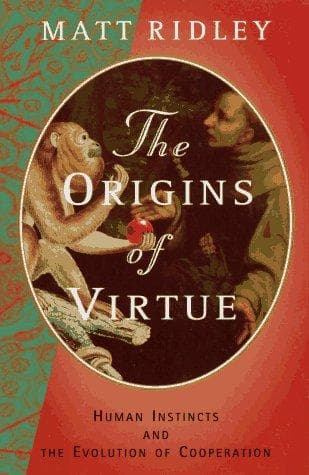
Matt Ridley
Picks up the puzzle of cooperation that The Selfish Gene raised, exploring reciprocal altruism, game theory and trust in humans and animals in accessible, lively prose.
Matt Ridley
Tackles the evolution of sex and sex differences, themes Dawkins introduced, explaining why sexual reproduction exists and how it shapes human nature.
Jerry A. Coyne
A clear, evidence-packed case for natural selection that gives Selfish Gene readers the factual foundation beneath Dawkins's theoretical arguments.