
We earn a commission if you buy through these links. Learn more
Command and Control
Guide by the Books of the Day editors · Updated · How we write our guides
A reported history of American nuclear weapons safety that shows how close the country came to accidental disaster, and how much of its safety depended on luck and on people who were often ignored.
What Creators Say About Command and Control
2 creators reviewed Command and Control on YouTube between 2017 and 2023, with 1.6K views between them. Their opinions are their own; we picked these reviews, we didn't write them.
What It's About
Command and Control is Eric Schlosser's investigation into the nuclear weapons the United States built and deployed during the Cold War, and especially into the accidents that happened along the way. He builds his account around specific incidents, most famously a 1961 B-52 bomber breakup over North Carolina that dropped two hydrogen bombs, and a 1980 Titan II missile explosion in Arkansas. Each episode is reconstructed in detail, with the technical failures, bureaucratic habits and split-second decisions laid out so the reader can see how ordinary errors became dangerous ones.
The book is written as narrative nonfiction rather than a policy manual. Schlosser moves between the bombs, the men who maintained them, the military chains of command and the engineers who tried to design fail-safes, such as the locks meant to stop an unauthorized launch. The tone is sober and often angry, and the pacing mostly works because the stories are gripping in themselves. Some sections involve dense engineering and organizational detail, so expect to slow down in places.
Reading it feels like being shown a set of files that were not meant to be opened. The experience is unsettling more than comforting, and it leaves you thinking about how much of the modern world rests on systems nobody fully controls.
Read this if you…
- are curious about Cold War history beyond the familiar diplomatic story
- want a well-researched account of how close the world came to nuclear accidents
- enjoy narrative nonfiction that reads almost like a thriller but is grounded in documents and interviews
Skip it if you…
- want a balanced survey of nuclear strategy, deterrence theory or arms control negotiations
- find long passages on engineering and military procedure hard to stay with
Key Ideas
- 1
Accidents were more common than the public knew
Schlosser argues that the nuclear arsenal produced a steady stream of mishaps, from crashes and fires to dropped weapons, and that secrecy kept most of them out of public view. The book's central move is to make those hidden incidents visible and to show that they were not freak events but a predictable result of building and handling enormous destructive power.
- 2
Safety depended on fragile mechanical and electrical locks
A recurring thread is the set of devices designed to keep a weapon from arming or detonating without authorization. Schlosser traces how these safeguards were added, how they sometimes failed, and how the military's reliance on them shifted over time, leaving the reader to judge whether the margin of safety was as wide as officials claimed.
- 3
Civilian control versus military culture
The book examines the tension between elected leaders and the military commands that actually operated the weapons. It asks how much real oversight existed, how information moved up and down the chain, and whether the people with the most knowledge of the risks had the least power to act on them.
- 4
Technology outrunning human judgment
Beyond the Cold War specifics, Schlosser presents a broader warning about complex systems that become harder for any person to understand fully. His interest is in the gap between what machines are designed to do and what happens when people are under pressure, tired or misinformed.
Limitations
Schlosser's sympathies are plainly with the critics of the nuclear program, and some readers find the argument one-sided, particularly on the value of deterrence. The book focuses on American accidents and does not give equal attention to the Soviet or other arsenals. Some technical details have been superseded by later safety reforms and declassifications, so it should be read as a view of its era rather than a current status report.
Questions Readers Ask
- Is Command and Control still relevant today?
- Yes, the core questions about command authority, safety locks and the risk of human or technical error still matter for any nuclear arsenal. Some specific systems described have changed, so treat the book as a historical account of how the risks were managed and mismanaged, not as a guide to today's weapons.
- How does it compare to Dr. Strangelove or other nuclear thrillers?
- The book is nonfiction and far less comic than Kubrick's film, though both share a sense that the machinery of nuclear war is absurdly fragile. Readers who enjoyed the film's darkness will likely appreciate Schlosser's documented account, but they should expect a sober, investigative tone rather than satire.
- Published
- 1848
- ISBN
- 9780141943176
- Difficulty
- intermediate
- Category
- Tech
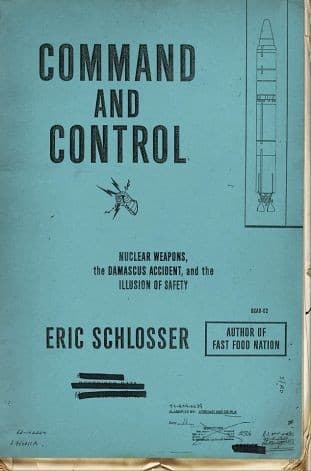
Book details and cover from Google Books.
Ready to read Command and Control?
Get your copy on Amazon, or listen to it on Audible. We earn a commission if you buy through these links.