
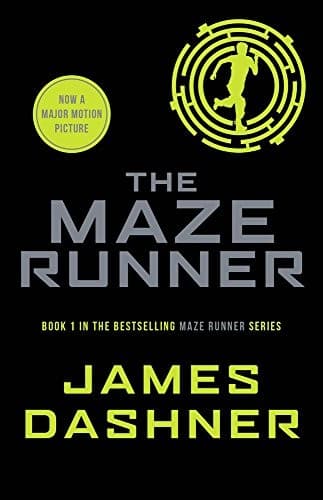
The Maze Runner
James Dashner
Like the arena in The Hunger Games, a lethal maze traps teenagers who must cooperate, scheme and survive while unseen controllers watch. It is fast, cliffhanger-driven and full of mystery.
Reader-supported: when you buy through links on our site, we may earn an affiliate commission. Learn more
We earn a commission if you buy through these links. Learn more
Find Similar BooksA tense, fast-moving survival story that doubles as a sharp critique of spectacle, inequality, and media manipulation, told through one of YA fiction's most memorable heroines.
In the nation of Panem, built on the ruins of North America, a wealthy Capitol rules twelve impoverished districts. Each year it demands one boy and one girl from every district to fight to the death in a televised arena. When her younger sister is chosen, sixteen-year-old Katniss Everdeen volunteers in her place. She heads to the Capitol alongside Peeta Mellark, a baker's son with whom she shares an uneasy history.
Collins tells the story in Katniss's present-tense first-person voice. It is clipped, wary, and practical, the voice of someone who has spent years hunting illegally to keep her family fed. That voice makes the book. Katniss is constantly calculating: what the audience wants to see, who she can trust, and how much of herself she has to perform to survive. The pacing is relentless. Short chapters often end on cliffhangers, and the arena sections read almost like a thriller.
Underneath the action, the novel asks uncomfortable questions about watching suffering as entertainment, about the gap between the comfortable and the desperate, and about how image can become a weapon. It works as a gripping page-turner for younger teens, and it gives adult readers plenty to think about. Note that the publisher blurb supplied here appears to describe the sequel, Catching Fire. This page covers the first book, which is where the trilogy begins.
The Games are a reality show as much as a punishment. Collins draws on war coverage and reality television to show how an audience can be trained to cheer for children's deaths. The Capitol's viewers are not cartoon villains. They are shallow and comfortable, and that makes the critique sting more than simple evil would.
Katniss learns quickly that skill alone will not save her. Sponsors, stylists, and interviews matter as much as her bow. Much of the tension comes from her struggle to decide which feelings are real and which are staged for cameras. That question about authenticity runs through the whole trilogy.
The districts are kept hungry, divided, and resentful of one another, while the Capitol lives in excess. The reaping and the Games exist to remind everyone who holds power. Collins makes hunger concrete and physical, so the political point lands through daily detail rather than lectures.
Katniss is prickly, guarded, and focused on protecting her family rather than on romance or destiny. Her competence comes from hard experience, not magic or a prophecy. That grounded quality, along with her moral discomfort about what she must do, set the template for many YA heroines that followed.
The prose is functional rather than literary, and some readers find the present-tense narration flat. Panem's world-building is thin in places: the economy, history, and politics beyond what Katniss sees stay sketchy. The romantic triangle that begins here can feel like a genre obligation next to the sharper political material. Comparisons to Koushun Takami's Battle Royale come up often, though Collins's focus on media and spectacle gives her book its own identity. As a first volume, it leaves major threads open for the sequels.
Reviews from readers on YouTube. Their opinions are their own.
Book details and cover from Google Books.
Ready to read The Hunger Games?
Get your copy on Amazon, or listen to it on Audible. We earn a commission if you buy through these links.
James Dashner
Like the arena in The Hunger Games, a lethal maze traps teenagers who must cooperate, scheme and survive while unseen controllers watch. It is fast, cliffhanger-driven and full of mystery.
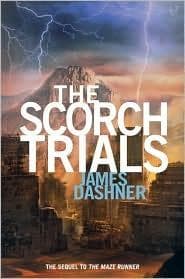
James Dashner
If the arena's survival tests gripped you, this sequel throws its characters into a brutal desert trial with shifting loyalties, giving the same breathless danger as Katniss's fight for life.
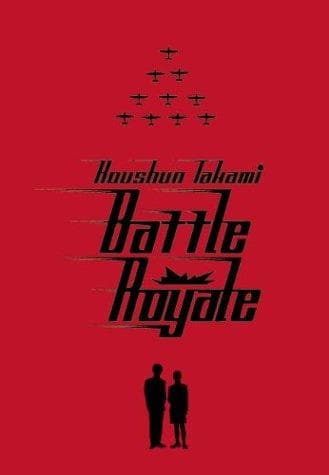
Kōshun Takami, Masayuki Taguchi
An older, darker classic where students are forced by an authoritarian state to kill each other. Best for mature readers who want the raw premise of The Hunger Games pushed further.
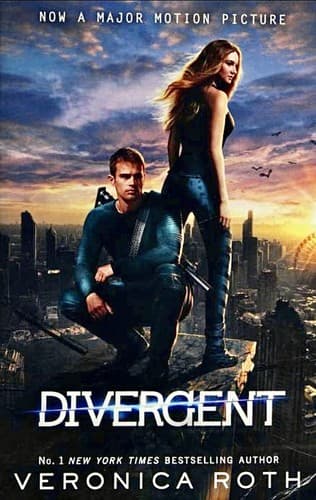
Veronica Roth
A divided society, a heroine who doesn't fit and a growing threat from those in power echo Panem's districts. Tris's tough training and quiet defiance will appeal to Katniss fans.