
We earn a commission if you buy through these links. Learn more
Battle royale
by Kōshun Takami, Masayuki Taguchi
On screen: Battle Royale (film, 2000)
Guide by the Books of the Day editors · Updated · How we write our guides
A bleak, darkly satirical thriller about a ninth-grade class forced into a fight to the death, worth reading for its unsettling questions about youth, authority, and what people do when survival is the only rule.
What Creators Say About Battle royale
2 creators reviewed Battle royale on YouTube between 2024 and 2026, with 13.6K views between them. Their opinions are their own; we picked these reviews, we didn't write them.
What It's About
Battle Royale, first published in Japan in 1999, follows a class of ninth graders who are taken to a remote island under a state program that pits them against one another. Each student wears a metal collar, the rules are simple, and the last one standing goes home. Takami moves among many characters, so you get brief portraits of dozens of kids. Some are sympathetic, some are blank, and some are openly cruel. You watch alliances form, fracture, and collapse in real time, and you often learn who is in danger only when the book is ready to show you.
The style is blunt and propulsive. Chapters are short and the tone is flat, close to a news report, which makes the violence feel matter-of-fact and therefore harder to shrug off. Periodic announcements of the dead and the rules of the game give the story the cold rhythm of a broadcast. The satire of a society that treats adolescents as disposable is sharp rather than subtle, and the book makes little effort to soften its points. Expect a page-turner that is also uncomfortable to sit with.
Reading it feels less like solving a puzzle and more like being shut in a pressure cooker. The book keeps asking what these kids would do in the same position, and what the adults who designed the game think they are proving. It is a commercial thriller with real ideas behind it, not a quiet literary novel, and it rewards readers who want momentum and moral pressure more than careful character study.
Read this if you…
- want a fast, gripping thriller with a dark satirical edge
- are curious how Japanese society and its school pressures are critiqued in fiction
- can handle sustained graphic violence and want a story that is hard to put down
Skip it if you…
- need likable heroes, a hopeful arc, or a reassuring ending
- expect a practical book about education, despite the category label; this is a novel
Key Ideas
- 1
Adults using children as a test
The game is presented as a national program, and the adults who run it treat the students as data points in a policy experiment. Takami uses this setup to attack a political culture that sees young people as a problem to be managed. The cruelty is institutional before it is personal, and that is the book's central accusation.
- 2
Schooling pressure as a source of rage
Because the story takes place in a classroom, the book examines how exam-driven, conformist schooling shapes its students. Many of the characters arrive at the island already carrying resentment toward teachers, parents, and peers. The novel suggests that the violence it stages was already present in ordinary school life, just hidden behind routine.
- 3
Survival turns friends into rivals
The book is less interested in heroes than in how quickly loyalty erodes under threat. Friendships are tested, trust is weighed against self-preservation, and decent characters make hard choices. The emotional weight comes from watching ordinary teenagers reason their way toward terrible decisions.
- 4
Spectacle and the public gaze
The game is framed as entertainment and deterrence, watched and discussed by people far from the island. That framing makes the book a critique of media spectacle as well as state power. Readers are invited to notice their own appetite for watching other people suffer, which is part of why the story feels so uneasy.
Limitations
The violence is frequent and graphic, which will put off many readers, and the book can feel repetitive in its brutality. The cast is very large, so many students get only a sketch, and some characters blur together. The satire is often heavy-handed, and the portrayal of Japanese schooling and militarism assumes cultural context that international readers may need to look up. Translations vary in smoothness, and the film adaptation and later spin-offs take different approaches, so the book is not the only version to judge.
Questions Readers Ask
- Is Battle Royale the same as the 2000 film?
- No. The 2000 film by Kinji Fukasaku follows the same basic premise but cuts and reshapes much of the material. The novel offers far more interior perspective on the students, many more minor characters, and a looser, more digressive structure. Many readers find the book darker and more sprawling than the film.
- Is it still relevant today?
- Yes, especially for its critique of institutions that treat young people as expendable and of media that turns suffering into entertainment. Its specific references to 1990s Japan date it somewhat, but the core questions about pressure, loyalty, and spectacle feel current.
- Who should read it first if they are new to the author?
- Readers who enjoy dystopian thrillers and do not mind bleak material are the best fit. If you want a gentler entry into Japanese fiction about youth and social pressure, consider a more restrained novel first, since this one is intentionally extreme.
- Published
- 1999
- ISBN
- 9781974743797
- Difficulty
- intermediate
- Category
- Education
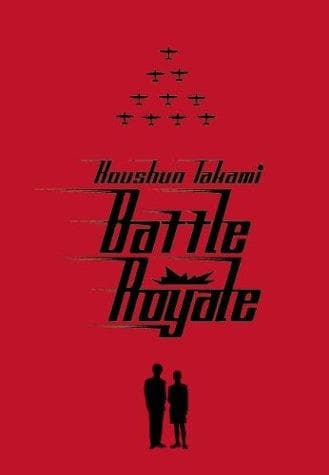
Book details and cover from Google Books.
Ready to read Battle royale?
Get your copy on Amazon, or listen to it on Audible. We earn a commission if you buy through these links.