
The Hunger Games
Suzanne Collins
Like The Maze Runner, it throws a group of young people into a deadly system they must decode while staying alive. Its arena rules unfold with the same page-turning urgency and sharp, uneasy tension.
Reader-supported: when you buy through links on our site, we may earn an affiliate commission. Learn more
We earn a commission if you buy through these links. Learn more
Find Similar BooksOn screen: The Maze Runner (film, 2014)
Guide by the Books of the Day editors · Updated · How we write our guides
A fast, puzzle-driven dystopian mystery that trades explanation for momentum, with a boy who wakes up in a walled maze knowing only his name.
2 creators reviewed The Maze Runner on YouTube between 2014 and 2025, with 96.3K views between them. Their opinions are their own; we picked these reviews, we didn't write them.
The Maze Runner opens with Thomas, a teenager who arrives in a rising metal box with no memory beyond his own name. He joins a community of boys living in a walled clearing called the Glade, which sits at the center of an enormous stone maze. Every month a new boy arrives, and the group has settled into routines built around farming, shelter, and a small corps of runners who map the maze's shifting corridors each day. Nobody knows how they got there or how to leave.
Dashner builds the book as a mystery told in close third person, so the reader learns the rules of the place at the same pace as Thomas. Much of the pleasure comes from trying to work out what the maze is for, who runs the place, and why the walls behave as they do. The prose is lean and quick, with short chapters and frequent cliffhanger endings, and the danger is regularly physical rather than abstract. It is closer to a thriller with a puzzle at its heart than to a slow-burn literary dystopia.
Reading it feels like being dropped into a game whose rules you have not learned. Expect a brisk pace, a strong sense of group tension, and violence aimed at a teen audience. The emotional core sits in friendships and in the question of whether the boys can trust one another when survival depends on it. The book ends on an opening rather than a resolution, and it works best as the first part of a longer series.
Every boy in the Glade arrived with his memories wiped except for his name, so the community has had to invent its own history, laws, and jobs from scratch. The book uses this to ask how much of a person's character lives in memory, and what a group becomes when nobody remembers why it exists. The question stays alive throughout, even when the action is loud.
The Gladers have organized themselves around strict customs: assigned work, a council, and a rule about the maze that everyone accepts without question. Dashner shows how quickly such systems harden into habit and authority, and how hard it is to challenge them when they keep people alive. Readers who enjoy watching social order form under pressure will find the best material here.
The maze works like a living puzzle: its walls shift, its layout is only partly mapped, and the runners who explore it each day piece together a picture no one can yet see whole. The book rewards readers who enjoy following clues and testing theories, and it keeps the mechanics deliberately unexplained for much of its length, which fuels the page-turning pull.
Under constant threat, the boys' loyalties shift between hope, suspicion, and necessity. Thomas's relationships with the other Gladers are the emotional heart of the story, and the book is most affecting when it shows how fear can make people turn on each other even when they want to help. The bonds are more interesting than the monsters.
Some readers find the characters thin, especially the supporting Gladers, who often blur together and are defined by one trait each. The violence is frequent and sometimes graphic for a young audience, and the prose is plain rather than memorable. Dashner also leaves the central mystery largely open, so readers who dislike cliffhangers may feel the book is only setup. The worldbuilding is deliberately sparse, which some see as a strength and others as a missed opportunity. Readers should expect a series, not a standalone.
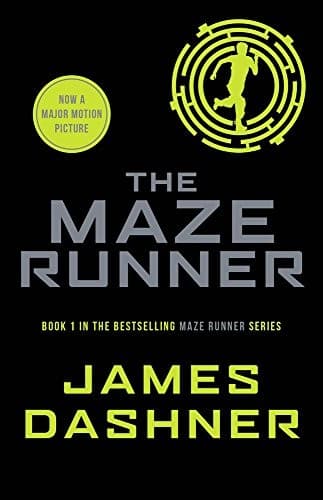
Book details and cover from Google Books.
Ready to read The Maze Runner?
Get your copy on Amazon, or listen to it on Audible. We earn a commission if you buy through these links.
Suzanne Collins
Like The Maze Runner, it throws a group of young people into a deadly system they must decode while staying alive. Its arena rules unfold with the same page-turning urgency and sharp, uneasy tension.
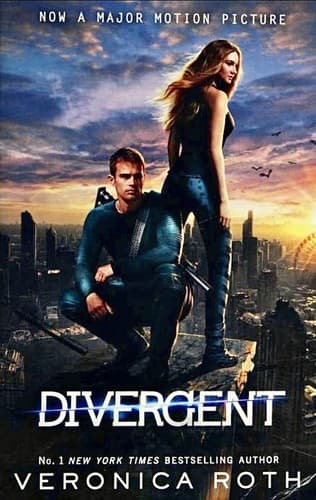
Veronica Roth
It shares the Maze Runner's dystopian setting and a society built on strict rules that teenagers begin to question. Readers who enjoyed the walled world and the sense of hidden systems will find the same momentum.

Lois Lowry
A short, haunting story about a controlled community that hides its true nature. It rewards the same curiosity about why a closed world is built the way it is, in a quieter key.
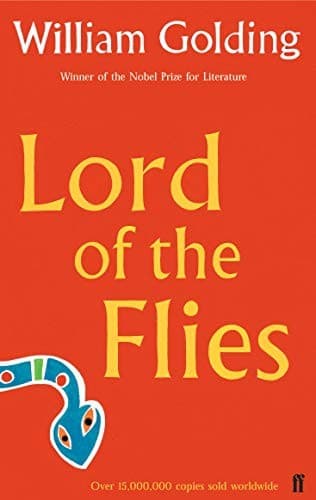
William Golding
Stranded boys must organise themselves without adults, and the fear and rivalry grow as fast as the danger. It is the classic that Maze Runner readers often recognise in its group dynamics.