
The Hunger Games
Suzanne Collins
Like Divergent, it follows a determined teenage girl forced into a brutal, controlled society, with a first-person voice that keeps the tension high from the first chapter.
Reader-supported: when you buy through links on our site, we may earn an affiliate commission. Learn more
We earn a commission if you buy through these links. Learn more
Find Similar BooksOn screen: Divergent (film, 2014)
Guide by the Books of the Day editors · Updated · How we write our guides
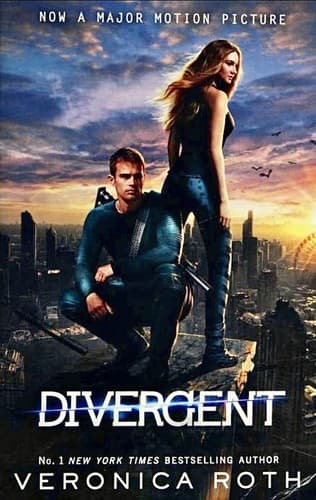
Roth's Divergent places Tris Prior in a walled Chicago sorted into five personality factions. Who will enjoy its fast pace, and who will find it thin.
2 creators reviewed Divergent on YouTube in 2012, with 93.4K views between them. Their opinions are their own; we picked these reviews, we didn't write them.
Divergent is a young adult dystopian novel set in a future Chicago where society is divided into five factions, each built around a single virtue: selflessness, bravery, peace, honesty, and intelligence. At sixteen, every young person takes an aptitude test and then chooses which faction to join for life, leaving their family behind if they pick a different one. The story follows Tris, who must make that choice under pressure and then prove she belongs where she lands.
The book is told in the first person, and its style is brisk and plot-driven. Chapters are short, scenes move quickly, and much of the middle stretch is physical and competitive, built around a demanding initiation. The world is revealed in pieces through Tris's eyes rather than through long explanations, so you learn the rules as she does.
Reading it feels less like studying a political system and more like watching someone test her limits and her loyalties. The emotional core is Tris's sense of not fitting neatly anywhere, and a romance runs alongside the action. It is an easy, absorbing read that rewards readers who enjoy momentum over density.
The factions suggest that who you are can be reduced to one dominant trait, and that society works best when people commit to that trait. The book uses this premise to ask whether a single label can ever capture a person, and what it costs to live inside one. Readers who think about how schools, teams, or online communities sort people will find the idea familiar.
Much of the novel's tension comes from initiation rituals that push recruits toward their limits. The book treats fear less as a weakness than as a measurable obstacle, and it lingers on how people respond when they are frightened, exhausted, or humiliated in front of others. These scenes give the story its pace and its sense of danger.
Tris's struggle is about whether to conform to a group that claims her or to remain outside every category. The idea of being difficult to classify gives the story its title and much of its emotional charge. It speaks clearly to adolescent anxieties about fitting in while still forming a self.
The setting is shaped by what Tris sees and fears, so the reader rarely gets a wider view of how the city functions. This keeps the narrative tight and immersive, though it means the larger political picture stays partly hidden. The approach works well for a first book in a series that is meant to unfold gradually.
Critics often point to the faction system itself, which can seem arbitrary when you ask how it sustains itself or why the rules were designed as they were. The prose is direct and sometimes plain, and some readers find the characterization less nuanced than the premise promises. The romance is a significant part of the book and is not to everyone's taste. The series also expanded in directions that some readers found less satisfying than the first novel, so it helps to decide whether you want this single book or the whole trilogy.
Book details and cover from Google Books.
Ready to read Divergent?
Get your copy on Amazon, or listen to it on Audible. We earn a commission if you buy through these links.
Suzanne Collins
Like Divergent, it follows a determined teenage girl forced into a brutal, controlled society, with a first-person voice that keeps the tension high from the first chapter.
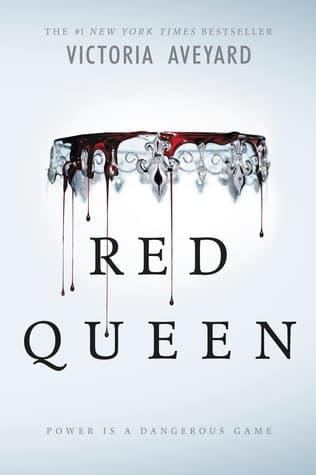
Victoria Aveyard
A society split by rigid social classes and a heroine who discovers she has a hidden power, much like Tris discovering she does not fit neatly into one faction.
Lauren Oliver
Set in a city where a government-controlled procedure removes love, it shares Divergent's focus on a young woman questioning the rules her world demands she follow.

Lois Lowry
A quieter companion to Divergent's theme of a rigid community shaping every choice, following a young protagonist who begins to see what his world has hidden.