
Thinking, Fast and Slow
Daniel Kahneman
Like Haidt, Kahneman takes age-old assumptions about human reason and tests them with careful experiments, showing how intuition often misleads us in everyday choices about happiness and meaning.
Reader-supported: when you buy through links on our site, we may earn an affiliate commission. Learn more
We earn a commission if you buy through these links. Learn more
Find Similar BooksGuide by the Books of the Day editors · Updated · How we write our guides
Haidt tests ten ancient 'Great Ideas' about happiness against modern psychology, using the elephant-and-rider metaphor to show why good intentions so often fail.
2 creators reviewed The Happiness Hypothesis on YouTube between 2015 and 2016, with 95.1K views between them. Their opinions are their own; we picked these reviews, we didn't write them.
The Happiness Hypothesis is Jonathan Haidt's attempt to take old questions about the good life seriously while checking them against research from social and positive psychology. He organizes the book around ten 'Great Ideas' drawn from traditions such as Greek philosophy, Buddhism, Christianity, and Stoicism, and asks which of them still hold up when examined with modern evidence. Rather than treating these maxims as fortune-cookie wisdom, he tries to extract the practical lessons inside them.
His central tool is the image of a rider on an elephant. The conscious mind reasons, plans, and explains, while the much larger automatic side handles emotion, habit, and gut reaction. The rider can steer, but it tends to serve the elephant's wishes, so self-knowledge and the arrangement of your surroundings often matter more than willpower alone. Haidt also draws on his own research on moral intuition and on group-transcending experiences, which he calls the 'hive switch.'
Reading the book feels like a long conversation with a bright, candid professor who admits his own failings and mistakes. Chapters blend personal anecdote, summaries of studies, and historical sources, so the tone is relaxed even when the ideas are dense. Readers tend to finish with a framework for thinking about their own behavior and values rather than a checklist of steps to follow.
Haidt argues that deliberate reasoning is often a press secretary for decisions already made by intuition and emotion. This reframes self-control: instead of trying to overpower impulses, the useful question becomes how to train the elephant's habits and how to shape the situations you put yourself in.
Using a rough 'happiness pie,' Haidt suggests that a substantial share of well-being is set by temperament, that external circumstances matter less than people expect, and that intentional activity offers the most room for change. The argument is useful for setting realistic expectations about what income, status, or a new life event will actually do.
Haidt returns repeatedly to love, friendship, and productive work as the places where lasting satisfaction tends to come from. He connects these to the older idea that a meaningful life is one invested in something beyond the self, and he tests that idea against what research says about engagement and connection.
The book examines the Golden Rule as a claim about how humans cooperate. Haidt looks at why reciprocity seems so widespread across cultures and how moral behavior is shaped by social life, which makes the old maxim look less like a simple command and more like an observation about how groups survive.
Haidt takes up the idea that what does not kill you makes you stronger, asking when hardship builds resilience and when it simply wears people down. The discussion is nuanced, treating growth after difficulty as real but not automatic, and it pushes readers to consider the conditions that make recovery possible.
Many of the specific findings Haidt cites come from the mid-2000s positive psychology literature, and some have been revised or challenged in later replication efforts. He sometimes states conclusions more firmly than the evidence allows, and his choice of the ten Great Ideas is inevitably selective. Readers may also find his treatment of religious traditions brief, since he is interested mainly in what they offer as practical wisdom rather than in their theological claims.
Book details and cover from Google Books.
Ready to read The Happiness Hypothesis?
Get your copy on Amazon, or listen to it on Audible. We earn a commission if you buy through these links.
Daniel Kahneman
Like Haidt, Kahneman takes age-old assumptions about human reason and tests them with careful experiments, showing how intuition often misleads us in everyday choices about happiness and meaning.
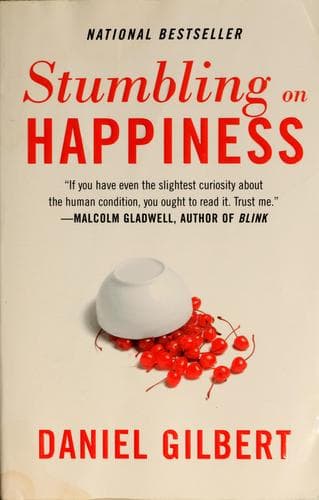
Daniel T. Gilbert
Gilbert explains why we mispredict what will make us happy, using research in a lively, witty style that echoes Haidt's habit of unpacking common beliefs about the good life.
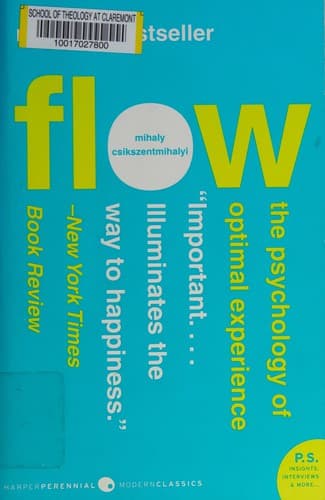
Mihaly Csikszentmihalyi
Flow draws on decades of research to describe the absorbed states that make life feel meaningful, complementing Haidt's argument that engagement and purpose matter more than pleasure alone.
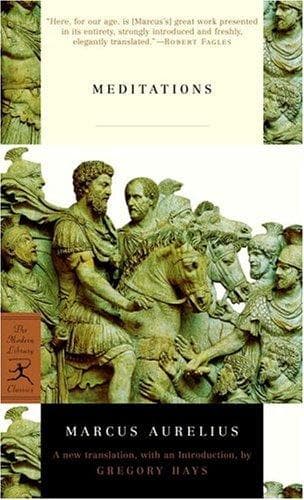
Marcus Aurelius
Written as private reflections by a Roman emperor, these short passages offer the same ancient guidance on virtue and equanimity that Haidt examines, and they reward slow, repeated reading.