
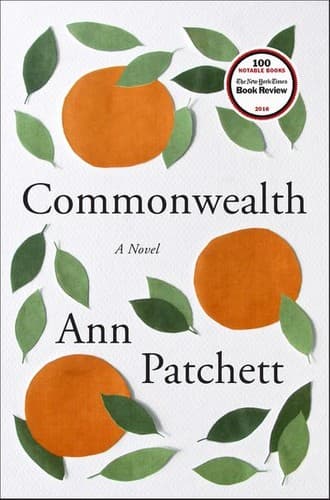
Commonwealth
Ann Patchett
Patchett returns to a blended family whose lives are reshaped by one gathering and its aftermath, told across many years with the same warmth and wry tenderness that carry The Dutch House.
Reader-supported: when you buy through links on our site, we may earn an affiliate commission. Learn more
We earn a commission if you buy through these links. Learn more
Find Similar Booksby Ann Patchett
Guide by the Books of the Day editors · Updated · How we write our guides
Ann Patchett's novel turns a grand house into a test of family loyalty, and its central relationship between two siblings is tender, unsentimental, and hard to put down.
2 creators reviewed The Dutch House on YouTube in 2019, with 61.9K views between them. Their opinions are their own; we picked these reviews, we didn't write them.
The Dutch House is narrated by Danny Conroy, who looks back on the years he and his older sister Maeve spent in a lavish house outside Philadelphia. The house is the book's gravitational center: its size, its beauty, and its tie to their father's ambitions shape nearly everything that happens inside it. Patchett's story moves across decades, so the reader sees the Conroys as children, as adults, and as people who have had to decide what they can forgive.
Patchett writes in a plain, warm, unhurried voice. Danny is a self-aware narrator who admits what he didn't understand at the time, which gives the book a reflective, almost confiding tone. The prose rarely shows off. Its pleasures come from scenes built on small domestic detail and from the slow buildup of consequences. It is a novel that rewards patience and readers who like to think about why people behave as they do.
Reading it feels like being let into a family's private history by someone who loves them and is still not sure they were right. Expect a book more concerned with relationships and loyalty than with plot twists, one that keeps returning to the question of home: what it means, who gets to keep it, and whether a place can ever be the same thing as a family.
The house is more than a setting. It reflects what the family values and what it hides. Its grandeur attracts attention and envy, and the Conroys' lives are organized around keeping it, losing it, or wanting it back. Patchett uses it to test how people measure worth, and how a building can carry a grudge or a promise across generations.
The bond between Danny and Maeve is the book's real subject. Her sacrifice for him is shown with unsentimental detail, and the story asks what it costs one person to parent another and whether gratitude can ever balance the account. Danny's uncertainty about how much he owes her gives the book much of its tension.
Wealth and its loss shape choices in the family, often in ways no one intends. Patchett does not treat money as simply corrupting. She shows how it becomes a language for affection, control, and fear. Readers hoping for a clear moral verdict will find the book more interested in people than in judgment.
The novel echoes the Cinderella story, with a house, a stepmother, and children pushed toward the margins. Patchett keeps the surface grounded in ordinary money troubles, marriages, and practical decisions, so the fairy-tale pattern works as a lens rather than a gimmick.
Danny narrates from later life, and the book examines how childhood stories get reshaped over time. Patchett lets the reader see what he is certain of and what he is still arranging in his own head, which makes the account feel personal and open to doubt.
Some readers find the narrative too settled and the emotional beats too obvious, especially in the middle stretches. Danny's perspective is limited to what he saw and was told, so the book offers little access to the inner lives of the other characters, and a few relationships are sketched more than explored. The fairy-tale framing can feel like a pattern some readers would rather see less of. It is also a book about privilege that does not examine the wider social world around its wealthy family very closely.
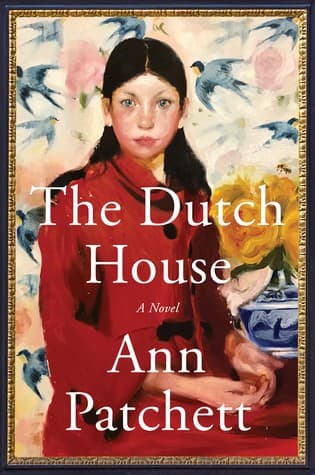
Book details and cover from Google Books.
Ready to read The Dutch House?
Get your copy on Amazon, or listen to it on Audible. We earn a commission if you buy through these links.
Ann Patchett
Patchett returns to a blended family whose lives are reshaped by one gathering and its aftermath, told across many years with the same warmth and wry tenderness that carry The Dutch House.
Amor Towles
Like The Dutch House, it follows a single setting and a close circle of people across decades, with a graceful narrator who finds meaning in ordinary daily life.
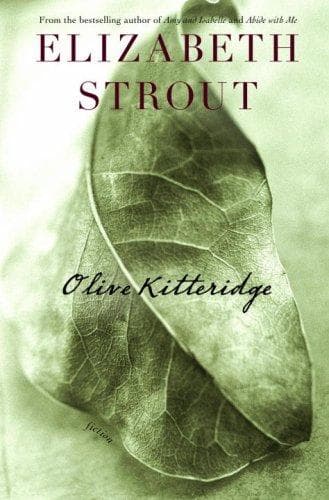
Elizabeth Strout, Rosa Perez Perez
Its linked sketches of a small-town family reveal long histories of love and disappointment, much as The Dutch House unfolds the slow weight of the past on two siblings.
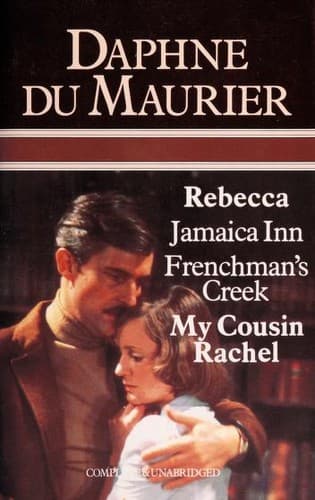
Daphne du Maurier
A grand house dominates every page and shapes the people who live inside it, a theme that gives The Dutch House its atmosphere of memory and loss.