
We earn a commission if you buy through these links. Learn more
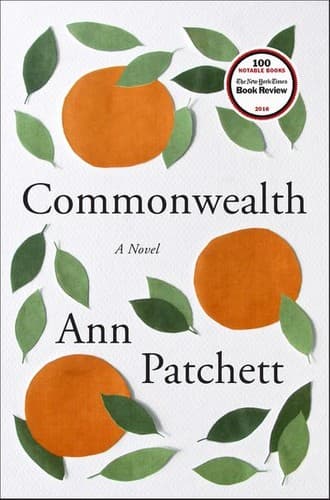
Commonwealth
by Ann Patchett
Guide by the Books of the Day editors · Updated · How we write our guides
Ann Patchett's Commonwealth is a warm, rangy family novel that shows how one chance meeting reshapes six children's lives over five decades, told with humor and real emotional weight.
What Creators Say About Commonwealth
2 creators reviewed Commonwealth on YouTube between 2016 and 2017, with 5K views between them. Their opinions are their own; we picked these reviews, we didn't write them.
What It's About
Commonwealth opens at a christening party in Southern California in 1964, where an unexpected guest's brief encounter with the hostess sets two marriages on a new course. The novel then follows the children of those two households across roughly fifty years, moving between childhood summers and the adult lives they build away from the house where it all started.
Patchett's approach is loose and conversational. Time jumps forward and back, and the focus passes from one sibling to another, so no single character holds the center for long. The book is less interested in a plot engine than in how a family gets assembled from accident and how its members remember the same events in incompatible ways. Some of the drama comes from who tells a story and who gets to own it.
Reading it feels like spending years with a large, untidy family. The tone is generous and often funny, with sharp observations about money, marriage, and rivalry, but there is a steady undercurrent of loss. You won't finish it with a single neat takeaway. You'll finish it feeling that you have watched people try, and mostly fail, to be the family they were told they were.
Read this if you…
- enjoy long, character-driven family novels that span decades
- like warm, funny prose with an undertow of melancholy
- are interested in how shared memories get rewritten over time
Skip it if you…
- want a tightly plotted story with a clear mystery or suspense
- prefer fast-moving books with a strong central protagonist
Key Ideas
- 1
A family formed by accident
The central event is a single impulsive moment that brings two households together. Patchett keeps returning to how much of adult life is shaped by choices made in a hurry, and how people then spend decades living inside arrangements they never planned. The novel treats this with more curiosity than judgment, asking what it means to belong to a family that began as a mistake.
- 2
Memory and who gets to tell the story
Siblings remember the same childhood differently, and the book pays close attention to the gap between lived experience and the version that ends up in print. Patchett explores how a family story can be claimed, shaped, and sold by one member, and what that does to everyone else who was there. The question of ownership of a shared past runs through the whole novel.
- 3
Money, class, and the cost of the good life
Much of the friction in these lives comes from wealth, its absence, and the strange ways they distort affection. Characters measure one another by what they have, what they inherited, and what they gave up. The book is alert to how money can hold a family together and also quietly pull it apart.
- 4
Siblings as lifelong companions and rivals
The bond between brothers and sisters is the heart of the book. Patchett shows how the same kids can be each other's closest allies and bitterest critics, sometimes within a single chapter. The relationships change as the characters age, and the novel finds tenderness in how stubbornly they keep returning to each other.
Limitations
Some readers find the structure too loose, since the story hops between characters and years and can feel episodic. The emotional beats sometimes rely on familiar territory of divorce, remarriage, and sibling resentment, and a few critics feel the novel tells more than it dramatizes. The reliance on a single famous book-within-the-book as a plot device may also strike readers as convenient. Those who want sustained tension or a single dominant point of view may find it diffuse.
Questions Readers Ask
- Is Commonwealth a good place to start with Ann Patchett?
- Yes, for many readers it is. The prose is clear and inviting, and the book does not demand specialist knowledge. It is more reflective and less plot-driven than some of her other novels, so readers who like her warmth and humor will likely settle right in. If you prefer a tightly paced story, you may want to try a more linear title first.
- Is Commonwealth similar to other family sagas?
- It shares ground with novels that follow a family across decades, such as the work of Jonathan Franzen or Anne Tyler, though it is lighter in tone than Franzen and less patterned than much of Tyler. Its strength is the way it handles memory and rivalry between siblings. Readers who enjoy those writers' attention to domestic detail will find much to like here.
- Does the novel still feel relevant today?
- Largely, yes. Its concerns about blended families, divorce, money, and the stories people tell about their pasts have not gone out of date. Some settings and attitudes reflect the decades it covers, but the emotional questions about belonging and fairness among siblings remain fresh for contemporary readers.
- Published
- 2016
- ISBN
- 9780062491794
- Difficulty
- beginner
- Category
- Fiction
Book details and cover from Google Books.
Ready to read Commonwealth?
Get your copy on Amazon, or listen to it on Audible. We earn a commission if you buy through these links.