
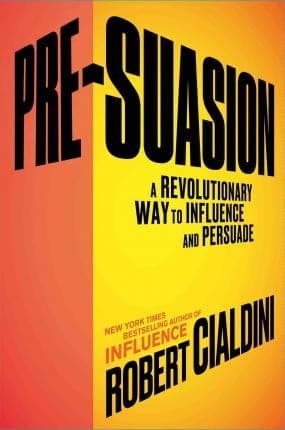
Pre-Suasion
Robert B. Cialdini, John Bedford Lloyd
Cialdini's later book builds on Influence by showing how the moments before a message shape how people receive it. It keeps the same evidence-first style and everyday examples.
Reader-supported: when you buy through links on our site, we may earn an affiliate commission. Learn more
We earn a commission if you buy through these links. Learn more
Find Similar BooksGuide by the Books of the Day editors · Updated · How we write our guides
Robert Cialdini's classic explains why people say yes, and it teaches you to spot the psychological levers that marketers, salespeople, and persuaders use every day.
2 creators reviewed Influence on YouTube between 2017 and 2021, with 441.9K views between them. Their opinions are their own; we picked these reviews, we didn't write them.
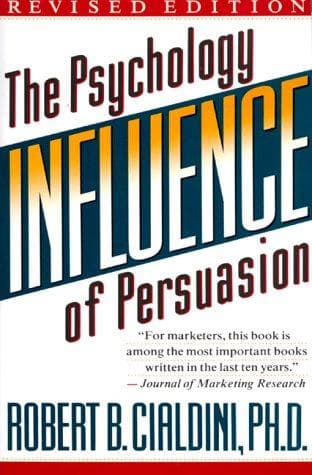
Influence is Robert Cialdini's classic look at why people comply with requests. First published in 1984, it grew out of years of his own research into persuasion. He supplemented lab work by taking jobs in sales and fundraising to watch how professionals actually close deals. The result is less a manual than a field guide to the mental shortcuts that make us agree.
The book's core move is to name a small set of recurring principles and then show each one at work in everyday situations: free samples, favors that seem to demand a return, scarcity framed as a deadline, and advice from experts we never think to check. Cialdini writes in a warm, anecdote-driven style, moving from a story to the experiment behind it and then back to the marketplace. Chapters are self-contained enough to dip into, though the argument builds as you go.
Reading it feels like being let in on how the trade works, and much of the pleasure is recognition: you will start catching these tactics in your inbox and at the checkout counter. The tone stays practical rather than cynical, and the closing material pushes toward defending yourself and deciding when a yes is genuinely your own. It reads quickly for a work of social science.
People feel obligated to repay what they have received, even when the gift was unasked for or small. Cialdini shows how this norm operates across cultures and why it can be exploited. Recognizing the urge to return a favor gives you a chance to pause before reciprocating something you never wanted to give.
Once people take a stand, even a tiny one, they feel pressure to act in line with it. Cialdini explains how small initial agreements can lead to much larger ones later. The insight is useful both for understanding why escalating requests work and for noticing when you are being nudged toward a choice you would not make fresh.
When we are unsure what to do, we look to what others are doing, especially people who seem similar to us. Cialdini describes how this shortcut makes testimonials, crowds, and canned laughter persuasive. The idea helps explain both everyday herd behavior and the ease with which the appearance of popularity can be manufactured.
We say yes more readily to people we like, to people who appear credible, and to things that seem rare or about to disappear. Cialdini tests these forces in examples that range from charity appeals to sales tactics. The chapters are where the book's practical value is most concrete, because each cue comes with a clear sense of how it feels from the inside.
Cialdini argues that knowing these shortcuts is the best protection against them, since they often work because they usually serve us well. He encourages readers to slow down when a cue fires and ask whether the request stands on its merits. The goal is not cynicism but more deliberate decisions about when to agree.
Much of the evidence comes from experiments and field observations gathered decades ago, and some later psychology replications have produced weaker results than the original studies suggested. The book focuses mainly on Western consumer and social settings, and its examples of salespeople and charities feel dated in places. It also gives less attention to online persuasion, which has changed how many of these principles operate. Some readers find the framework tidy in a way that real-world influence rarely is.
Book details and cover from Google Books.
Ready to read Influence?
Get your copy on Amazon, or listen to it on Audible. We earn a commission if you buy through these links.
Robert B. Cialdini, John Bedford Lloyd
Cialdini's later book builds on Influence by showing how the moments before a message shape how people receive it. It keeps the same evidence-first style and everyday examples.
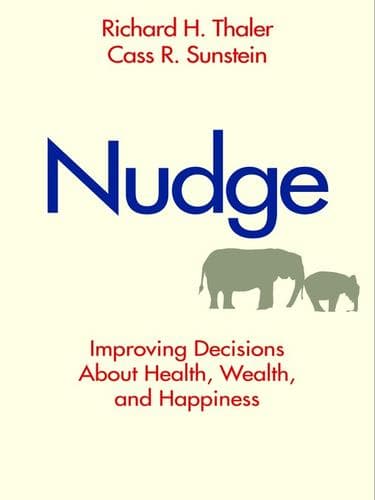
Richard H. Thaler, Cass R. Sunstein
Like Influence, it uses experiments to show how small changes in choice design steer behaviour. Readers who enjoyed the principles of compliance will find the same blend of psychology and practical policy.
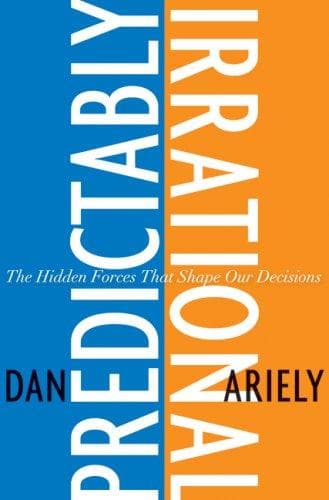
Dan Ariely
Ariely's experiments on how people make irrational choices echo Cialdini's field studies. It is witty and accessible, and it explains why our decisions often miss what we think is rational.
Daniel Kahneman
Kahneman explains the automatic shortcuts that persuaders exploit, which is the mechanism behind many of Influence's examples. It is dense but rewarding for readers who want the deeper theory.