
We earn a commission if you buy through these links. Learn more
Klara and the Sun
On screen: Klara and the Sun (film, October 15, 2026)
Guide by the Books of the Day editors · Updated · How we write our guides
A near-future story told by an artificial friend who reads the world with unsettling sincerity, making ordinary human choices feel strange and new.
What Creators Say About Klara and the Sun
2 creators reviewed Klara and the Sun on YouTube between 2021 and 2026, with 285.6K views between them. Their opinions are their own; we picked these reviews, we didn't write them.
What It's About
Klara is an Artificial Friend, a solar-powered machine built to keep a young person company. We first meet her in a shop window, where she watches the street and studies the people who pass. The story is set in a near-future America divided by class and by access to enhancement, and Klara's view of it is shaped by her own limits and by her deep, almost devotional trust in the sun as a source of life.
Ishiguro writes in a calm, formal, carefully measured voice. Klara is an earnest observer who often misreads what she sees, and much of the meaning sits in the gaps between what she reports and what the reader can infer. Scenes unfold slowly, built from small domestic moments, conversations that seem polite but carry weight, and long stretches of watching. Nothing is rushed, and the reader is asked to do real interpretive work.
The experience is quiet, uneasy and moving rather than fast or dramatic. It is less a plot-driven thriller than a meditation on love, loyalty and what we ask of the people and things we depend on. Readers who enjoy a narrator whose honesty is never in doubt, but whose understanding is incomplete, will find the book rewarding. It asks for patience and rewards close attention.
Read this if you…
- enjoy quiet, character-driven novels with a distinctive narrator
- like books that leave questions open and trust you to interpret
- have read Never Let Me Go and want more of Ishiguro's careful, melancholy style
Skip it if you…
- want fast pacing, action or a clear plot engine from the first chapter
- find unreliable or naive narrators frustrating rather than absorbing
Key Ideas
- 1
A narrator who sees the world differently
Klara's perspective is the engine of the book. She takes people at their word, reads faces and gestures literally, and reports behaviour with a kind of innocence. Because she is sincere but not always right, the reader constantly weighs what she says against what is actually happening, which makes even quiet scenes feel tense and layered.
- 2
Love as something chosen and tested
The book explores how affection works between humans and between humans and machines. Klara's devotion is never in question, yet the story keeps asking whether love can be real when it is built, programmed or bought, and whether people deserve the loyalty they receive from those who serve them.
- 3
Inequality dressed up as progress
In this near-future world, advantages are passed down through money and medical enhancement. Ishiguro shows this through ordinary households and offhand remarks rather than speeches, so the unfairness feels lived-in and quietly unsettling rather than preachy.
- 4
Faith, hope and the sun
Klara's belief in the sun gives the novel a spiritual undercurrent. It is never explained in full, and it invites readers to consider what we rely on when we cannot control outcomes, and how hope can sustain someone who has little other power.
Limitations
The pace is slow, and some readers find the early chapters repetitive or the narrator's innocence wearing. The world-building is deliberately thin, so readers who want detailed explanations of how the technology or society works may feel shortchanged. Some critics have argued that the story's emotional payoff depends heavily on tone and restraint, which not every reader will find persuasive. The book is also more interested in mood and implication than in sharp social critique.
Questions Readers Ask
- Is Klara and the Sun a good first Ishiguro novel?
- It can be, though many readers start with The Remains of the Day or Never Let Me Go. Klara and the Sun is more accessible in sentence-level terms than some of his work, but its meaning emerges slowly. If you like a narrator who is gentle and sincere, it works well as an entry point. If you want a gripping plot early on, you may prefer one of his earlier novels.
- How does it compare to Never Let Me Go?
- Both books use a calm, first-person narrator to explore loyalty, artificial or engineered lives and the quiet unfairness of a society. Never Let Me Go is more emotionally direct and builds toward a clearer dramatic shape. Klara and the Sun is more oblique, with a narrator whose understanding is more limited, so its emotional effect comes from what is left unsaid.
- Published
- 2019
- ISBN
- 9784152100061
- Difficulty
- intermediate
- Category
- Science Fiction
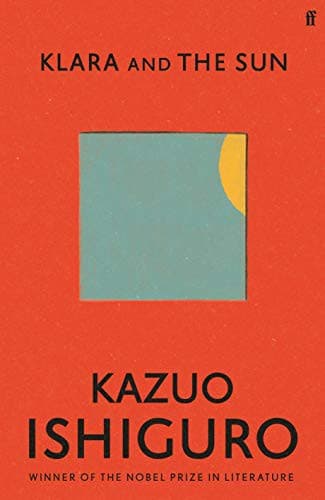
Book details and cover from Google Books.
Ready to read Klara and the Sun?
Get your copy on Amazon, or listen to it on Audible. We earn a commission if you buy through these links.