
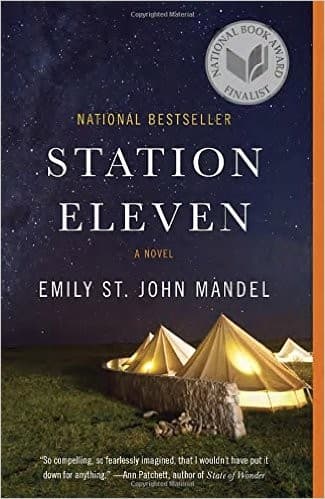
Station Eleven
Emily St. John Mandel
Like The Road, it follows survivors across a collapsed world, but balances grief with a stubborn belief that art and memory are worth carrying forward, offering a more hopeful counterpoint.
Reader-supported: when you buy through links on our site, we may earn an affiliate commission. Learn more
We earn a commission if you buy through these links. Learn more
Find Similar BooksA spare, harrowing novel about a father and son crossing a ruined America, worth reading for its unforgettable style and its quiet, stubborn argument for goodness.
The Road follows a father and his young son as they travel south through a United States wrecked by an unnamed catastrophe. Ash hangs in the air, the crops are gone, and the surviving people are scattered, desperate, and sometimes dangerous. The two push a cart of scavenged supplies toward the coast, and the journey is less a plot than a run of close calls, scarce meals, and hard decisions about who to trust.
McCarthy's style is the book's signature. He drops most quotation marks, strips out many commas and apostrophes, and alternates long unbroken sentences with stark fragments. Dialogue is brief and functional, and the narration rarely explains what anyone feels. The result is a reading experience that is slow, hushed, and oddly rhythmic. Many readers find themselves reading passages aloud to catch the cadence.
Emotionally, the book rests on the bond between the two travelers. The father's fierce protectiveness and the boy's questions about whether they are still the good guys give the grim journey its moral center. It is hard in content, with violence and despair that are not softened, yet it is also tender and sometimes unexpectedly consoling. Expect to finish it in a few sittings and then keep thinking about it for days.
McCarthy removes conventional punctuation and most explanatory framing, so the reader experiences the world almost as the characters do: fragmentary, immediate, and without context. This is the source of the book's hypnotic pull, and also the reason it can feel hard to enter at first. Once the rhythm settles, the sparseness starts to feel deliberate and precise.
The novel asks what decency means when there is no law, no institution, and no reason to expect reward for kindness. The boy repeatedly tests whether his father's choices are good, and the father's answers are uncertain and human. The book treats moral behavior as something chosen repeatedly under pressure rather than something a society provides.
Nearly everything in the book is filtered through the relationship between the two. The father's love is shown mainly through action: vigilance, sacrifice, and careful teaching. Their conversations are simple, but they carry the weight of the whole story and explain why the father keeps going when survival alone seems to make little sense.
The ruined country is rendered in vivid, bleak detail, from gray ash and dead forests to empty towns and roads that offer no safety. McCarthy never explains the catastrophe, which keeps attention on the physical experience of moving through it. The land functions almost as a character, indifferent and dangerous, against which the travelers' small acts of care stand out.
The book deliberately withholds the cause of the catastrophe and the state of the wider world, which frustrates readers who want world-building or a sense of how society works. Critics have also noted that the characters are thin, since the father and son are defined largely by their roles and most other people appear only briefly. The punctuation and sentence style are a barrier for some readers. Some also find its emotional closing note too neat for a book so unrelentingly grim.
Reviews from readers on YouTube. Their opinions are their own.
Book details and cover from Google Books.
Ready to read The Road?
Get your copy on Amazon, or listen to it on Audible. We earn a commission if you buy through these links.
Emily St. John Mandel
Like The Road, it follows survivors across a collapsed world, but balances grief with a stubborn belief that art and memory are worth carrying forward, offering a more hopeful counterpoint.
Peter Heller
A lonely pilot survives after a pandemic, and his spare, fragmented narration and quiet tenderness will feel familiar to anyone moved by McCarthy's stripped-down survival story.
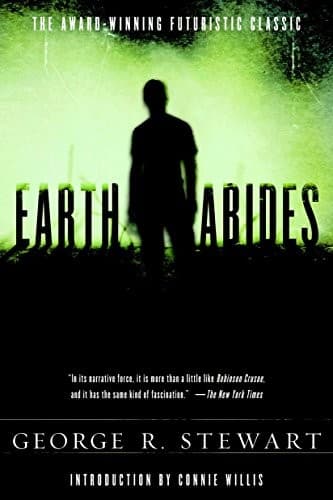
George Rippey Stewart
A classic of the genre that watches civilisation fade over decades, sharing The Road's meditative pace and its questions about what humanity keeps when everything else is lost.