
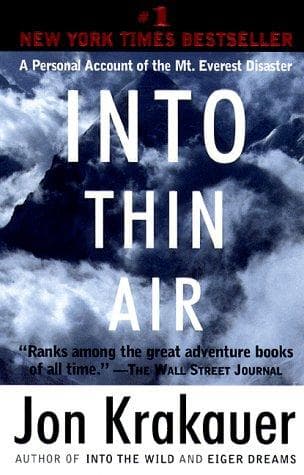
Into Thin Air
Jon Krakauer
Krakauer's firsthand account of the deadly 1996 Everest season brings the same probing questions about ambition and risk as Into the Wild, with even more urgency because he was there.
Reader-supported: when you buy through links on our site, we may earn an affiliate commission. Learn more
We earn a commission if you buy through these links. Learn more
Find Similar Booksby Jon Krakauer
Krakauer's reported account of Chris McCandless, a young man who walked away from his comfortable life and died alone in the Alaskan bush, is a gripping look at the pull of wild places and the people who chase them.
Into the Wild is Jon Krakauer's 1996 book about Chris McCandless, a 1990 college graduate who gave away his savings, cut ties with his family, and spent the early 1990s drifting across North America before going alone into the Alaskan wilderness. Krakauer first reported the story as a magazine article, and the book expands it into a full investigation built from McCandless's letters, journals, and the recollections of people he met on the road. Krakauer writes as a reporter, so the narrative keeps separating what is documented from what is guessed at.
The structure moves between McCandless's journey and Krakauer's own history as a climber. Krakauer draws on his youthful risk-taking to ask why a stranger's choices could feel so familiar to him. These digressions are the book's most divisive element: some readers find them illuminating, while others feel they pull attention away from the subject.
Reading it is a sad, tense experience, closer to a slow examination of a life that resists easy verdicts than to a thriller. You will likely finish with strong opinions about McCandless and about the appeal of wild places, and the book is good at keeping admiration and irritation in view at the same time.
McCandless wanted a life stripped of money, possessions, and social obligations. The book takes that desire seriously, showing both its idealism and the blind spots that came with it. Krakauer treats the impulse as something many people feel, even if few act on it so completely.
Krakauer is open about seeing himself in McCandless. His own climbing and risk-taking give him a way into the story, but also a reason to judge it harshly at times. The result is a portrait shaped by identification, which is part of why it hits so hard.
A large part of the book concerns McCandless's strained relationship with his parents and the anger that drove him away from them. Krakauer uses these family tensions to explain the trip, though he does not present them as a complete explanation for what happened.
Because McCandless died alone, much of the story depends on journals, photographs, and interviews with people who met him. The book is as much about the challenge of piecing together a stranger's final months as it is about the events themselves.
Krakauer offers a hypothesis about the cause of death involving a plant McCandless may have eaten, and he presents it with appropriate uncertainty. The book makes clear that the exact cause remains debated, which keeps the ending open to the reader.
The most common criticism is that Krakauer identifies too closely with McCandless, which some readers feel leads him to be either too forgiving or too harsh. His long digressions into mountaineering and other climbers' stories are seen by many as padding. The book also cannot settle the circumstances of McCandless's death, and it relies heavily on the recollections of people who knew him. Readers who want a complete picture of Alaska or of the people who search for lost travelers will find only partial coverage.
Reviews from readers on YouTube. Their opinions are their own.
Book details and cover from Google Books.
Ready to read Into the Wild?
Get your copy on Amazon, or listen to it on Audible. We earn a commission if you buy through these links.
Jon Krakauer
Krakauer's firsthand account of the deadly 1996 Everest season brings the same probing questions about ambition and risk as Into the Wild, with even more urgency because he was there.
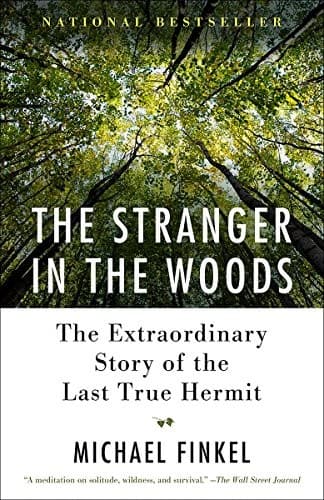
Michael Finkel
The true story of a man who lived alone in the Maine woods for 27 years. Like Krakauer, Finkel tries to understand why someone would walk away from society entirely.
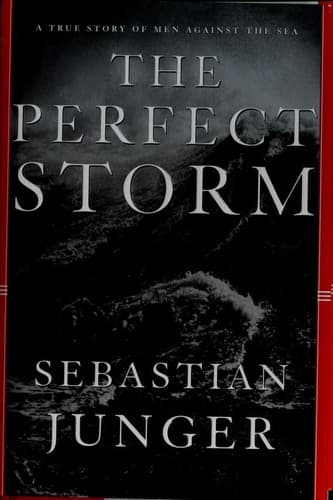
Sebastian Junger, Anne Collins
A meticulously reconstructed account of men lost to nature's power. Readers who admired how Krakauer pieced together McCandless's final months will appreciate Junger's similar investigative method.
Cheryl Strayed
Strayed's memoir of hiking the Pacific Crest Trail alone after personal loss shares Into the Wild's belief that the wilderness can strip a life down and remake it.