
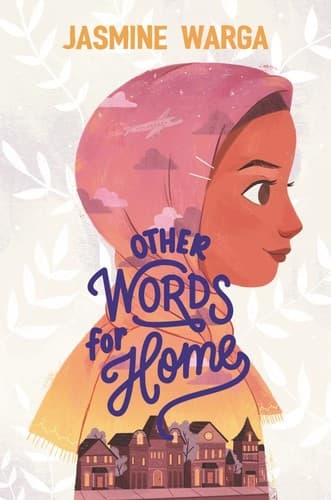
Other Words for Home
Jasmine Warga
Like Hà, Jude leaves a homeland in turmoil, Syria, for an American town, and her free-verse voice captures new-language frustration, family loyalty and finding her place with the same tenderness.
Reader-supported: when you buy through links on our site, we may earn an affiliate commission. Learn more
We earn a commission if you buy through these links. Learn more
Find Similar Booksby Thanhha Lai
Guide by the Books of the Day editors · Updated · How we write our guides
A short, spare verse novel that makes a child's flight from Saigon and first year in Alabama feel immediate, funny, and honest about loss.
2 creators reviewed Inside Out & Back Again on YouTube between 2021 and 2025, with 41.8K views between them. Their opinions are their own; we picked these reviews, we didn't write them.
Inside Out & Back Again is a novel in free verse narrated by Hà, a ten-year-old who leaves Saigon in 1975 as the city falls and resettles with her mother and siblings in Alabama. The story covers roughly one year, told in short poems that each capture a single moment: a meal, a schoolyard insult, a letter, a memory of home. The family's flight and arrival are present, but the emphasis stays on how a child absorbs a new country.
Lai writes in plain, spare language, and the poems are short enough that a reader can finish the book in an afternoon. What gives them weight is precision. Hà notices small things, like unfamiliar food, the way classmates mock her, and the shape of unfamiliar trees, and she uses humor and a child's blunt logic to describe pain. Her English is still forming across the book, so her struggles with words become part of the form rather than just subject matter.
Reading it feels intimate and unhurried, closer to sitting with a diary than working through a historical account. Adults will likely notice more about what the family has lost than children do, but the book never requires prior knowledge of the war. It works well read aloud or alone, and many readers return to it because the individual poems are easy to reread.
Hà's sense of home is tested by small social moments: classroom teasing, strangers' indifference, and food that tastes wrong. The book treats belonging as slow, uneven work rather than a single moment of arrival, and it does not pretend the transition is quick or painless.
The loss of Saigon, the familiar landscape, and uncertainty about relatives left behind does not arrive in one dramatic scene. It appears between school days and household chores, so the sadness feels realistic and cumulative rather than staged for effect.
Hà's imperfect English shapes the prose. Her observations about words, sounds, and misunderstandings give the poems their particular voice, and she often turns her mistakes into fresh, striking images that show how she sees the world.
Her mother and siblings hold the story together. The book shows a family adapting as a unit while each member copes differently, and it makes clear that the relationships at home are what give the child a footing in an unfamiliar place.
Because the poems are spare, some readers find the emotional turns brief and wish for more development, especially for secondary characters, who often appear only as glimpses. The narrow child's perspective also means political context is limited to what Hà understands, which suits the book's purpose but leaves big questions unexplored. Readers used to dense prose novels may find the form slight, though its brevity is deliberate. The book is also written with a young audience clearly in mind, so older readers may want more complexity.
Book details and cover from Google Books.
Ready to read Inside Out & Back Again?
Get your copy on Amazon, or listen to it on Audible. We earn a commission if you buy through these links.
Jasmine Warga
Like Hà, Jude leaves a homeland in turmoil, Syria, for an American town, and her free-verse voice captures new-language frustration, family loyalty and finding her place with the same tenderness.

Jacqueline Woodson
Woodson's verse memoir of growing up between South Carolina and Brooklyn shares Inside Out's short, vivid poems and its sense of a child noticing how place shapes identity.

Katherine Applegate
Kek arrives in snowy Minnesota from Sudan, and his poems about strange food, cold weather and lost family echo Hà's confusion and resilience in Alabama.
Alan Gratz
Three children from different eras flee danger by sea and land; readers moved by Hà's boat journey will find gripping, accessible stories of escape and hope.