
We earn a commission if you buy through these links. Learn more
Home of the Brave
Guide by the Books of the Day editors · Updated · How we write our guides
A short, emotionally direct verse novel that gives younger readers a close look at a refugee boy's first months in America, without melodrama.
What Creators Say About Home of the Brave
2 creators reviewed Home of the Brave on YouTube between 2009 and 2014, with 6.6K views between them. Their opinions are their own; we picked these reviews, we didn't write them.
What It's About
Home of the Brave is a verse novel for younger readers about Kek, a boy who leaves a war-torn part of Sudan and ends up in a cold, unfamiliar American town. Applegate tells the story in short free-verse poems, each a snapshot of a single moment, so the book reads quickly even when the subject is heavy. Much of the story is about what Kek notices: the unfamiliar food, the snow, the classmates who don't know what to make of him.
The style is spare on purpose. Applegate uses white space, short lines, and plain diction, letting gaps in the story carry emotion. Memories of what Kek left behind surface in pieces rather than in one long flashback, so the reader assembles his history the way he does, slowly and in fragments. Some readers will find this affecting; others will want more concrete detail than the form allows.
The experience is closer to sitting with a single voice than following a plot-heavy adventure. It is a book about waiting, about being new, and about the gap between how people see a refugee and who that person actually is. Adults reading it aloud will find plenty to talk about, and older children will likely finish it in one sitting.
Read this if you…
- want an accessible entry point into refugee experiences for middle-grade readers
- like short, emotionally direct verse that rewards slow, careful reading
- are reading with a child and want a book that opens conversations about being new somewhere
Skip it if you…
- need a fast-moving plot with a lot of action or suspense
- want a detailed, historically specific account of the conflict in Sudan
Key Ideas
- 1
Displacement seen from inside a child's head
The book keeps its focus on what a young boy can understand and feel, rather than on the politics or logistics of resettlement. Readers get the disorientation of a new country through his eyes: what confuses him, what comforts him, and what he cannot yet name. This narrow lens is the source of both the book's intimacy and its limits.
- 2
Memory arriving in fragments
Kek's past comes back in pieces, often triggered by something small in the present. Applegate avoids a tidy flashback structure, so the reader has to hold uncertain pieces together. This mirrors how trauma and loss often work, and it asks readers to be patient rather than waiting for the full story to be delivered.
- 3
Belonging that is slow and uneven
The book does not offer a neat moment when Kek suddenly fits in. Friendships form tentatively, and small kindnesses sit alongside moments of exclusion. The theme is that adjusting to a new place is a long, uneven process, and that it happens through ordinary days more than through dramatic turning points.
- 4
Verse as a way to hold hard material
The free-verse form keeps emotional weight manageable for younger readers while still being direct about loss and fear. White space does a lot of work, and the poems often end on a quiet image rather than a stated lesson. For many readers this is the main reason the book works as a first encounter with refugee experience.
Limitations
Because the story is told through one child's perspective and in brief poems, the wider political history of Sudan and the reasons for the war stay largely in the background. Some readers find the emotional beats familiar, and those who know more about refugee resettlement may wish for more complexity about the adults around Kek. The sparse form also means few scenes are developed at length, which can feel abrupt to readers used to conventional novels. The book is best read as an introduction rather than a comprehensive account.
Questions Readers Ask
- Is Home of the Brave suitable for adults?
- Yes. The vocabulary is simple, but the emotional content is serious. Adults who read it will likely get more from the gaps and restraint than from the plot itself. It works well as a quick read, and it is often more rewarding when discussed afterward with someone else who has read it.
- How does it compare to The One and Only Ivan by the same author?
- Both books use a spare, direct voice and are short enough to finish in a sitting. Ivan is narrated by a gorilla and leans on warmth and humor, while Home of the Brave is more openly focused on displacement and grief. Readers who liked Ivan's quiet tone will likely appreciate this one, though it is sadder.
- Published
- 2007
- ISBN
- 9780545154154
- Difficulty
- beginner
- Category
- Children's Books
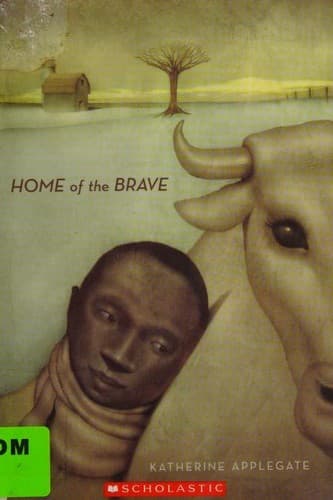
Book details and cover from Google Books.
Ready to read Home of the Brave?
Get your copy on Amazon, or listen to it on Audible. We earn a commission if you buy through these links.