
We earn a commission if you buy through these links. Learn more
Brown Girl Dreaming
Guide by the Books of the Day editors · Updated · How we write our guides
Woodson's National Book Award-winning memoir in free verse turns a childhood split between South Carolina and Brooklyn into short, vivid poems that reward slow reading.
What Creators Say About Brown Girl Dreaming
2 creators reviewed Brown Girl Dreaming on YouTube between 2020 and 2023, with 10.1K views between them. Their opinions are their own; we picked these reviews, we didn't write them.
What It's About
Brown Girl Dreaming is Jacqueline Woodson's memoir told entirely in free verse, with short poems that each hold a moment from her childhood. It moves from her birth in Ohio to a childhood spent largely with her grandparents in South Carolina, and later to Brooklyn after her mother moves the family north. The book is organized around memory more than a strict timeline, so it drifts between family, church, school, and neighborhood with a loose, associative feel.
The style is the main event. The poems are spare, often only a few lines, and white space does much of the work. Woodson moves easily between a child's perspective and the adult looking back, so a single image of a porch, a street, or a grandmother's voice can carry a whole stretch of feeling. Reading it takes an evening, but the pages reward going slowly. Ideas about race, faith, and storytelling come up through everyday details rather than through argument.
The experience is intimate and warm without being sentimental, and it tends to stay with you after you close it. It works both as a window onto a specific time and place and as a study of how a young writer's sense of self takes shape. Readers who want a fast, plot-driven story may find the pace unusual, but people who enjoy poetry will find it easy to enter.
Read this if you…
- love poetry or verse novels and want a memoir that uses the form well
- want to understand a particular time and place in American family life through one person's memories
- are interested in how a writer's childhood shapes the way she sees the world
Skip it if you…
- need a plot with momentum and clear turning points
- prefer memoirs that are detailed, chronological, and full of background explanation
Key Ideas
- 1
Memory shaped into short, precise poems
The verse form is not decoration. Each poem isolates one moment, so the reader feels how memories arrive as fragments, some bright and some oddly sharp. The brevity forces attention onto small details like a color, a sound, or a gesture, and those details do the emotional work that a longer narrative would normally handle with exposition.
- 2
Belonging in two very different places
Much of the book is about the gap between the slower, rooted life in the South with her grandparents and the faster, more crowded world of Brooklyn. Woodson shows how a child learns to hold both, feeling at home in one place while missing the other. The question of where you belong, and who you belong to, runs through nearly every section.
- 3
Faith, family, and the stories that hold them
Religious life, family rituals, and the way elders pass down stories form the book's emotional core. The grandparents and the church community give the child a sense of order and moral seriousness, and the book looks closely at how those traditions shape identity without turning into a lesson about belief.
- 4
A child who becomes a writer
The memoir also follows the slow development of a young storyteller. It pays attention to the difficulty of learning to read and the pull of words and imagination. Readers interested in how writers come to their craft will find the book's reflections on language and noticing especially rewarding.
- 5
Race and childhood in the civil rights era
The larger social world of the 1960s and 1970s appears in the book through ordinary days rather than headline events. Woodson lets the reader see how racial history touches school, home, and friendship, leaving the reader to draw connections instead of stating conclusions outright.
Limitations
Because the book is built from small poems, it covers many subjects without going deeply into any one of them, and some readers may want more context about events or people that appear only briefly. The fragmented structure can feel disjointed to readers who expect a continuous narrative arc. Its brevity is also a strength that some find frustrating, since the most affecting moments are sometimes over before they fully unfold. It is a children's and young adult book by classification, so adult readers may find it lighter than they expect, though many find it richer on a second reading.
Questions Readers Ask
- Is Brown Girl Dreaming only for children?
- No. It is categorized as a children's and young adult book, and the language is simple, but the themes of identity, family, race, and memory land with adults too. Many adult readers find the book richer on a second reading, when the small poems start to connect in ways that are easy to miss the first time through.
- Do I need to know poetry to enjoy it?
- No. The poems are short and conversational, with little reliance on formal technique. If you can follow a few lines at a time and enjoy a clear image, you can read it comfortably. Some readers find that the verse form helps them slow down and pay closer attention to each moment.
- What should I read next if I liked it?
- If you enjoyed the verse memoir form, Woodson's own fiction for younger readers is a natural next step. Readers who want another intimate childhood story might also try a classic coming-of-age memoir written in prose, which offers more narrative detail and background.
- Published
- 2014
- ISBN
- 9781484496749
- Difficulty
- beginner
- Category
- Children's Books
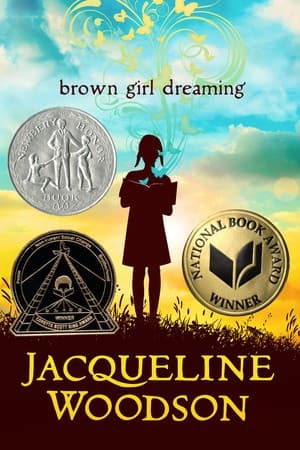
Book details and cover from Google Books.
Ready to read Brown Girl Dreaming?
Get your copy on Amazon, or listen to it on Audible. We earn a commission if you buy through these links.