
We earn a commission if you buy through these links. Learn more
Other Words for Home
Guide by the Books of the Day editors · Updated · How we write our guides
A warm, unsentimental middle-grade novel in short free-verse chapters about a Syrian girl starting over in Cleveland, where language, school, and friendship make the idea of home feel unfinished.
What Creators Say About Other Words for Home
2 creators reviewed Other Words for Home on YouTube in 2020, with 4.4K views between them. Their opinions are their own; we picked these reviews, we didn't write them.
What It's About
Other Words for Home is a middle-grade novel that follows Jude, a twelve-year-old who leaves Syria with her mother and brother to join her father in Cleveland, Ohio. The story picks up in the uneasy months after the move, when the familiar routines of her old life have been replaced by a new language, a new school, and a city that does not yet feel like hers.
Warga tells it in short, spare entries written mostly in verse, so each scene arrives quickly and much of the emotional weight comes from what is left unsaid. Jude's voice is observant and occasionally funny, and the book trusts young readers to notice the gap between what she says and what she feels. The chapters are brief, so the book reads fast, but it asks for patience with silence and small gestures.
The experience is closer to sitting with a worried, honest friend than to watching a plot unfold. Much of the drama is domestic and social: homework, lunch tables, letters home, and the slow work of finding one person who makes a place feel less foreign. Readers who expect a large external conflict may find it quiet, but its focus on everyday courage is the point.
Read this if you…
- want a fast, emotionally honest middle-grade novel about moving to a new country
- enjoy quiet stories driven by character rather than plot twists
- are looking for a window into refugee experience written for young readers
Skip it if you…
- want a sweeping plot with high stakes and frequent action
- need a detailed account of the political history behind the war in Syria
Key Ideas
- 1
Home as something you build, not inherit
Jude does not treat home as a place she has simply lost or gained. The book shows it as a set of small, daily acts: learning a route, recognizing a face, finding a word that fits. That framing makes the story feel hopeful without pretending the move is easy or that the past can be set aside.
- 2
Language as both barrier and identity
Switching languages changes how Jude sees herself. Words she knows in Arabic carry meanings English cannot reach, and her struggle to express herself in a classroom becomes a struggle to be taken seriously. The verse form makes this feel physical, with gaps and pauses standing in for the things she cannot yet say.
- 3
Displacement seen through ordinary days
Rather than centering war or politics, the novel watches refugee life through school, friendship, and family routines. This lets younger readers grasp what resettlement feels like from the inside, though the larger causes of the family's situation remain mostly in the background.
- 4
Memory and the family left behind
Jude carries people and places from Syria with her, and the book keeps returning to them. These memories are not decoration. They show how loss and attachment can exist alongside a growing sense of belonging, and why both feelings can be true at once.
Limitations
Some readers find the free-verse style thin, since scenes are brief and feelings are sometimes stated rather than developed. The book simplifies the political and legal realities of refugee resettlement, which suits its audience but may leave adults wanting more context. Its emotional arc resolves more neatly than real resettlement usually does, and secondary characters can feel sketched rather than fully drawn. These are reasonable trade-offs for a book written for children, but they are worth knowing before you choose it for an older reader.
Questions Readers Ask
- Is Other Words for Home suitable for adults?
- Yes, though it is written for middle-grade readers, roughly ages nine to thirteen. Adults who read it can appreciate its honesty about displacement and its sensitivity to a child's perspective. It takes only a few hours to read, so it works well as a quick, reflective book or as something to read alongside a child.
- How does it compare to Inside Out & Back Again?
- Both are verse novels about a young girl resettling in the United States after fleeing war. Thanhha Lai's book is more richly textured and historically specific, while Warga's is quieter and more focused on everyday friendship and language. Readers who loved one will often find something to appreciate in the other, especially if they want more stories about refugee childhood.
- Published
- 2019
- ISBN
- 9780062747822
- Difficulty
- beginner
- Category
- Children's Books
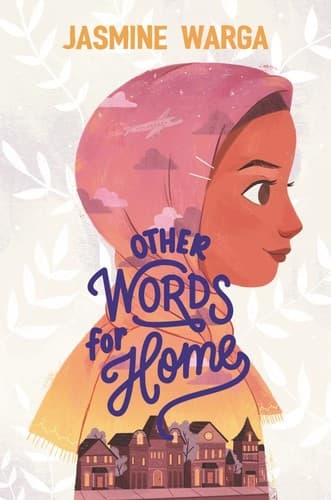
Book details and cover from Google Books.
Ready to read Other Words for Home?
Get your copy on Amazon, or listen to it on Audible. We earn a commission if you buy through these links.